 listicle
Are Family Martial Arts Training Benefits Real?
Last Updated: October 26, 2026
Quick Summary
Family martial arts training benefits are real but not automatic, coming from consistent practice, good instruction, and programs built for mixed ages. Families who train together stick with it longer than kids who train alone, and training two to three times a week tends to produce the clearest changes on the mat and at home.
- Parents usually notice focus improvements first, often within the first few months of regular classes.
- Most programs group students by skill level, not strictly by age, so parents and kids can train together.
- Track attendance, skill progression, confidence markers, fitness, and enjoyment instead of fixating on belt rank.
- Before enrolling, check for mixed-age options, instructor experience, safety standards, schedule flexibility, and a trial option.
- Beginners should spend weeks on fundamentals and controlled drills before any sparring with protective equipment.
Table of Contents
- What Family Martial Arts Training Actually Delivers
- The Benefits of Martial Arts for Kids
- Physical Fitness Benefits That Apply to Every Age
- Martial Arts for Families: How Shared Training Works
- Martial Arts and Family Bonding: What Changes at Home
- How to Choose Family Martial Arts Classes
- Safety, Costs, and Realistic Expectations
- Book a Free Class at Goshinkan Jujitsu Dojo
- Frequently Asked Questions
What Family Martial Arts Training Actually Delivers
Family martial arts training benefits are real, but they are not automatic. They come from consistent practice, good instruction, and a program built for mixed ages.
That last point matters more than most parents expect. A child who quits after three weeks gains nothing.
Below, we break down what the actual benefits are, how shared training works, and how to pick a program that fits your family.
The Benefits of Martial Arts for Kids
The benefits of martial arts for kids show up fastest in three places: attention, confidence, and physical fitness. Parents usually notice the focus change first, often within the first few months of regular classes.
Focus, Discipline, and School Performance
Martial arts training is repetitive by design. Students drill the same movements until they become automatic, and that repetition builds concentration the way few other activities do.
A common mistake parents make is expecting instant results. Focus improves gradually, through consistent attendance. For a deeper look at how this plays out, see our guide on whether martial arts is good for kids.
Confidence and Self-Defense Skills
Confidence in martial arts comes from competence. A child who learns to defend themselves, even at a basic level, carries themselves differently. They stand taller. They speak up.
Self-defense skills matter here too. Students learn awareness, boundary setting, and how to respond under pressure. That combination does more for self-esteem than praise alone. Our guide to martial arts and confidence explains how instructors build this step by step.
Physical Fitness Benefits That Apply to Every Age
Physical fitness benefits apply to every age, and that is what makes family training unusual. Kids and adults work on the same qualities, just at different intensities.
Here is what regular practice develops:
- Strength and muscle tone through bodyweight and partner drills
- Cardiovascular fitness and endurance from sustained rounds of movement
- Flexibility and balance built into warm-ups and technique work
- Coordination and agility from footwork patterns and combinations
- Weight management and metabolism support through consistent activity
Adults often report the same outcomes as their children: better stamina, less stiffness, and a healthier lifestyle overall. Our adult benefits guide covers the fitness side in more detail.
Martial Arts for Families: How Shared Training Works
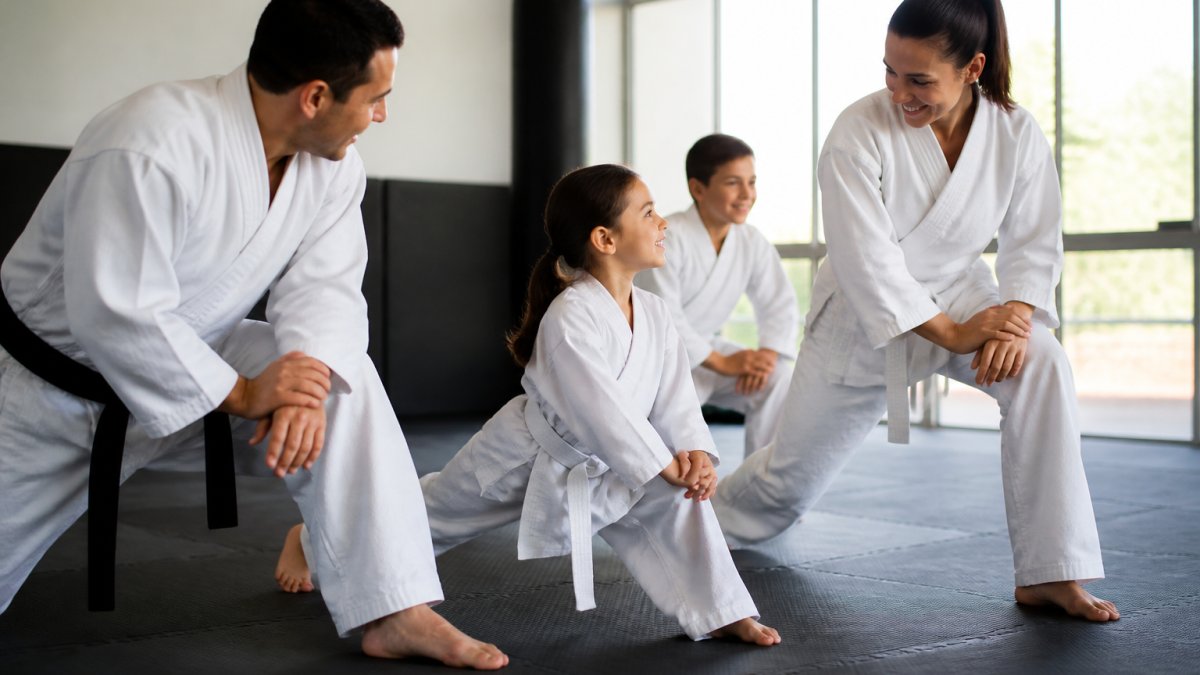
Martial arts for families works because most programs group students by skill level, not strictly by age.
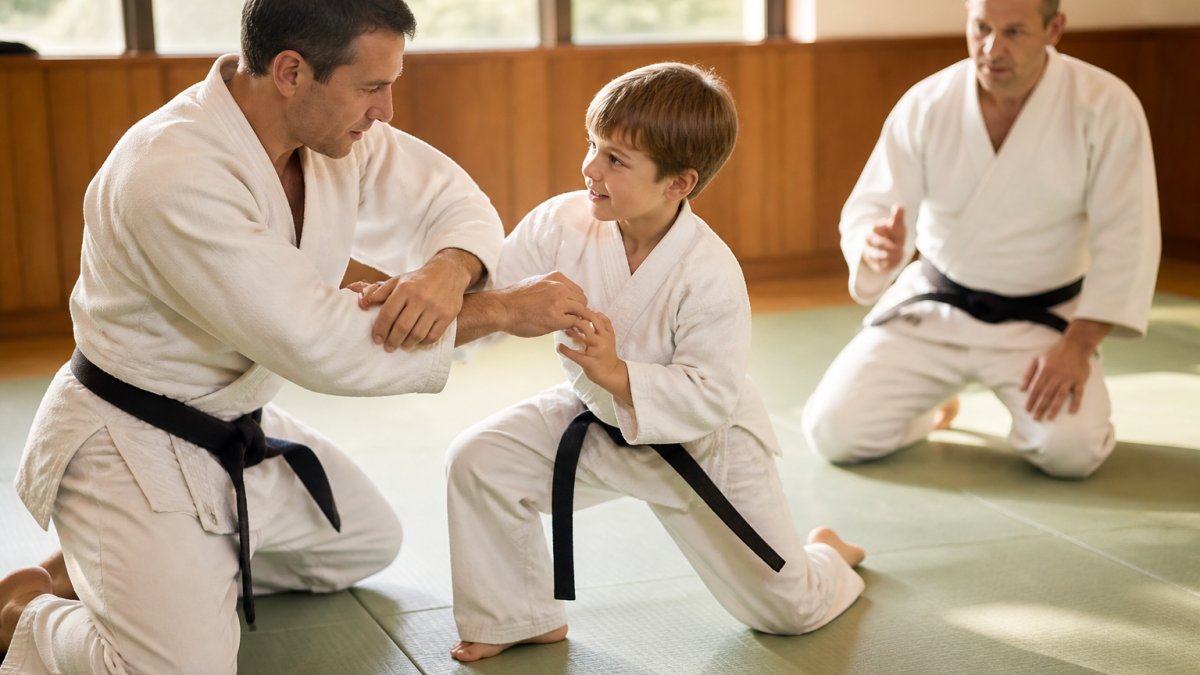
In practice, this means a beginner adult and a beginner child can start on the same night. Instructors adjust drills so younger students build fundamentals while adults add intensity.
The American Academy of Pediatrics notes that organized physical activity supports children's development when it is age-appropriate and well supervised.
Martial Arts and Family Bonding: What Changes at Home
Martial arts and family bonding change the conversation at home because training together creates a shared vocabulary: the same techniques, the same goals, the same small victories.
Why Shared Training Bonds Differently Than Shared Hobbies
Most family activities put parents in a coaching or supervising role. Martial arts flips that. When a parent and child are both students, the parent models the behavior they expect: listening to corrections, practicing imperfectly, getting back up after a failed drill.
A common pattern instructors see is that families who train together develop a shorthand at home. The dojo can become a neutral space where everyone is a beginner at something, which can level the relationship in a healthy way.
Measuring Progress as a Family (Without Fixating on Belt Rank)
Belt rank is the most visible marker of progress, but it is a poor sole measure for families training together because adults and children progress at different rates and on different timelines. A more useful approach is to track several indicators side by side:
- Attendance consistency: Are you making it to class two to three times a week? Consistency predicts outcomes better than any single test.
- Skill progression: Can each family member demonstrate last month's techniques without prompting? Can they chain two or three movements together?
- Confidence markers: Does your child volunteer to demonstrate a technique? Do they speak up in class? Do they handle a mistake without shutting down?
A simple family practice is a monthly check-in: each person names one thing they improved and one thing they want to work on. This keeps progress visible without reducing it to a belt color, and it gives parents and children a shared language for effort.
What Changes at Home
Many families find that shared training can provide a structured, screen-free routine that everyone participates in. It can also give families a built-in recovery ritual: a consistent class night, a shared warm-up, a post-class debrief. The bonding comes from repetition and shared effort, not from a single dramatic moment. Families who train two to three times a week tend to see the clearest changes, both on the mat and at home.
How to Choose Family Martial Arts Classes
Choosing family martial arts classes comes down to five checks. Run through them before you commit to any program.
- Mixed-age options: Can parents and kids train in the same session or on the same night?
- Instructor experience: Are instructors comfortable teaching total beginners of different ages?
- Safety standards: Are contact levels age-appropriate, with clear rules for sparring?
- Schedule flexibility: Can you attend different class times when work hours shift?
Watch out: a program that separates parents entirely misses the point of family training. If you cannot observe a class before enrolling, keep looking. Our guide to finding local classes walks through what to ask on a first visit.
Run through these five checks before committing to any family program.
| Check | What to look for |
|---|---|
| Mixed-age options | Parents and kids train in the same session or on the same night |
| Instructor experience | Instructors comfortable teaching total beginners of different ages |
| Safety standards | Age-appropriate contact levels with clear sparring rules |
| Schedule flexibility | Different class times when work hours shift |
| Trial option | Can you try a class before signing anything |
Safety, Costs, and Realistic Expectations
Safety, costs, and realistic expectations deserve an honest answer, because most marketing pages skip them. This section gives you the practical version.
Safety and Age-Appropriate Contact
Safety in family martial arts comes from matching contact to age and experience, not from avoiding contact altogether. Beginners should spend weeks on fundamentals, footwork, and controlled partner drills before any sparring.
Ask these questions before enrolling:
- What protective equipment is required, and who provides it? Common items include mouthguards, gloves, shin guards, and headgear for sparring. For children, equipment should fit properly and be inspected regularly.
- How is sparring supervised? Look for clear rules on contact level, matched partners by size and experience, and an instructor who stops drills early when form breaks down.
- How are injuries prevented? Warm-ups, controlled drills, and instructors who correct form early matter more than any single piece of gear. Ask how the program handles a child who is nervous about contact.
- What are the age and maturity requirements for contact drills? Programs vary; some delay contact until a student demonstrates control and listening skills, regardless of age.
The American Academy of Pediatrics notes that organized physical activity supports children's development when it is age-appropriate and well supervised. Family classes make that easier to check, because parents see the instruction firsthand.
Costs and Time Commitment
Costs vary widely by program, class frequency, and membership terms. Rather than quote a single figure, ask for a full breakdown before committing:
- Tuition: Monthly or annual, and whether it covers unlimited classes or a set number per week.
- Equipment: Uniform, protective gear, and any testing or belt fees.
- Trial options: Many dojos offer a free or low-cost trial class. Ask about it before signing anything.
- Contract terms: Avoid long contracts on a first visit. Ask about cancellation and pause policies.
Time commitment matters as much as cost. Families who train two to three times a week tend to see the clearest progress, but that schedule has to fit work, school, and travel. Ask whether the program offers different class times and whether parents and children can attend on the same night.
Realistic Expectations and Evidence Quality
Be realistic: martial arts is not a quick fix for focus or confidence. It is a steady practice that rewards consistency. Much of what you read about benefits comes from practitioner experience and small studies rather than large controlled trials, so treat dramatic claims with caution.
A reasonable expectation is gradual improvement over months, not weeks: better focus, improved fitness, and growing confidence, provided attendance is consistent. If a program promises instant transformation, that is a signal to look elsewhere.
Book a Free Class at Goshinkan Jujitsu Dojo
The best way to judge family martial arts training is to step on the mat.
Our dojo offers expert instructors, an environment built on camaraderie and personal growth, and classes open to all ages and skill levels. Students can build focus, discipline, and self-confidence while learning practical self-defense.
Then get started with Goshinkan Jujitsu Dojo and book a free class for your family.
Frequently Asked Questions
Can parents and children train in martial arts together?
Yes. Many dojos run family martial arts classes where parents and kids train side by side or in parallel groups, with drills scaled to each person's age and level. At Goshinkan Jujitsu Dojo, instructors can adjust techniques so different ages can work the same skill safely. Shared training gives families a common activity, a shared vocabulary for effort and respect, and built-in accountability because each person sees the other practice. Ask about class structure before enrolling, since some programs separate age groups and combine only for warm-ups.
How often should a family practice martial arts together?
Two classes per week is a common starting point for most families, which gives enough repetition to build technique without overwhelming a child's schedule. Beginners often do best with two sessions weekly for the first few months, then add a third if the family wants faster progress toward belt goals. Consistency matters more than volume: showing up twice a week for a year beats five sessions in one month followed by a dropout. Talk with instructors about your schedule and any irregular work hours before committing to a fixed class time.
What are the benefits of martial arts for kids who struggle with focus?
Martial arts training asks children to repeat specific movements, listen for corrections, and hold attention through short structured drills, which practices focus the same way a sport practices a skill. Kids also see immediate feedback: a stance either holds or it doesn't. Parents may report better listening and self-control at home, though results depend on regular attendance and instructor quality. Ask a prospective school how they handle distractible beginners and whether they let shy or anxious children ease in at their own pace rather than pushing them into group activities.
How much do family martial arts classes cost, and what if it doesn't work out?
Pricing depends on the program, the number of family members enrolled, and how many classes per week you attend, so ask the dojo directly for current rates and any family discounts. Goshinkan Jujitsu Dojo offers no-contract membership, which means you can stop if the fit isn't right. Before signing up, ask about the cancellation process, whether uniforms and testing fees are separate, and whether you can try a free class first. A free class lets your child meet the instructor and see the room before you commit any money.
Ready to train together? Book a free class at Goshinkan Jujitsu Dojo and find out what your family can build on the mat.