 how-to
Martial Arts for Focus Building: A Practical Guide
Last Updated: October 23, 2026
Quick Summary
Martial arts for focus works by training attention through short, repeated demands that get slightly harder over time, like holding a stance and correcting drift. A four-week beginner routine of 20-25 minute sessions, three to four times per week, builds focus gradually. Expect modest, steady gains over months, not overnight change.
- Hold one stance for 20 seconds, rest 20 seconds, and repeat five times in week one.
- Keep sessions to 20-25 minutes and practice three to four times per week at the same time of day.
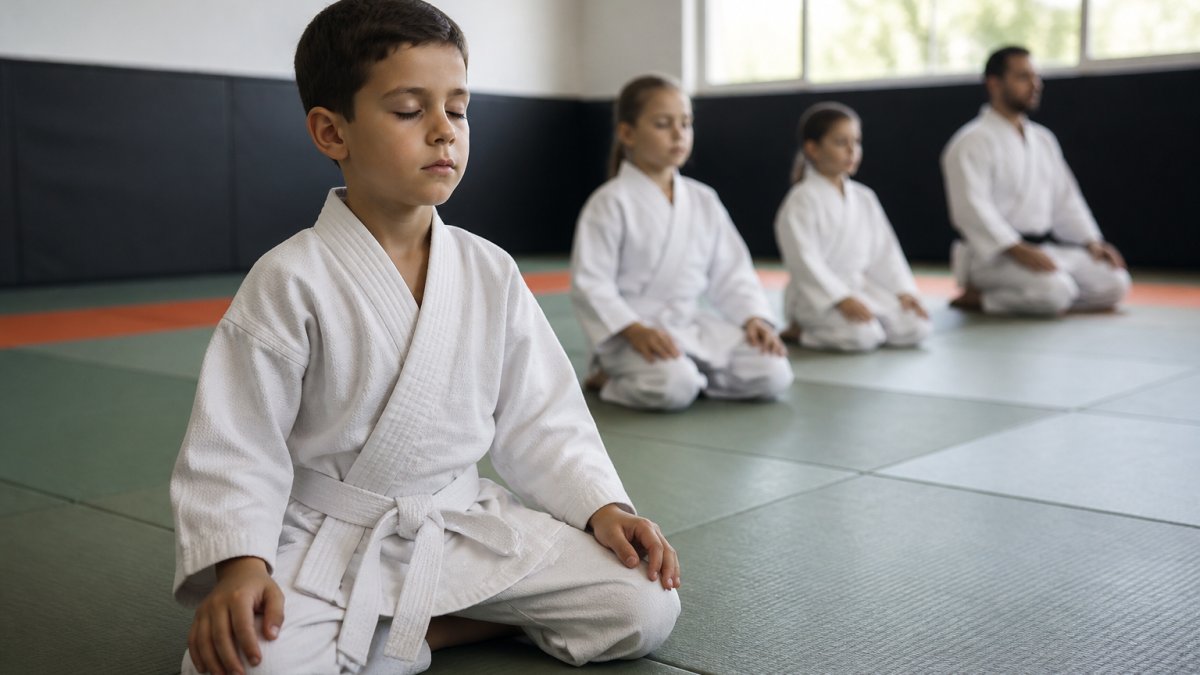
- End every session with 60 seconds of quiet breathing to carry calm into the rest of the day.
- Progress by adding duration, complexity, distraction, or precision one variable at a time, not more time.
- Slow, clean reps train attention better than fast, sloppy ones, so avoid chasing speed early.
Table of Contents
- How Martial Arts for Focus Building Actually Works
- A Progressive Focus-Building Routine for Beginners
- Martial Arts and Concentration: Drills That Train Attention
- Martial Arts for Self-Discipline: From Stances to Self-Control
- How to Teach Kids to Follow Directions Through Dojo Practice
- Martial Arts for Children with ADHD: Adapting Training to Different Attention Needs
- How to Measure Changes in Attention and Concentration
- Choosing a Style and Class: An Instructor and Class-Quality Checklist
- Frequently Asked Questions
How Martial Arts for Focus Building Actually Works
Martial arts for focus building works by training attention the same way it trains the body: through short, repeated demands that get slightly harder over time. At Goshinkan Jujitsu Dojo, we see this play out in every beginner class.
Focus is not a personality trait you either have or lack. It is a skill that responds to practice, and martial arts practice is unusually well suited to building it.
Attention, Repetition, and the Present Moment
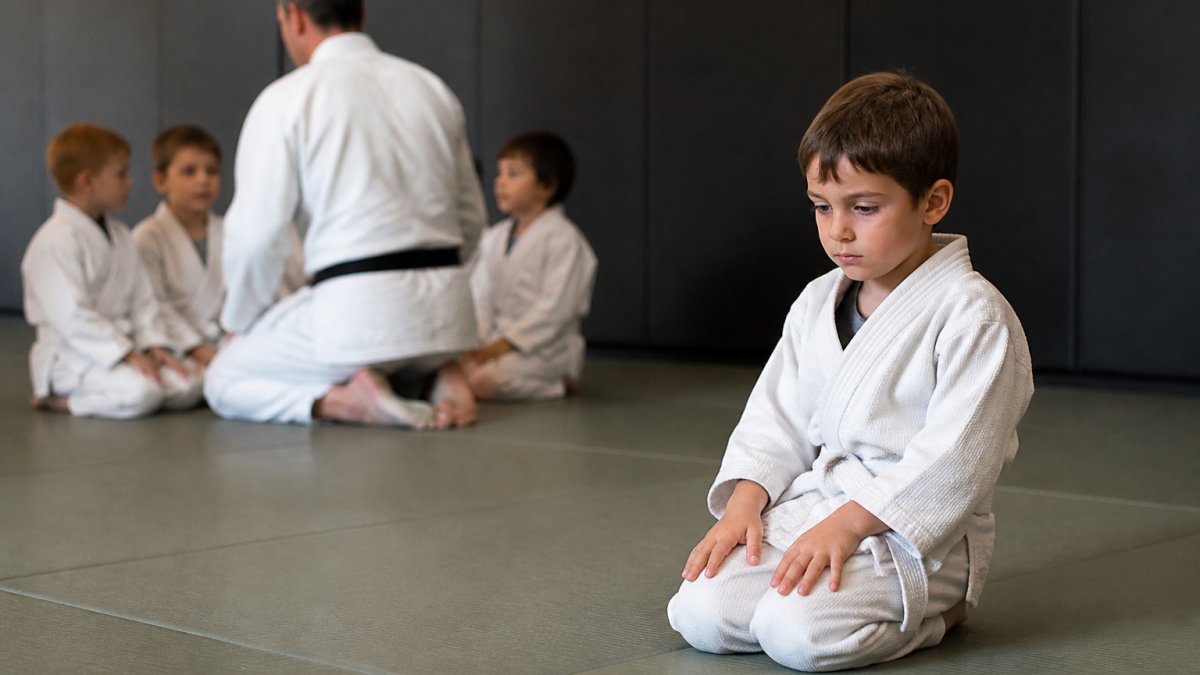
A stance is a fixed position of the feet and body that a student must hold with correct alignment. Holding one demands constant small corrections, and those corrections are attention training in disguise.
Here is why the format works:
- Short drills match a beginner's real attention span
- Repetition turns shaky effort into automatic skill
- Immediate feedback from an instructor catches drift right away
The American Psychological Association's overview of attention research describes attention as a limited resource that can be strengthened through targeted practice. That is exactly what a dojo does, one repetition at a time.
A Progressive Focus-Building Routine for Beginners
Start with a four-week routine built on short, structured blocks. Twenty minutes of focused practice beats an hour of drifting through movements. The sequence below is designed so each week adds exactly one new demand, no more, because focus grows from repeated success, not from being overwhelmed.
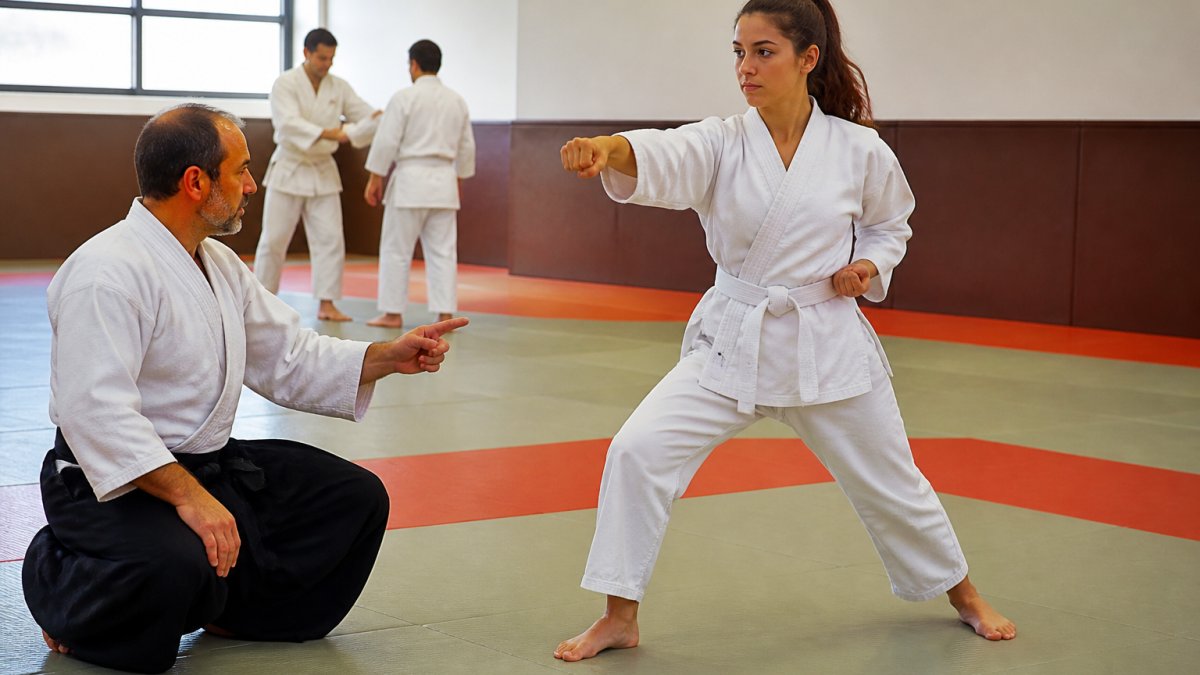
The Four-Week Sequence
Practice three to four times per week, ideally at the same time of day. Keep sessions to 20-25 minutes, including a short warm-up and the closing breath practice.
- Week 1, Single-point holding: Hold one stance for 20 seconds. Rest 20 seconds. Repeat five times. The only goal is to notice drift and correct it without frustration.
- Week 2, Switching attention: Add a second stance. On the instructor's or a partner's command, switch between the two. Do ten switches per session. This trains the mind to release one target and lock onto another.
- Week 3, Slow sequencing: Practice a three-move combination slowly, ten reps per side. Say the name of each move silently as you perform it. Naming keeps attention anchored when the body wants to rush.
- Week 4, Chained combinations with feedback: Chain two combinations together while a partner watches for errors. The partner calls out one correction per round. Receiving and applying feedback in real time is the closest thing to a focus rep you can do with a partner.
How to Progress After Week Four
Do not simply add more time. Add one of these variables instead, one at a time:
- Duration: Extend stance holds from 20 to 30 seconds.
- Complexity: Add a fourth move to the combination.
- Distraction: Practice with background noise or a partner moving nearby.
A common pattern is to advance too quickly and then plateau. If a student can hold attention for the full session three times in a row, that is the signal to add the next variable, not before.
Matching the Routine to Different Attention Needs
Beginners with shorter attention spans do better with more frequent, shorter blocks: five minutes of stance work, a one-minute break, then five minutes of slow combinations. Beginners who prefer structure thrive on the fixed weekly sequence. The routine is a scaffold, not a test, adjust the block length to the learner, not the other way around.
A Simple Way to Track Progress
Keep a one-line log after each session: date, minutes practiced, longest unbroken stance hold, and one note on what distracted you. Compare week one to week four. Improvement usually shows up first as fewer reminders needed, then as longer stretches on task. Expect gradual gains, not overnight change.
Martial Arts and Concentration: Drills That Train Attention
Concentration improves fastest when a drill forces you to track one thing at a time. Martial arts and concentration fit together because every technique has a single point of attention: the hand, the foot, the breath, the partner.
These drills work for kids and adults alike:
- Stance freeze: Hold a stance until the instructor calls the next one. No fidgeting.
- Mirror drill: Copy a partner's slow movement exactly, in real time.
- Count the reps: Perform a strike ten times and count aloud. Miss a number, start over.
A common mistake is chasing speed too early. Fast, sloppy reps train sloppy attention. Slow, clean reps train the mind to stay on task.
Martial Arts for Self-Discipline: From Stances to Self-Control
Self-discipline in martial arts starts with small physical rules and grows into emotional control. A student who can hold a stance through boredom can later hold their temper through frustration.
The progression is predictable:
- Stances teach the body to obey a command
- Strikes and defensive maneuvers teach control of force
- Forms teach memory and sequencing
Martial arts for self-discipline is not about harshness. It is about making and keeping small promises to yourself, over and over, until keeping them becomes normal.
How to Teach Kids to Follow Directions Through Dojo Practice
Learning how to teach kids to follow directions works best when directions are short, physical, and repeated. A dojo is built for exactly this, because every instruction has a visible result.
Try these approaches at home or in class:
- Give one instruction at a time, then wait
- Pair words with a demonstration
- Use the same phrase every time, so it becomes a cue
Children respond to structure. When they know what comes next, they stop testing boundaries and start participating. That is why so many parents notice listening skills improving within the first few weeks.
Martial Arts for Children with ADHD: Adapting Training to Different Attention Needs
Martial arts for children with ADHD can work well when the class format matches how the child's attention actually operates. Short bursts, clear cues, and frequent movement beat long lectures every time. But the details matter more than the general principle, and most articles stop at the principle.
What to Look for in a Class
- Brief instructions followed by immediate practice. A direction that takes more than a few seconds to explain loses most young learners.
- Frequent position changes to reset restless energy, standing, moving, partner work, then stillness.
- Predictable routines with a clear start and finish, so the child knows what comes next.
Sensory and Environmental Considerations
Attention is not only mental, it is sensory. A dojo that is too loud, too bright, or too crowded can drain a child's focus before the first drill begins. Ask whether the school offers:
- A quieter corner or a break space for overstimulated students
- Consistent lighting and minimal echoing surfaces
- A predictable warm-up that signals "training time"
- Permission to step out briefly without penalty
These are not luxuries. They are the conditions under which many neurodivergent learners can participate at all.
Instruction Style That Supports Attention
A good instructor treats attention differences as a teaching problem, not a behavior problem. Watch for these methods:
- One instruction at a time, paired with a demonstration
- The same phrase every time, so it becomes a cue rather than a new sentence to parse
- Praise for follow-through, not just for the attempt
- Immediate, specific feedback ("lift the back heel") rather than vague encouragement
Realistic Expectations
Martial arts is not a treatment for attention disorders, and no ethical instructor should promise that it is. What training can reasonably offer is structured practice in waiting, listening, and returning attention to a task, skills that may carry over into school and home.
We adapt pacing at Goshinkan Jujitsu Dojo so students who need more movement get it without feeling singled out. The goal is a class where attention differences are accommodated, not hidden.
How to Measure Changes in Attention and Concentration
Track progress with simple, repeatable observations rather than vague impressions. Measure the same things, at the same time of day, every few weeks.
| What to Track | How to Measure It | What Improvement Looks Like |
|---|---|---|
| Time on task | Minutes spent on one drill before drifting | Longer stretches without reminders |
| Following instructions | Directions given vs. completed correctly | Fewer repeats needed |
| Frustration recovery | Time to refocus after a mistake | Shorter cool-down periods |
| Home follow-through | Homework or chores finished without nagging | Fewer reminders per task |
Keep a short log. Compare month one to month three. Real change shows up as small, steady gains, not overnight transformation.
Choosing a Style and Class: An Instructor and Class-Quality Checklist
Pick a class by watching a session and asking direct questions. The style matters less than the instructor and the environment.
Use this checklist:
- Does the instructor give clear, calm corrections?
- Are class sizes small enough for individual attention?
- Do students seem relaxed and engaged, not fearful?
- Is there a clear beginner path with steady progression?
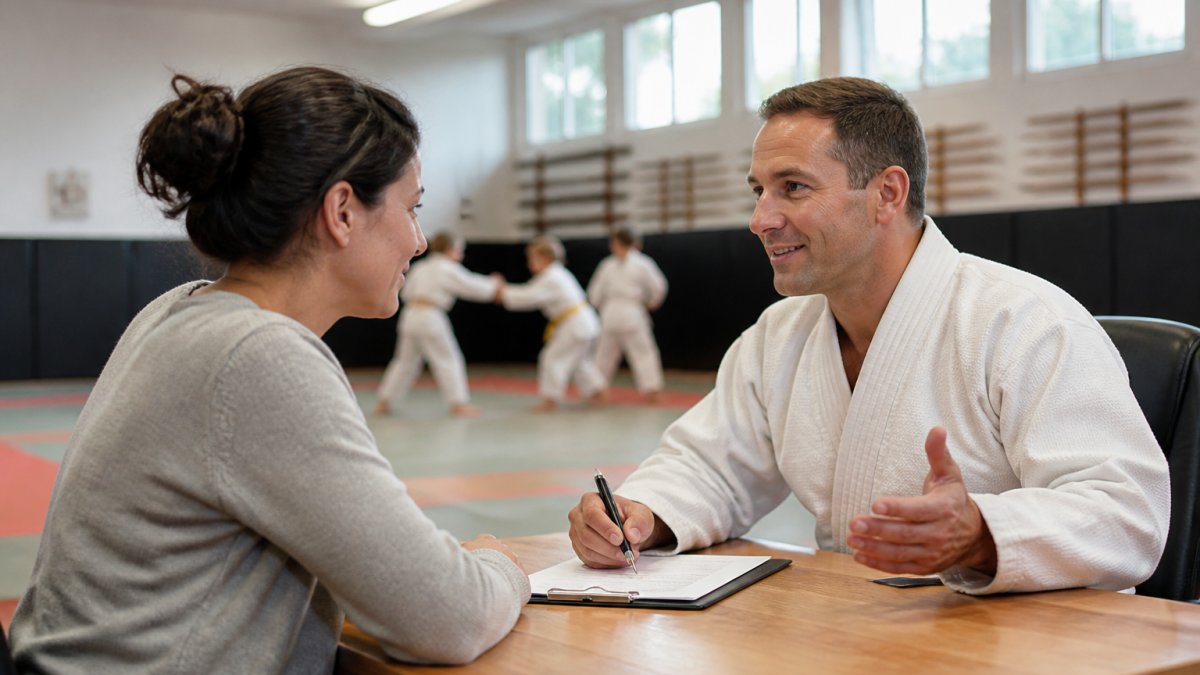
We invite families to book a free class at Goshinkan Jujitsu Dojo and see the environment firsthand. Watch how instructors handle a nervous beginner. That tells you more than any brochure.
Frequently Asked Questions
Which martial art is best for ADHD?
There is no single best style for ADHD. What matters most is a structured class with short, clear instructions, predictable routines, and an instructor who gives frequent feedback. Styles that combine repeated forms, stances, and partner drills, such as jujitsu, karate, or taekwondo, tend to suit learners who need movement and clear boundaries. Visit a class and watch how the instructor handles a student who loses focus before you commit.
How can martial arts help children improve focus?
Martial arts for focus building works through repetition, attention to detail, and immediate feedback. A child learns to hold a stance, follow a sequence of strikes, and reset after a mistake. These small acts of attention add up. Training also pairs breathing techniques with movement, which can help a child settle a busy mind. The benefit comes from consistent practice over months, not from a single class.
How often should a child practice martial arts to build focus?
Two classes per week is a common starting point for children, with short at-home practice of five to ten minutes on other days. Consistency matters more than volume. A child who trains twice a week for a year will build more focus than one who trains five times a week for a month and then stops. Ask the instructor for a simple home routine that reinforces what happens in class.
Can martial arts help kids follow directions?
Yes, when the class is built around clear commands and predictable routines. Instructors give short directions, demonstrate them, and have students repeat the action. Over time, a child learns to listen, process, and respond. Parents can reinforce this at home by using the same short, specific phrasing the instructor uses, and by praising the act of following through rather than only the result.
Building focus takes time, and the right environment makes the difference. If your child struggles to stay on task, or you want a structured way to build discipline and confidence, Goshinkan Jujitsu Dojo offers expert instructors, a welcoming community for all ages and skill levels, and a focus on core values like perseverance and respect. Book a free class and see how our dojo helps students build focus that lasts.