 how-to
Martial Arts for Shy Children: Benefits That Build Confidence
Table of Contents
- How Martial Arts for Shy Children Builds Real Confidence
- Why the Dojo Format Works Differently Than Team Sports
- The Best Martial Arts for Shy Children: Styles and Class Formats Compared
- Martial Arts Social Skills for Kids: Making Friends Without the Spotlight
- Martial Arts for Kids Discipline and Focus: What Progress Actually Looks Like
- Your Child's Kids Martial Arts First Class: A Step-by-Step Plan
- How to Judge a Class for Emotional Safety Before You Enroll
- When Martial Arts May Not Be the Right Fit
- Conclusion
- Frequently Asked Questions
Last Updated: October 19, 2026
How Martial Arts for Shy Children Builds Real Confidence
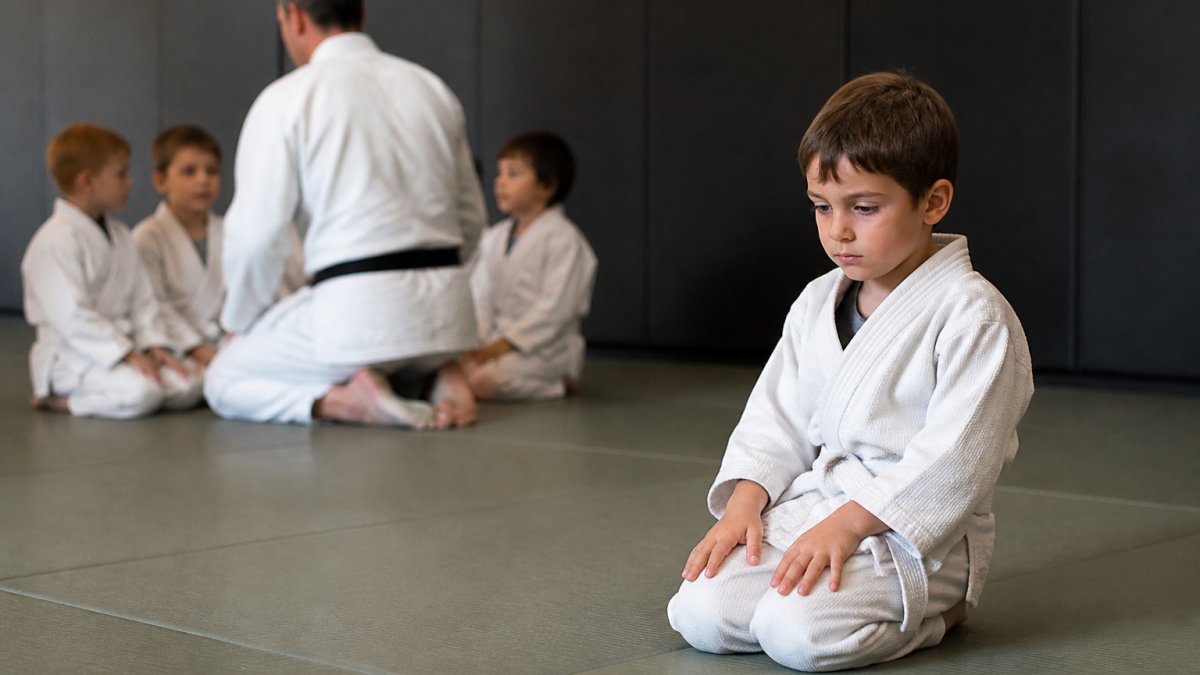
Martial arts for shy children works because a dojo asks kids to be seen in small, controlled doses, building confidence without the pressure of a crowd.
The dojo format breaks confidence into small steps: bow, say one word, do one move, repeat. No audience, no spotlight.
Below, we'll show what to expect, which styles suit a cautious kid, and how to tell real progress from a sales pitch.
Why the Dojo Format Works Differently Than Team Sports
Team sports reward the loudest kid. The dojo rewards the kid who shows up and tries.
In a team game, one mistake can cost the group a point, and shy kids feel that weight fast. In martial arts, progress is personal: your child competes against last month's version of themselves.
The structure also helps. The American Academy of Pediatrics guidance on physical activity for children notes that structured, predictable activity helps kids build both fitness and confidence.
Three more reasons the format fits cautious kids:
- Small groups mean fewer eyes on your child
- Partner practice builds one-on-one social contact, not crowd contact
- Positive reinforcement comes from an instructor, not a scoreboard
The Best Martial Arts for Shy Children: Styles and Class Formats Compared
The best martial arts for shy children are usually Brazilian jiu-jitsu, traditional jujitsu, or karate in small, structured classes. But the style name matters less than the format: two karate schools can feel completely different, and a packed jiu-jitsu class can be harder than a calm taekwondo one.
Use this comparison to understand each style's practical features, then use the format questions below to judge the actual class.
| Style | Contact Level | Partner Work | Typical Class Size | Emphasis | Best For | Watch Out For |
|---|---|---|---|---|---|---|
| Brazilian jiu-jitsu | Moderate to high (grappling, close contact) | Constant, one-on-one | Often 10-20 | Ground control, positional sparring | Kids who dislike being watched by a crowd | Close contact feels intense at first; hygiene and personal space rules matter |
| Traditional jujitsu | Moderate (strikes, throws, joint locks) | Frequent, paired | Often 8-15 | Practical self-defense, technique | Kids who want skills that feel useful | More techniques to learn; pace can feel fast |
| Karate | Low to moderate (strikes, forms, limited sparring) | Some, often in lines or pairs | Varies widely, 8-30 | Forms, rank belts, discipline | Kids who like clear goals and checklists | Large classes at some schools; sparring can feel competitive |
| Taekwondo | Low to moderate (kicks, forms, sparring) | Some, often in lines or pairs | Varies widely, 10-30 | Kicks, forms, fast belt progress | Kids who want visible, frequent milestones | Sparring can feel competitive; belt mills exist |
Karate, Brazilian Jiu-Jitsu, and Jujitsu: What Suits a Cautious Kid
Karate gives a shy child visible progress through belts, stripes, and forms, so kids who like checklists and clear rules often thrive.
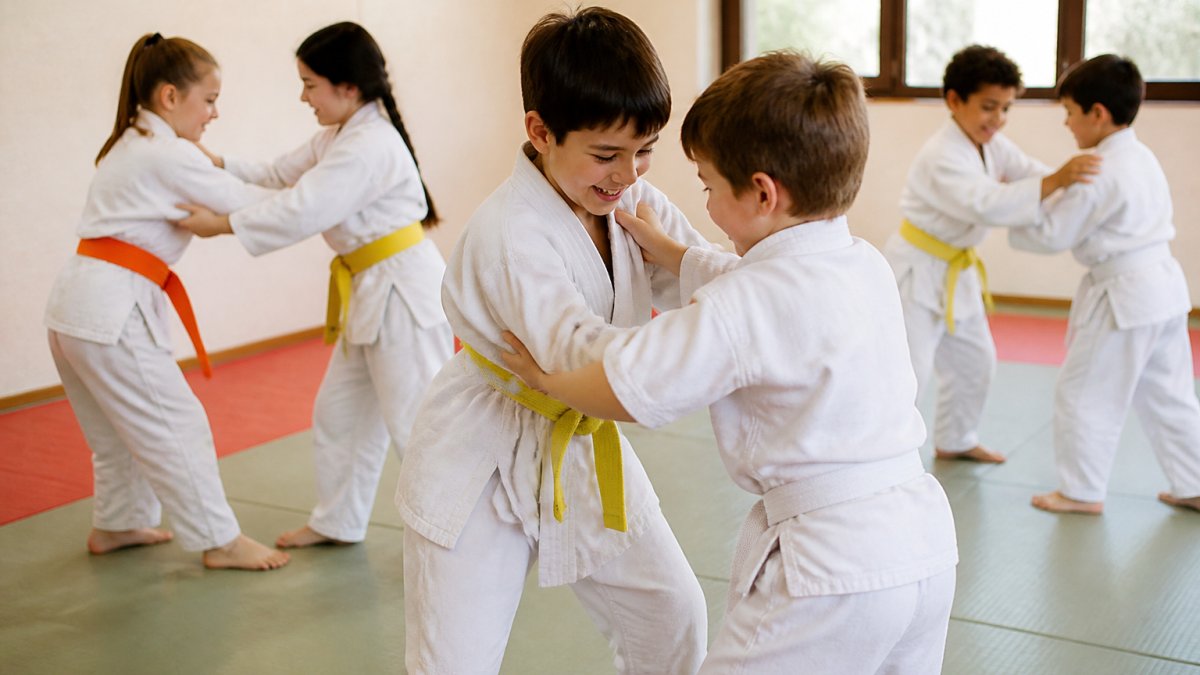
Brazilian jiu-jitsu and traditional jujitsu lean on partner work, which sounds scary but is often a plus: two kids drilling together talk more than a whole class would, with controlled contact and an instructor-set pace.
Taekwondo sits in the middle: frequent belt promotions motivate kids who need visible wins, but sparring culture varies enormously by school.
Format Questions That Matter More Than the Style
Before you compare styles, compare these features during a visit:
- Class size. A beginner class of 8 to 12 lets an instructor notice a quiet child. A class of 30 does not. Ask for the typical beginner headcount, not the maximum.
- Contact level. Good programs start with air drills, then pads, then controlled partner work. A school that puts beginners into live sparring in week one is a poor fit for a cautious kid.
- Partner rotation. One steady partner for a whole drill is easier for a shy child than constant switching.
Martial Arts Social Skills for Kids: Making Friends Without the Spotlight
Martial arts social skills for kids grow through repeated, low-stakes contact. Your child doesn't have to tell a story in front of the group, just work with a partner every class.
Friendships form quietly: kids pair up for drills, spot each other, and line up together week after week. Eye contact and speaking up happen naturally because the drill gives them something to talk about.
A common mistake parents make is pushing for instant friendship. It backfires. Instead, watch for small wins:
- Your child greets one classmate by name
- They volunteer to demonstrate a move with a partner
- They stay a few minutes after class to talk
Martial Arts for Kids Discipline and Focus: What Progress Actually Looks Like
Martial arts for kids discipline and focus shows up in small, boring moments first: standing still during line-up, waiting their turn, listening to a full instruction before moving.
Focus is a muscle, and class drills train it in short bursts.
So what should you expect, and when? Here's a realistic timeline:
| Timeframe | Typical Signs of Progress |
|---|---|
| First month | Less hesitation at the door, follows basic routines |
| Two to three months | Makes eye contact with the instructor, completes drills without prompting |
| Four to six months | Speaks up in class, helps a newer student, handles frustration better |
Progress isn't a straight line. Some weeks your child will seem stuck; then a skill clicks and confidence jumps with it.
Your Child's Kids Martial Arts First Class: A Step-by-Step Plan
The kids martial arts first class is where most shy children either settle in or shut down. A planned first visit makes the difference.
Here's the plan we suggest to families before their first session:
- Visit before joining. Watch one class from the side. Your child sees the room, the instructor, and the routine with zero pressure.
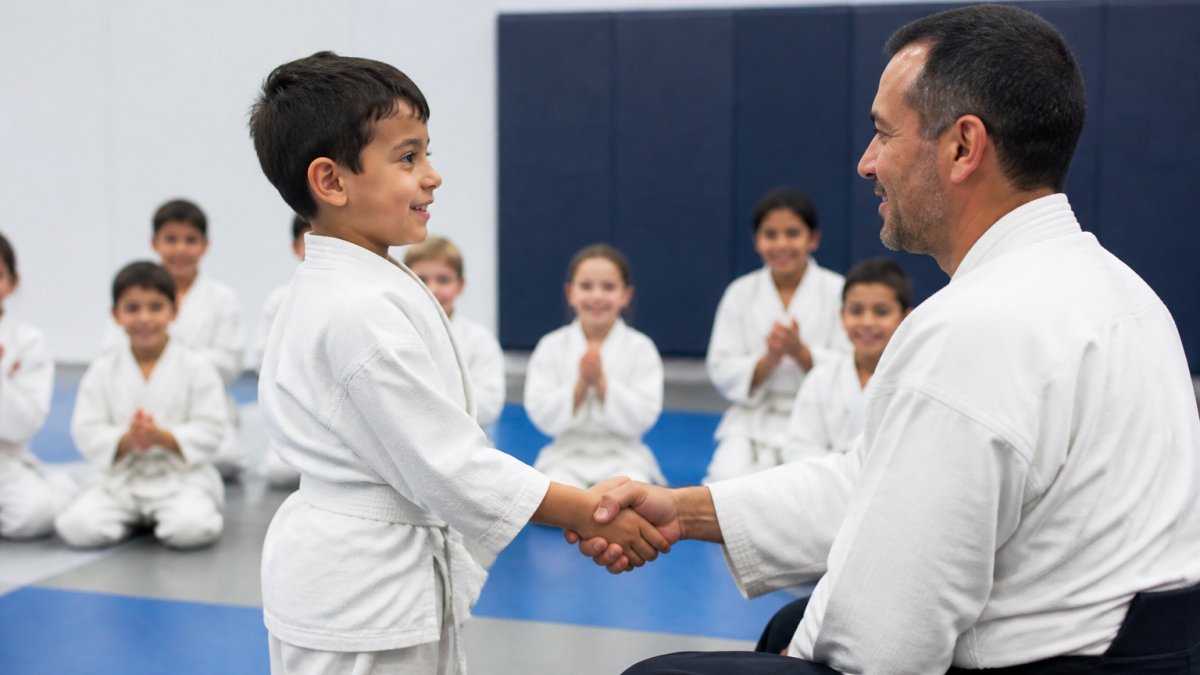
- Meet the instructor first. A two-minute hello before class removes the stranger factor.
- Arrive early. A quiet room is easier to enter than a full one.
- Set one small goal. "Bow and say hello" is enough for day one.
- Sit where your child can see you. Most dojos allow parents to watch.
- Debrief after, not during. Ask one question on the way home: "What was the best part?"
- Return within a week. Momentum matters more than perfection.
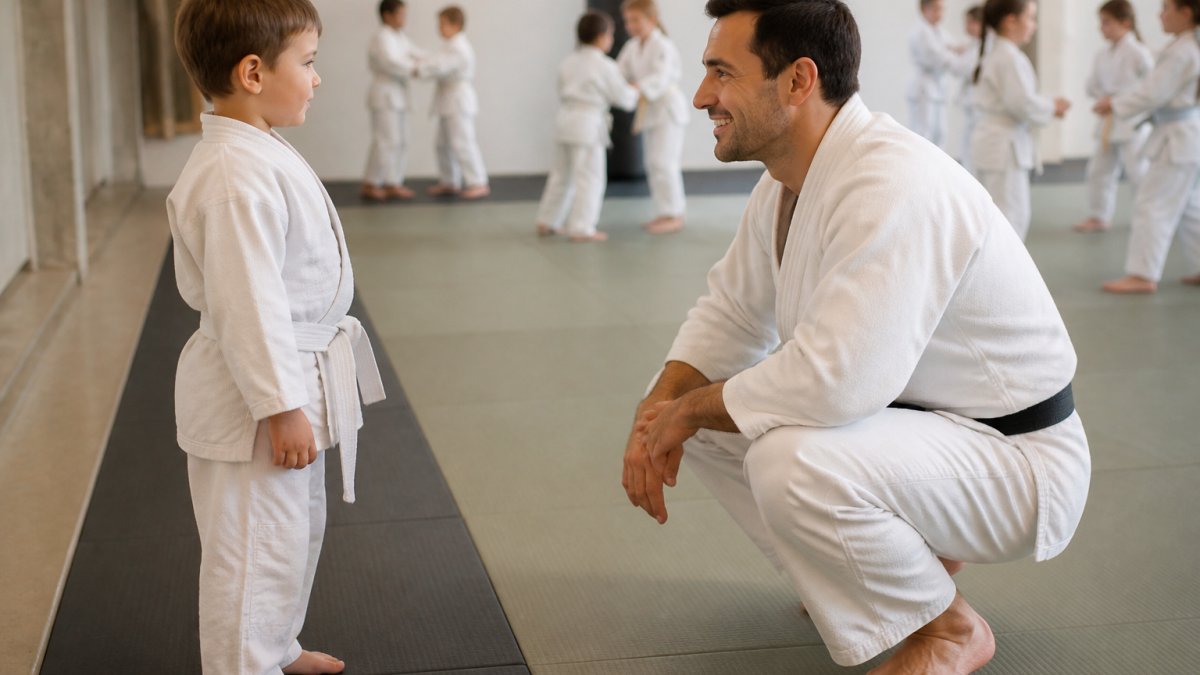
At Goshinkan Jujitsu Dojo, we let new students watch a full class before stepping on the mat. That single step removes most of the fear.
How to Judge a Class for Emotional Safety Before You Enroll
Emotional safety is the factor most parents skip, yet it decides whether your child stays.
Use this checklist during your visit:
- Instructors correct behavior without shaming a child
- Quiet kids get called on gently, not put on the spot
- Beginners are paired with patient, more experienced students
Ask one direct question: "How do you handle a child who won't participate on day one?" A good answer describes patience and small steps.
The Child Mind Institute's guidance on helping children with shyness makes a related point: pushing a shy child too fast tends to backfire, while gradual exposure builds real comfort.
When Martial Arts May Not Be the Right Fit
Martial arts is not the answer for every child, and pretending otherwise wastes your money and your kid's time. Know when to keep going, when to change the approach, and when to look elsewhere.
Shyness vs. Anxiety: A Careful Distinction
Shyness is a temperament: hesitation in new social situations, warming up slowly, preferring to watch before joining. It usually eases with time and familiar routines.
Anxiety is different. The National Institute of Mental Health's overview of anxiety in children describes anxiety as excessive worry or fear that is hard to control and out of proportion to the situation.
This is not a diagnosis, and only a pediatrician or mental-health professional can make one. But these patterns are worth a conversation with your child's doctor:
- Fear or distress that does not ease after several visits to the same class
- Anxiety that affects sleep, school attendance, eating, or friendships
- Physical symptoms before class such as stomachaches, headaches, or crying that do not settle
If you see these patterns, martial arts can still be part of the plan, but alongside professional guidance, not replacing it.
When to Change the Approach Instead of Quitting
Sometimes the problem is the class, not the activity. Consider a different school or format if:
- The class is too large for your child to get individual attention
- The instructor pushes participation before your child is ready
- The culture feels competitive, harsh, or shaming during your visit
A smaller class, a different style, or a gentler onboarding process can change the experience entirely.
When to Look Elsewhere
Martial arts is one path to confidence, not the only one. If your child isn't settling in after a fair trial, consider alternatives with structure and small-group contact:
- Swimming lessons in small groups
- Climbing gyms with beginner classes
- Art or music classes with predictable routines
The right activity is the one your child will return to. That may be martial arts, and it may not be.
That said, most cautious kids do settle in with the right class and enough time. Give it a fair month before you decide, and judge progress by behavior, not by belt rank.
Conclusion
Finding the right activity for a shy child takes patience, and most programs aren't built for kids who hang back. You need small classes, predictable routines, and instructors who let a child warm up at their own pace.
At Goshinkan Jujitsu Dojo, our classes build focus, discipline, and self-confidence through steady practice, not pressure.
Book a free class with Goshinkan Jujitsu Dojo and let your child try the mat on their own terms.
Frequently Asked Questions
Can martial arts help a shy child become more confident?
Yes, and the reason is structural rather than magical. Martial arts for shy children pairs predictable routines with small, repeated wins: a correct stance, a clean bow, a partner drill completed. Each of those gives a quiet child evidence that they can handle something new. Confidence grows from that evidence, not from being pushed into the spotlight. Look for a school that lets a shy child watch, warm up at the edge of the mat, and join in when ready rather than one that calls them out on day one.
Which martial art is best for a shy child?
There is no single winner, but the class format matters more than the style name. Brazilian jiu-jitsu and jujitsu lean on partner practice and close-contact drills, which build social comfort gradually. Karate and taekwondo offer highly structured lines and clear rank progression, which suits kids who like knowing exactly what comes next. Visit a class and watch how the instructor handles a hesitant child. A school with small groups, age-appropriate instruction, and patient instructor support will do more for a shy kid than any specific discipline.
How do parents prepare a shy child for their first martial arts class?
Keep the run-up low-pressure. Visit the dojo beforehand so the space is familiar, meet the instructor, and watch a few minutes of a class. Explain the basics: students bow, line up, and follow the instructor's lead. Pack water and comfortable clothes, arrive early to avoid a rushed entrance, and agree on a signal your child can use if they need a break. Tell them they do not have to talk to anyone, and that trying one class is the whole goal. Afterward, ask what they noticed rather than whether they liked it.
How long does it take to see changes in a shy child's confidence?
Expect small shifts first, not a personality change. In the first month, most parents notice a child talking about class, remembering routines, or showing a stance at home. Over three to six months of steady attendance, willingness to participate, eye contact with the instructor, and comfort with partner practice usually build. Progress is not linear, and a child who clams up after a hard week is not regressing. Judge the trend across a couple of months, and ask the instructor what they see on the mat.