 ultimate-guide
Self Defense Classes for Beginners: A Complete Guide
Table of Contents
- Why Self Defense Classes for Beginners Are Worth Starting Now
- What to Expect in a Self-Defense Class
- The Best Martial Arts for Self-Defense and How to Compare Styles
- How Long Does It Take to Learn Self-Defense?
- How to Choose Beginner Self Defense Classes: A Step-by-Step Guide
- Safety, Consent, and Injury Prevention in Beginner Training
- Women's Self-Defense, Co-Ed Classes, and Family Options
- What Beginner Classes Cost and How to Commit Without a Contract
- Frequently Asked Questions
Last Updated: October 18, 2026
Why Self Defense Classes for Beginners Are Worth Starting Now
Most people who put off self-defense training assume they need to get fit first, learn to fight first, or somehow already be "the type." That assumption is backwards, and it's the single biggest reason beginners never walk through a dojo door.
A good beginner program teaches practical skills you can use in a real situation, not choreography you'll forget under stress. It builds situational awareness before it builds technique, and it treats confidence as a training outcome rather than a prerequisite.
Below, we'll walk through what a class actually involves, how to compare styles, how long progress takes, and how to choose a program without signing your life away.
What to Expect in a Self-Defense Class
A beginner self-defense class typically runs 45 to 90 minutes and follows a predictable rhythm: a warm-up, instruction in one or two core techniques, partner drills at controlled speed, and a cool-down with a short debrief.
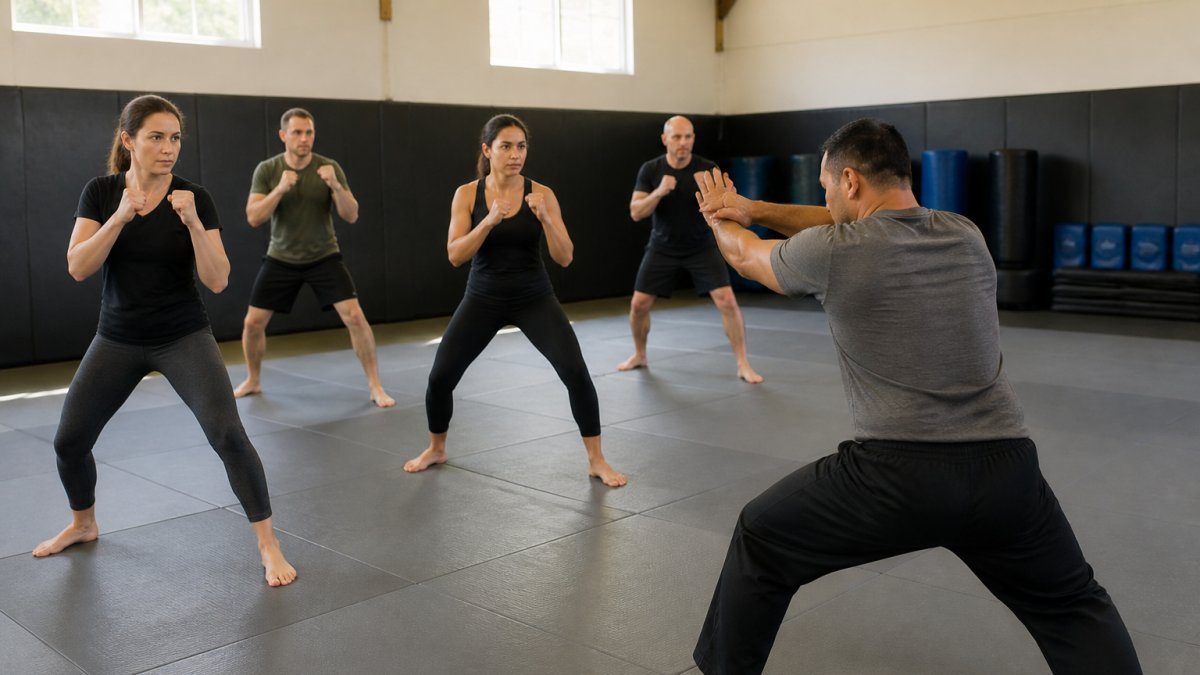
Instructors generally introduce stance, movement, and distance management before any striking or grappling. Expect to work with a training partner, and expect the instructor to demonstrate each technique several times before you try it.
Your First Class, Step by Step
Here's the sequence most beginner programs follow, and what you should expect at each stage:
- Arrive early and meet the instructor. Mention any injuries or limitations. Good instructors adjust drills around them.
- Warm-up (10-15 minutes). Joint mobility, light cardio, and bodyweight movement. Nothing exotic.
- Fundamentals instruction (15-20 minutes). One or two techniques, explained and demonstrated slowly.
- Partner drills (20-30 minutes). Controlled reps with a training partner. Consent and light contact are established first.
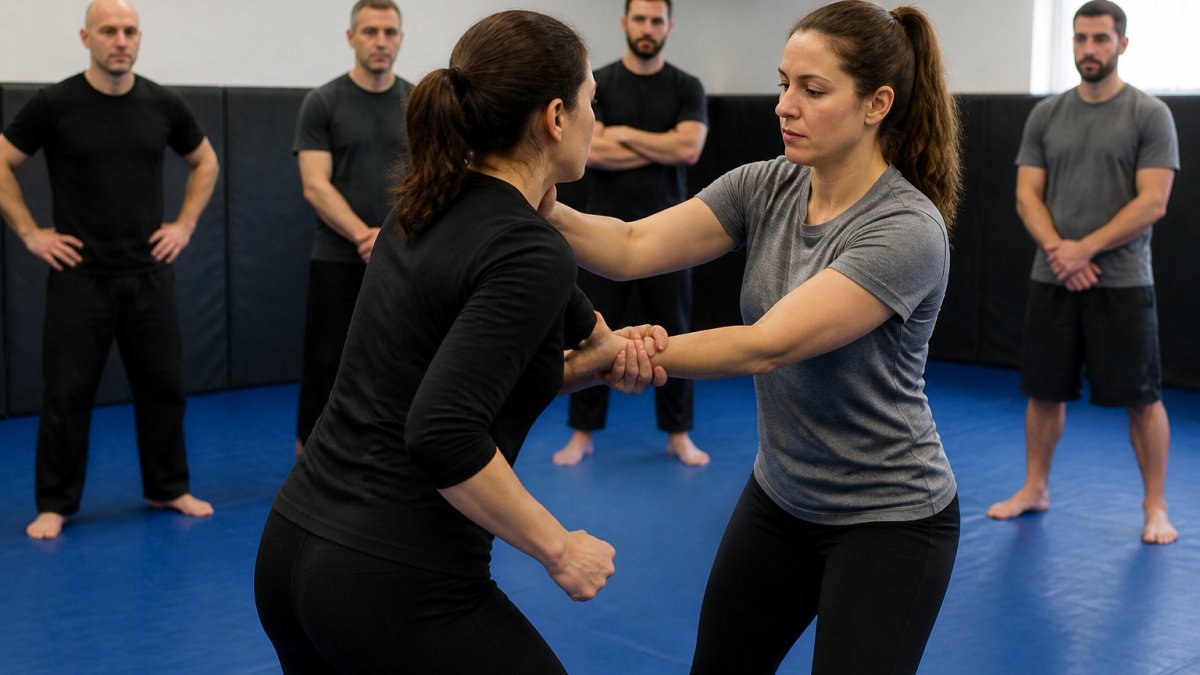
- Situational practice (10-15 minutes). Applying the technique from a realistic starting position, such as a wrist grab or a close-range approach.
- Cool-down and questions (5-10 minutes). Stretching, plus a chance to ask what you didn't follow.
What to Wear and Bring
Wear comfortable athletic clothing you can move in, and bring water. Most schools train barefoot on mats or ask for clean indoor shoes. Avoid jewelry and loose items that can catch. If you're trying a class before committing, a t-shirt and athletic pants are enough; you don't need a uniform for a trial pass.
The Best Martial Arts for Self-Defense and How to Compare Styles
There's no single best martial art for self-defense, because "best" depends on what you're preparing for. The honest answer is that styles differ in what they optimize, and beginners should pick based on goals rather than reputation.
Striking systems such as boxing and Muay Thai develop distance control, footwork, and the ability to hit and move. Grappling systems such as jiu-jitsu focus on control positions, escapes, and ground survival. Blended systems such as Krav Maga combine striking, grappling, and weapon-defense scenarios into one curriculum aimed at real-world safety.
| Style family | Core focus | Good fit for | Trade-off |
|---|---|---|---|
| Boxing / striking arts | Punch, jab, footwork, distance | Building confidence fast, staying on your feet | Limited ground defense |
| Jiu-jitsu / grappling | Control positions, escapes, ground work | Smaller people defending against larger attackers | Less striking practice |
| Krav Maga / blended | Striking, grappling, knife and gun defense scenarios | Practical, scenario-based self-defense | Quality varies widely by school |
| Traditional martial arts | Discipline, forms, structured progression | Families, kids, long-term development | Self-defense application varies |
Striking, Grappling, and Blended Systems
The practical difference comes down to where the confrontation happens. If you're grabbed, grappling answers the question. If you're approached at distance, striking and footwork answer it. Blended systems try to cover both, which is why they appeal to beginners who want practical training rather than competition.
A common mistake is choosing a style by watching highlight reels. Combat sports footage shows trained athletes at full speed; beginner classes look nothing like that, and they shouldn't.
How Long Does It Take to Learn Self-Defense?
Beginners usually feel more aware and more confident within a few weeks, can execute basic techniques under light pressure within two to three months, and develop reliable defensive skills with six to twelve months of consistent training.
Progress depends on frequency more than talent. Two sessions a week beats one long session, because repetition under mild pressure is what makes a technique usable.
A Realistic Beginner Progress Timeline
Most beginner programs follow a predictable arc. Use this as a rough map, not a guarantee:
| Timeframe | What most beginners can do | What they usually can't do yet |
|---|---|---|
| Weeks 1-2 | Recall stance, movement, and one escape with prompting | React without thinking or apply technique under resistance |
| Weeks 3-6 | Execute two or three core techniques in slow partner drills | Chain techniques or recover from a failed attempt |
| Weeks 7-12 | Apply techniques from a realistic starting position at moderate speed | Stay calm and technical when a partner resists fully |
| Months 4-6 | Combine striking and grappling responses; recognize common attack patterns | Perform reliably against a larger, stronger, or faster attacker |
| Months 7-12 | Execute core defenses under light-to-moderate pressure with composure | Claim mastery; self-defense is a maintained skill, not a finished one |
How to Measure Your Own Progress
Instead of asking "am I good yet," track concrete markers. A common pattern among instructors is to have beginners self-assess on four questions every month:
- Recall: Can I name and demonstrate the technique without the instructor prompting me?
- Pressure: Can I execute it when my partner adds moderate resistance, not just compliant cooperation?
- Recovery: If the first attempt fails, do I have a second option, or do I freeze?
- Composure: Can I keep breathing and thinking, or does my form collapse under stress?
If the answer to all four is yes for a given technique, you've moved from "learning" to "usable." If only the first is yes, you're still in the repetition phase, which is exactly where a beginner should be.
How to Choose Beginner Self Defense Classes: A Step-by-Step Guide
Choosing well comes down to six checks, and you can complete all of them before paying anything:
- Confirm the program has a true beginner track. Mixed-level classes are fine, but there should be a structured entry point.
- Ask about instructor credentials and teaching experience. Who teaches beginners, and how long have they taught?
- Watch or try a class before committing. Look at how the instructor handles the least experienced person in the room.
Safety, Consent, and Injury Prevention in Beginner Training
Safety in beginner training rests on three things: informed consent before any partner contact, controlled intensity that ramps gradually, and an instructor who corrects form before adding speed.
Injury prevention follows the same logic as any physical activity. Warm up properly, learn to tap or signal stop, and speak up the moment something feels wrong. Bruises and sore muscles happen; joint pain and uncontrolled impacts shouldn't.
Women's Self-Defense, Co-Ed Classes, and Family Options
Women's self-defense classes typically emphasize scenarios that statistics show disproportionately affect women, including close-range grabs and harassment situations, and many students find a women-only setting easier for asking questions early on. Co-ed classes offer a wider range of training partners and better simulate real-world size differences.
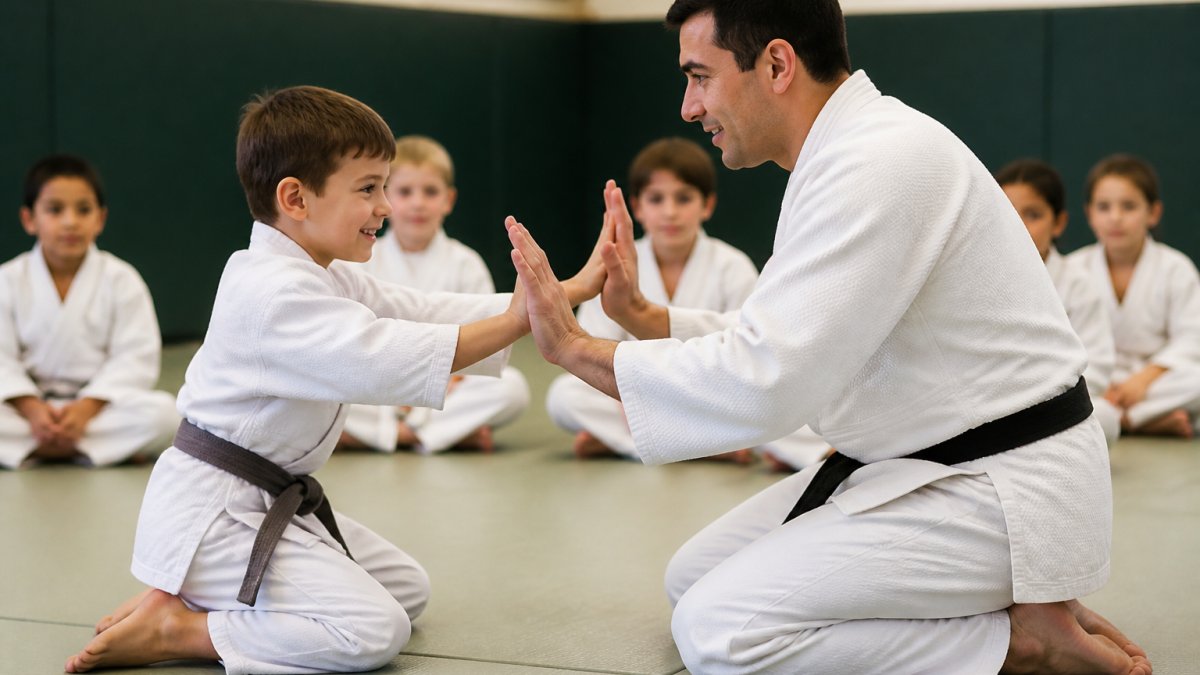
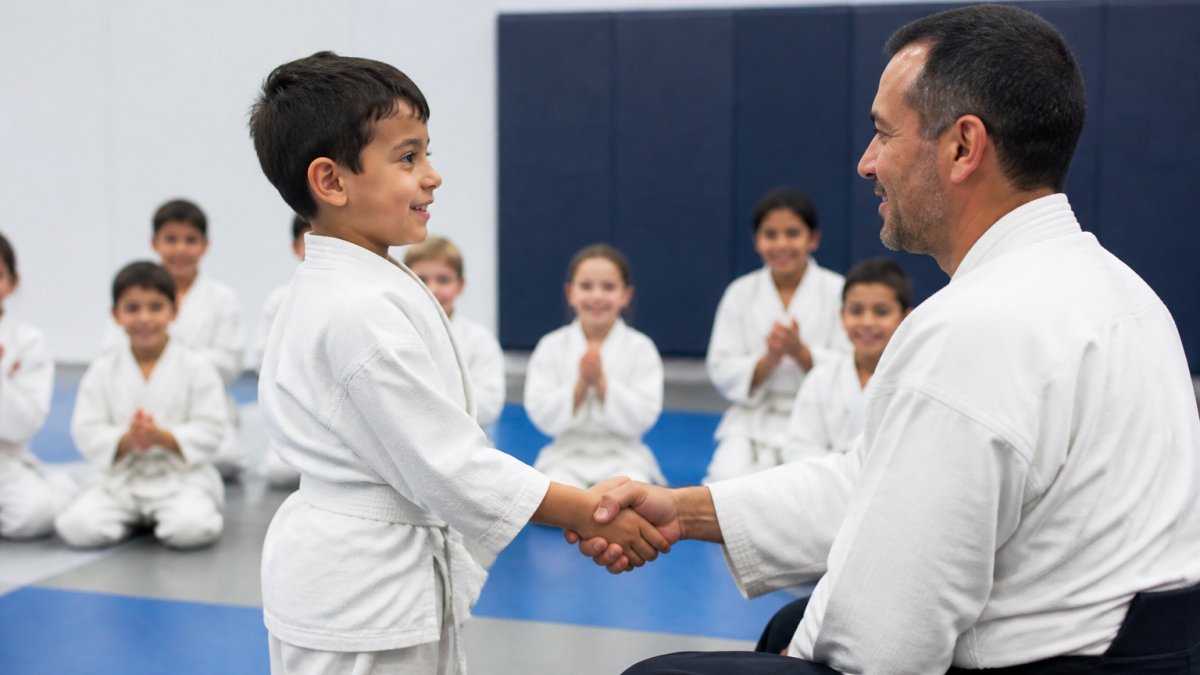
Family options matter for parents comparing programs for kids. Children's classes usually focus on awareness, boundaries, and confidence alongside basic technique, and many schools run parallel adult and youth sessions so parents can train at the same time. Our classes welcome all ages and experience levels, and beginners are never asked to keep up with advanced students.
What Beginner Classes Cost and How to Commit Without a Contract
Pricing for beginner self-defense classes varies by school, schedule frequency, and whether uniforms or gear are included. Rather than quote a single figure that wouldn't apply to your situation, here's the cost structure most schools use and how to compare them on equal footing.
The Common Pricing Models
Most beginner programs fall into one of four pricing structures:
- Monthly membership: A flat monthly rate, typically billed on the same date each month. This is the most common model for ongoing classes.
- Per-class or drop-in fee: A set fee for each session, often higher per class than a membership but with no commitment.
- Session-based packages: A block of classes (for example, an eight-week beginner course) paid upfront. Good for testing a program without an open-ended commitment.
How to Compare Schools on Total Cost Per Session
Headline price is misleading. Compare on cost per session instead:
- Divide the monthly rate by the number of classes you'll actually attend. A $150 monthly membership that offers eight classes is about $19 per class if you attend all eight, but about $38 per class if you only make four.
- Add equipment costs. Uniforms, gloves, shin guards, and mouthguards are often billed separately. Ask whether loaner gear is available for beginners before you buy anything.
- Factor in trial and registration fees. Some schools charge a one-time sign-up or insurance fee on top of monthly dues.
- Check what's included. Some memberships bundle open-mat sessions, seminars, or online instruction; others charge extra.
Contract and Cancellation Questions to Ask
No-contract arrangements are worth prioritizing as a beginner. A month-to-month setup lets you test whether the schedule, the instructor, and the training style actually fit before you commit to anything long-term. Ask specifically:
- What is the notice period to cancel or pause a membership?
- Is any portion of a payment refundable if I stop attending?
- Is there a minimum commitment term, and what happens if I move or get injured?
Budget-Friendly Alternatives
If cost is a barrier, several lower-cost entry points exist. Community recreation centers and parks-and-recreation departments often run beginner self-defense workshops at lower rates than private schools. Nonprofit organizations and university continuing-education programs sometimes offer short courses. Many schools also run free or low-cost introductory seminars a few times a year, ask to be put on a notification list.
Frequently Asked Questions
Do I need to be fit before starting self defense classes for beginners?
No. Beginner classes are built for people who have never trained before, and most programs start with basic conditioning, footwork, and simple techniques that build fitness as you go. Instructors typically let you work at your own pace and scale drills to your current ability. If you have an injury or health condition, tell the instructor before class so they can offer modifications. Showing up consistently matters far more than arriving in shape.
What should I wear to my first beginner self-defense class?
Comfortable athletic clothing you can move and stretch in, plus clean indoor training shoes or bare feet depending on the school's mat policy. Avoid jewelry, watches, and anything with hard edges that could catch or scratch a training partner. Bring a water bottle and a small towel. Many schools loan a uniform or gi for the first few sessions, so ask before buying gear. A trial pass is the easiest way to confirm what the class requires.
How long does it take to learn basic self-defense?
Most beginners pick up core defensive skills, situational awareness habits, and escape techniques within a few months of consistent training, usually two to three sessions per week. Realistic timelines vary because progress depends on attendance, the style you choose, and how much you practice. Basic competence is a milestone, not a finish line. Expect steady improvement in confidence and technique over the first year rather than a fixed endpoint.
Are self-defense classes safe for beginners?
Reputable schools treat safety and consent as core parts of training. Beginners typically start with controlled drills, light contact, and clearly explained boundaries before any sparring. Instructors should demonstrate techniques first, match partners by size and experience, and stop any drill that feels unsafe. Speak up if something hurts or feels wrong. A good school will never pressure a new student into full-contact work before they are ready.
Which martial art is best for beginners who want practical self-defense?
There is no single best style, but systems that combine striking and grappling, such as Krav Maga, jiu-jitsu, boxing, and blended martial arts programs, tend to cover the most real-world scenarios. The best choice is usually the school closest to you with qualified instructors, beginner-friendly classes, and a training culture you feel comfortable in. Visit a class, watch how instructors coach, and check class reviews and star ratings before committing.
How often should beginners attend self-defense classes?
Two to three sessions per week is a common starting point for beginners. That frequency builds muscle memory without overwhelming your schedule or your body. Attending once a week still helps but slows progress noticeably. If your work hours are irregular, look for schools with flexible class times or open mat sessions so you do not lose your spot when you miss a class.
Starting something new takes nerve, and the hardest part is usually the first phone call. If you're ready to move past the guesswork, Goshinkan Jujitsu Dojo offers expert instructors, a training environment built on camaraderie and personal growth, and classes that welcome every age and skill level. Book a free class and see what beginner training actually feels like.