 ultimate-guide
Is Martial Arts Good for Kids? A Parent's 2026 Guide
Table of Contents
- Is Martial Arts Good for Kids? What Parents Need to Know
- The Real Benefits of Martial Arts for Kids: A Numbered Look
- The Best Age for Kids to Start Martial Arts
- Martial Arts for ADHD Focus: What Parents Should Know
- How to Choose a Martial Arts School for Kids
- Safety, Injury Risk, and Realistic Commitment
- Frequently Asked Questions
Last Updated: October 15, 2026
Is Martial Arts Good for Kids? What Parents Need to Know
Is martial arts good for kids? For most children, yes, and the reasons go well beyond self-defense. At Goshinkan Jujitsu Dojo, we've watched shy beginners grow into focused, respectful students.
That second part matters. The honest answer to whether martial arts is good for kids is: it depends on the school, the instructor, and your child's readiness.
The Real Benefits of Martial Arts for Kids: A Numbered Look
The benefits of martial arts for children fall into three broad categories: mental discipline, social-emotional growth, and physical conditioning. Most kids experience improvements across all three within a few months of consistent training.
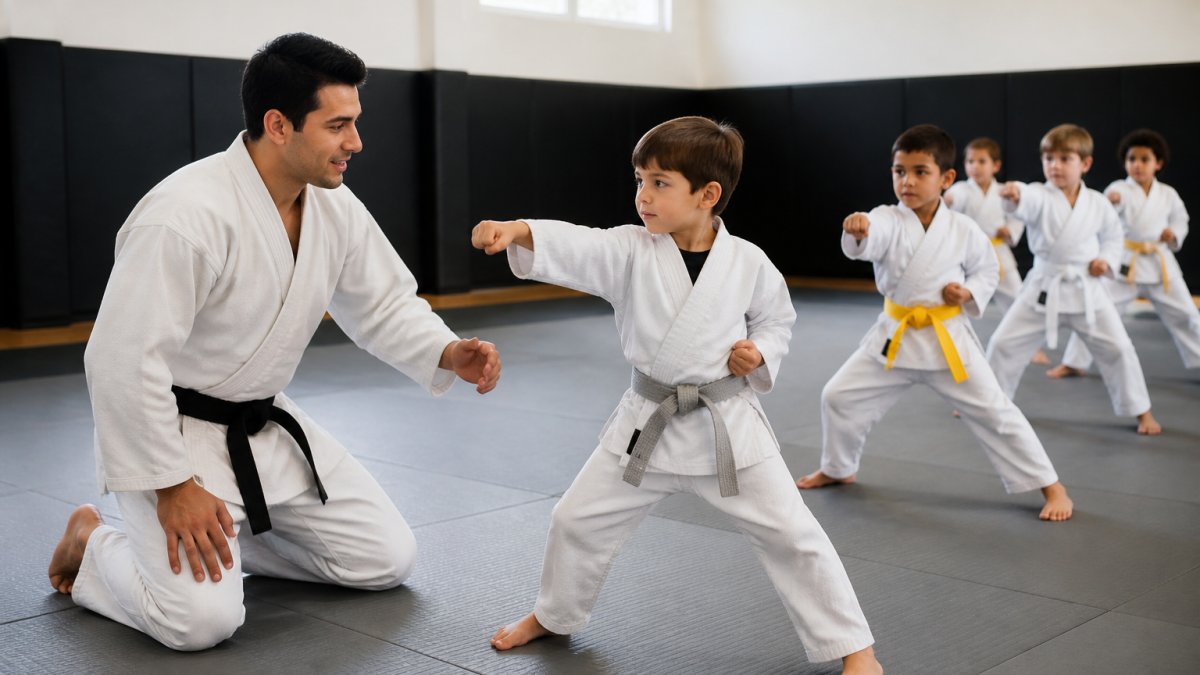
Discipline, Self-Control, and Focus
Discipline is the benefit parents ask about most, and it's the one that shows up fastest. A typical class asks kids to stand still, follow multi-step instructions, and repeat a technique until it's right.
For kids who struggle to sit through homework or who bounce off the walls after school, this structured repetition gives pent-up energy a healthy outlet while training concentration.
Confidence, Respect, and Social Skills
Confidence in martial arts comes from competence, not trophies. When a child finally lands a clean kick or earns a new colored belt, they've proven to themselves that effort produces results.
Respect and humility are built into the culture. Students bow to instructors and training partners, and higher belts are expected to help beginners. That structure teaches teamwork and responsibility in a way few other activities do.
Physical Fitness, Coordination, and a Healthy Outlet
Martial arts develops strength, flexibility, balance, and motor skills at the same time. Kids who feel clumsy in team sports often thrive here because the progress is individual and measurable.
The full-body conditioning also supports emotional well-being. Physical activity releases stress, and for anxious or high-energy kids, a good class can be the most calming hour of their week.
The Best Age for Kids to Start Martial Arts
Most children are ready to start martial arts between ages 5 and 7, when they can follow multi-step directions and stay engaged for a full class.
The best age for kids to start martial arts isn't a fixed number, though. It's a readiness question that changes with each developmental stage. Here's how readiness, class format, and expectations typically shift by age.
Ages 3 to 4: Play-Based Introduction
At this stage, attention spans often run only 5 to 10 minutes per activity, and coordination is still developing.
Signs a child is ready:
- Can separate from a parent for a 30-minute class without a meltdown
- Follows one- or two-step directions ("touch your toes, then stand up")
- Can take turns in a group of 6 to 10 kids
If a school's 3-year-old class looks like a scaled-down adult class with lines and formal bows, that's a mismatch. Look for short activity blocks, frequent water breaks, and instructors who kneel to a child's eye level.
Ages 5 to 7: The Classic Starting Window
This is when most children can handle a structured 45- to 60-minute class. They can follow multi-step instructions, remember a short sequence of techniques, and understand the difference between practice and play.
Signs a child is ready:
- Follows two or three instructions in a row
- Stays with one activity for 30 minutes
- Responds to an adult other than a parent giving direction
At this age, progress is measured in small wins: standing still during a drill, remembering a form, earning a first stripe or belt. Expect coordination to lag behind enthusiasm, that's normal.
Ages 8 to 12: Fastest Technical Progress
School-age students tend to progress fastest because they can handle more complex technique, take real ownership of their training, and set goals.
Signs a child is ready for a more serious program:
- Can self-correct when reminded
- Handles losing or not getting a belt promotion without quitting
- Shows interest in improving a specific skill
This is also the age when some kids shift from recreational classes to competition-focused training. That's a family decision, not a requirement, recreational tracks produce the same discipline and fitness benefits without the travel and pressure.
Ages 13 and Up: Teen Programs and Identity
Teens often get the most from martial arts when the program treats them as young adults. Look for teen-only classes or advanced tracks, opportunities to help teach beginners, and instructors who explain the "why" behind techniques. Teens who stick with training through high school often cite the same reasons adults do: stress relief, a non-team-sport identity, and a skill that keeps improving.
If Your Child Isn't Ready Yet
Waiting six months rarely hurts. Starting too early, on the other hand, can sour a kid on martial arts for years. If your child fails most of the readiness signs for their age, consider a general movement or gymnastics class first, then revisit martial arts later. The door stays open.
Martial Arts for ADHD Focus: What Parents Should Know
Martial arts for ADHD focus is one of the most common reasons parents seek out a dojo, and the structure genuinely helps many kids. Classes break movement into short, clear steps, provide immediate feedback, and reward self-control. That format matches how many children with attention challenges learn best.
A few practical notes before you sign up:
- Look for instructors experienced with energetic or easily distracted students.
- Ask about class size. Smaller groups mean more individual correction.
- Watch a class first. Good instructors redirect without shaming.
How to Choose a Martial Arts School for Kids
Learning how to choose a martial arts school for kids comes down to three things: instructor quality, class structure, and culture. A great program is patient, safety-conscious, and honest about what training can and can't do.
Start by visiting in person. Watch how instructors speak to students, how they handle a kid who's struggling, and whether older students seem respectful or bored. Then ask direct questions.
Questions to Ask (and Red Flags to Watch For)
Bring these to your first visit:
- What's your instructor-to-student ratio?
- Are instructors background-checked and certified?
- Can we try a free class before committing?
Red flags include pressure to sign a long contract on day one, instructors who yell or use fear, no trial class, and vague answers about safety or supervision.
| What to Check | Green Flag | Red Flag |
|---|---|---|
| Instructor tone | Calm, corrective | Yelling, shaming |
| Trial class | Free or low-cost | None offered |
| Commitment | Month-to-month | High-pressure contract |
| Class size | Small, supervised | 30+ kids, one adult |
| Safety | Mats, first aid, rules | No visible precautions |
At Goshinkan Jujitsu Dojo, we welcome beginners of every skill level, and let families try a class before deciding.
Safety, Injury Risk, and Realistic Commitment
Martial arts is generally safe for children when classes are well supervised and matched to age and ability. Most injuries are minor bumps and strains, and good schools reduce risk with padded mats, warm-ups, controlled sparring, and clear rules. But "generally safe" isn't the same as "risk-free," and the commitment, in time and money, is bigger than most brochures suggest.
Injury Risk: What the Research and Coaches Actually See
Across youth sports, martial arts tends to sit in the moderate range for injury risk, lower than contact sports like football or ice hockey, higher than non-contact activities like swimming or track.
Risk goes up when:
- Sparring starts before a child has solid fundamentals
- Protective gear is missing, ill-fitting, or optional
- Class sizes are large enough that instructors can't watch every pair
Risk goes down when schools use padded floors, require mouthguards and headgear for any contact work, teach falling and breakfalling early, and match sparring partners by size and experience, not just belt color.
Questions to Ask About Safety Before You Enroll
- What's your injury protocol, and is a first-aid kit on the floor during every class?
- Are instructors certified in CPR and first aid?
- At what age and belt level does sparring begin, and is it optional?
If your child has a heart condition, prior injury, or a developmental or neurological diagnosis, talk to your pediatrician before enrolling. Most kids can participate, but a clinician who knows your child can flag specific concerns a school can't.
Realistic Costs: What Families Actually Pay
Monthly tuition at a typical school generally runs somewhere in the range of a mid-range extracurricular. Exact numbers vary widely by region, style, and whether the program is recreational or competition-focused, so ask directly rather than assuming.
Budget for these categories, not just tuition:
- Monthly tuition, the base fee, often discounted for a 6- or 12-month commitment
- Registration or enrollment fee, a one-time charge at sign-up
- Uniform and belt, usually required, sometimes included
Ask for the total first-year cost in writing. A school that won't itemize is a school that's hiding something.
Schedule and Commitment: What One to Two Classes a Week Really Looks Like
Most beginners start with one to two classes per week, each 45 to 60 minutes. That's roughly 1.5 to 2 hours per week of class time, plus practice at home if your child wants to progress faster.
A realistic weekly rhythm for a beginner:
- One weekday evening class (after school, before dinner)
- One weekend morning class, or a second weekday if the schedule allows
- 10 to 15 minutes of at-home practice, two or three times a week
Expect the first month to feel like a logistics puzzle. Once the routine settles, most families find it fits. If it doesn't fit after 6 to 8 weeks, that's useful information, not a failure.
The False-Security Caveat
Self-defense training can create a false sense of security if a child believes a few moves make them invincible. Good instructors teach awareness and de-escalation first, technique second, and are honest that a child's best defense is usually avoiding the situation and telling a trusted adult.
Frequently Asked Questions
At what age should a child start martial arts?
Most schools offer preschool classes starting around age 3 or 4, but readiness matters more than a birthday. A child who can follow two-step directions, take turns, and stay with an activity for 10 to 15 minutes is usually ready. Ages 5 to 7 often work well for structured group classes. If your child is shy or anxious, look for a program that lets them watch a class first and ease in at their own pace.
Is martial arts effective for children with ADHD?
Many parents report that martial arts for ADHD focus works because classes break movement into short, clear steps with immediate feedback. Kids get to move their bodies while practicing concentration, which can help with pent-up energy and impulse control. Results vary by child and by instructor quality. Talk with the school about class size, structure, and whether instructors have experience with kids who need extra support.
Are there risks associated with martial arts for young children?
Injury risk in kids' martial arts is generally low when classes are age-appropriate and well supervised. Most bumps happen during sparring or falling drills. Reduce risk by choosing a school that uses padded mats, requires safety gear for contact work, matches partners by size and skill, and keeps a low student-to-instructor ratio. Ask how the school handles injuries and whether sparring is optional for beginners.
How do I choose a martial arts school for kids?
Visit in person and watch a full class. Check instructor credentials and how coaches speak to students. Ask about monthly cost, schedule flexibility, and cancellation policy before signing anything. A good school will offer a free or low-cost trial class so your child can test the fit. Trust your gut: if the environment feels pressured or chaotic, keep looking.
Every parent wants their child to feel capable, focused, and confident, and finding the right program is the hard part. At Goshinkan Jujitsu Dojo, our expert instructors, community-focused environment, and small, welcoming classes help kids build discipline and self-confidence while making real friends. Book a free class and see how your child responds before you commit to anything.