 how-to
Why Martial Arts Helps With Confidence: A Parent's Guide
Table of Contents
- How Martial Arts Builds Confidence: The Core Mechanisms
- Self-Defense and Confidence: Feeling Safer Changes How You Carry Yourself
- Martial Arts Benefits for Kids: Focus, Discipline, and Body Awareness
- Martial Arts for Shy Kids: A Pace That Respects Their Comfort Zone
- Martial Arts and Self-Esteem: Progress, Goals, and Emotional Control
- A Step-by-Step Guide to Building Confidence Through Training
- Realistic Timelines, Progress Tracking, and When Martial Arts May Not Help
- Frequently Asked Questions
Last Updated: October 19, 2026
How Martial Arts Builds Confidence: The Core Mechanisms
Confidence in martial arts grows from repeated proof: a student tries a technique, fails, adjusts, and repeats until it works, teaching the brain what no pep talk can: "I can handle hard things."
That shift is why martial arts helps with confidence, and it follows a predictable pattern.
The mechanism comes down to three things:
- Small wins stack up. Each belt stripe, each clean throw, each successful escape adds evidence.
- Failure is built in. Everyone taps out or misses a step. Students learn that mistakes don't end anything.
- The body teaches the mind. Standing tall, breathing steady, and moving with purpose changes how a person feels.
Self-Confidence Versus Self-Esteem: What's the Difference?
Self-esteem is how much you value yourself overall. Self-confidence is your belief that you can handle a specific task.
The two overlap but grow differently: a child can feel good about themselves and still freeze when asked to speak in class.
For parents, self-belief runs through competence, not compliments. Praise without skill rings hollow; skill without praise still builds real belief.
Self-Defense and Confidence: Feeling Safer Changes How You Carry Yourself
The self-defense and confidence link is physical before it's mental.
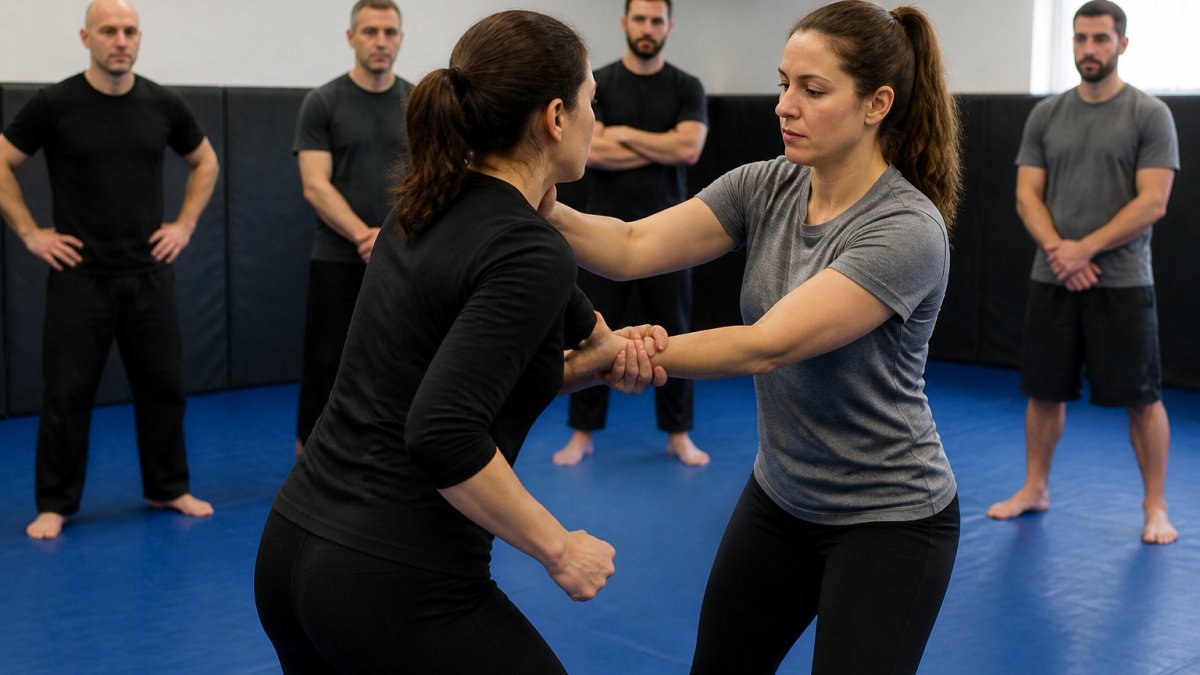
We teach beginners that self-defense starts with awareness, not fighting. Notice the exit. Keep distance. Trust your gut. Those habits alone change how a student moves through the world.
The confidence boost doesn't come from expecting a fight. It comes from knowing you have options. That peace of mind shows up in small ways:
- Walking to the car without checking over a shoulder
- Speaking up when something feels wrong
- Staying calm instead of panicking
The National Center for Victims of Crime notes that personal safety skills and situational awareness are core parts of prevention education.
Martial Arts Benefits for Kids: Focus, Discipline, and Body Awareness
The martial arts benefits for kids show up fast.
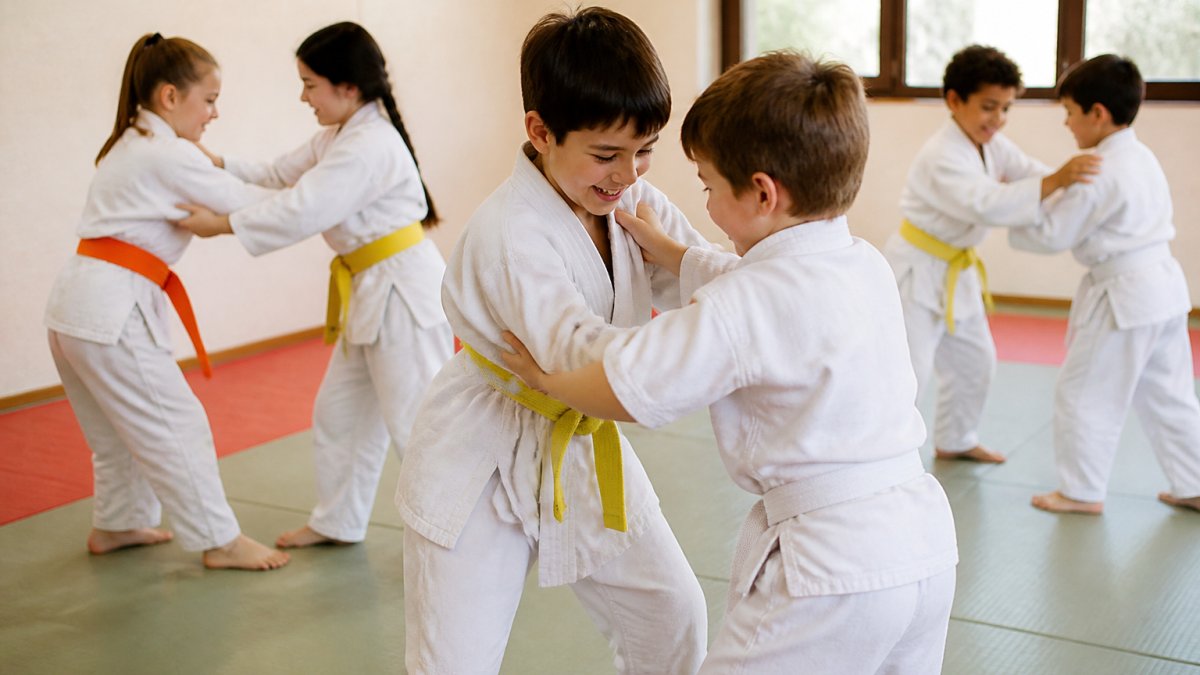
A kids' class runs on structure: students bow in, line up, follow multi-step instructions, wait their turn, and repeat drills.
Here's what that looks like in concrete terms, broken down by age band:
- Ages 4-6: The win is following a two- or three-step direction ("bow, step back, sit") without leaving the mat. That's the foundation of classroom readiness.
- Ages 7-9: The win is sustaining attention through a 30- to 45-minute class and accepting a correction without shutting down. This is where frustration tolerance starts to form.
- Ages 10-12: The win is self-correcting, noticing a mistake and fixing it without an adult pointing it out. That's the seed of independent discipline.
Body awareness grows alongside focus. Kids learn where their limbs are, how to fall safely, and how to control their strength; coordination improves because every technique asks the body to do two things at once.
Physical Fitness, Coordination, and the Confidence That Follows
Fitness and confidence connect through the body. A child who can do a push-up, hold a stance, and keep up in class feels capable. That feeling travels.
Martial arts builds strength, balance, and stamina without team tryouts.
A few concrete markers parents can watch for in the first three months:
- Holding a plank or stance for a few seconds longer than last month
- Landing a fall without flinching or bracing awkwardly
- Keeping balance on one foot through a drill
None require a trophy; all are evidence a child can point to, and that evidence turns a good class into a durable belief: I can get better at hard things.
Martial Arts for Shy Kids: A Pace That Respects Their Comfort Zone
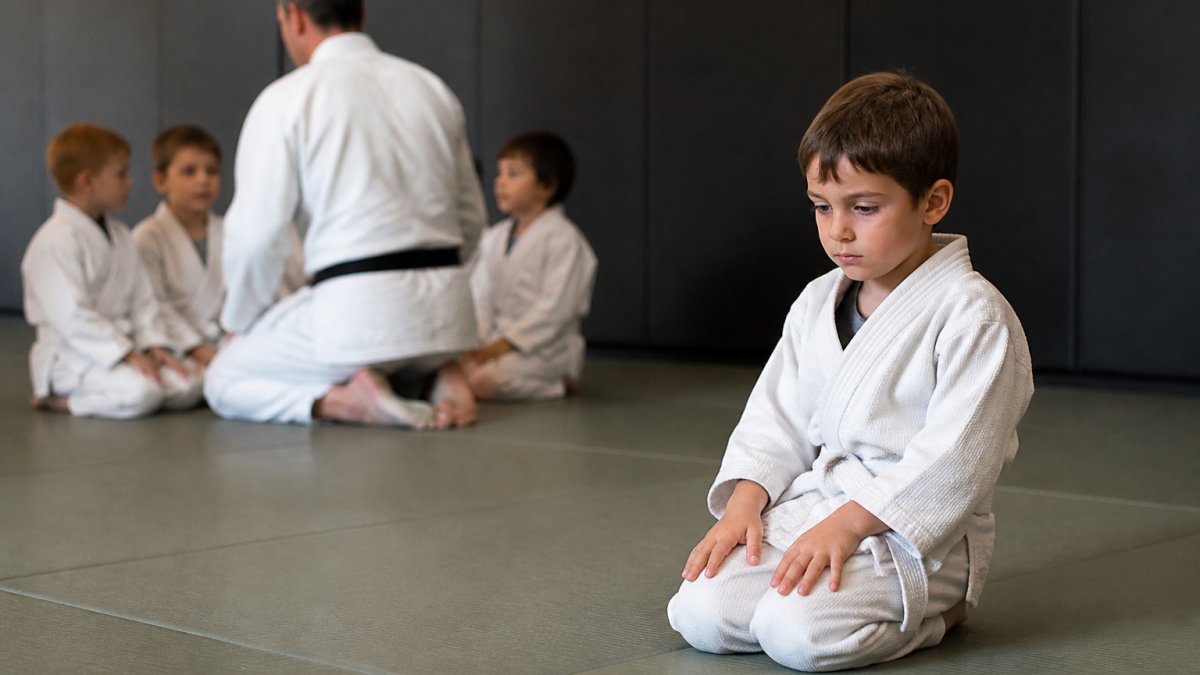
Shy kids thrive in martial arts when the environment respects their pace. A good program doesn't force a quiet child to lead a group on day one.
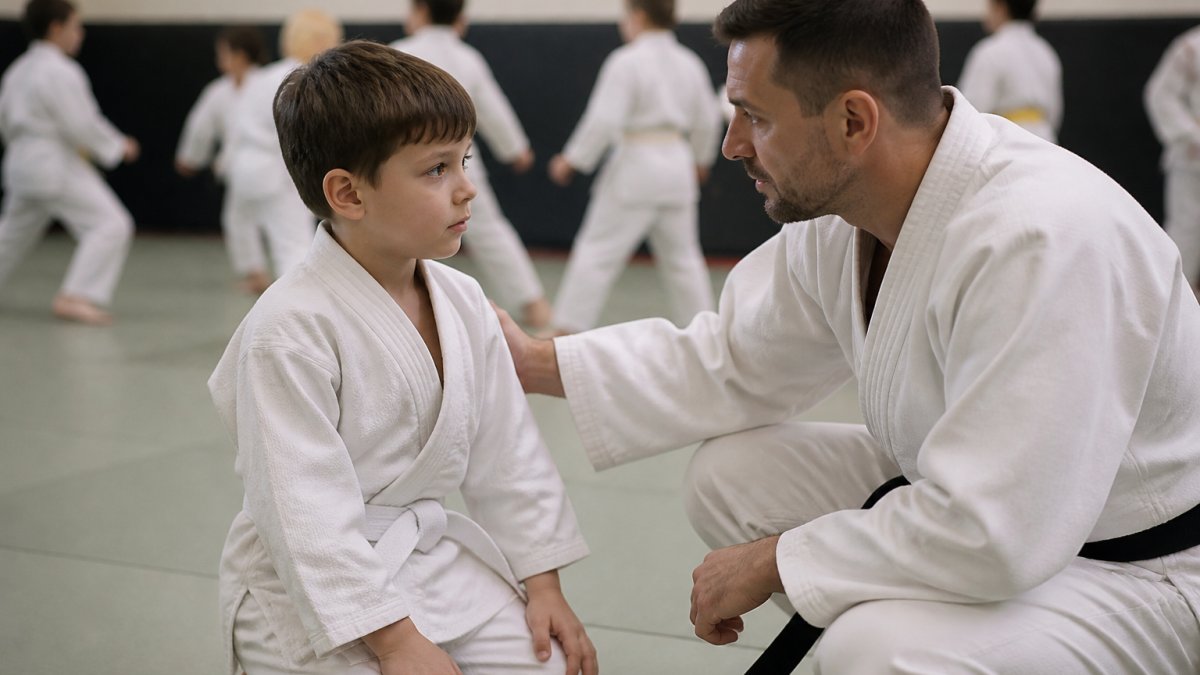
Martial arts for shy kids works because the structure does the social heavy lifting. Students don't have to start conversations. They bow, partner up, and drill.
Here's what a supportive pace looks like:
- Pairing a new student with a patient partner
- Letting them observe before joining a drill
- Praising effort out loud, not just results
The belonging comes later, and it comes naturally. Shared struggle builds friendship faster than icebreakers.
Martial Arts and Self-Esteem: Progress, Goals, and Emotional Control
Martial arts and self-esteem connect through measurable progress. Dojo goals are clear: learn this technique, earn this stripe, test for this belt. Students always know what's next.
That clarity is powerful. A child who struggles in school, where progress feels vague, can point to a belt and say, "I earned that." Visible achievement builds self-respect.
Emotional control gets trained alongside the techniques: a student who gets frustrated after a missed move learns to breathe, reset, and try again.
Staying Calm Under Pressure and Building Resilience
Resilience is practiced, not preached. Sparring and partner drills put students in mildly stressful situations on purpose: heart rate rises, mistakes happen, nothing bad follows.
Over time, the body learns that pressure is survivable. That lesson carries into tests, performances, and hard conversations. Patience grows too, because no one earns a belt overnight.
A Step-by-Step Guide to Building Confidence Through Training
Here's the practical path we recommend to families who want confidence to grow on purpose, not by accident. The American Psychological Association describes confidence as a skill built through mastery experiences, and this sequence follows that idea.
- Pick a style and a school that fits. Watch a class before signing up. Look for patient instructors and small groups.
- Set a first goal that's close. Aim for one month of consistent attendance, not a black belt.
- Attend on a fixed schedule. Consistency beats intensity. Two classes a week, every week.
- Track one skill at a time. Ask the instructor what to practice and how to know it's improving.
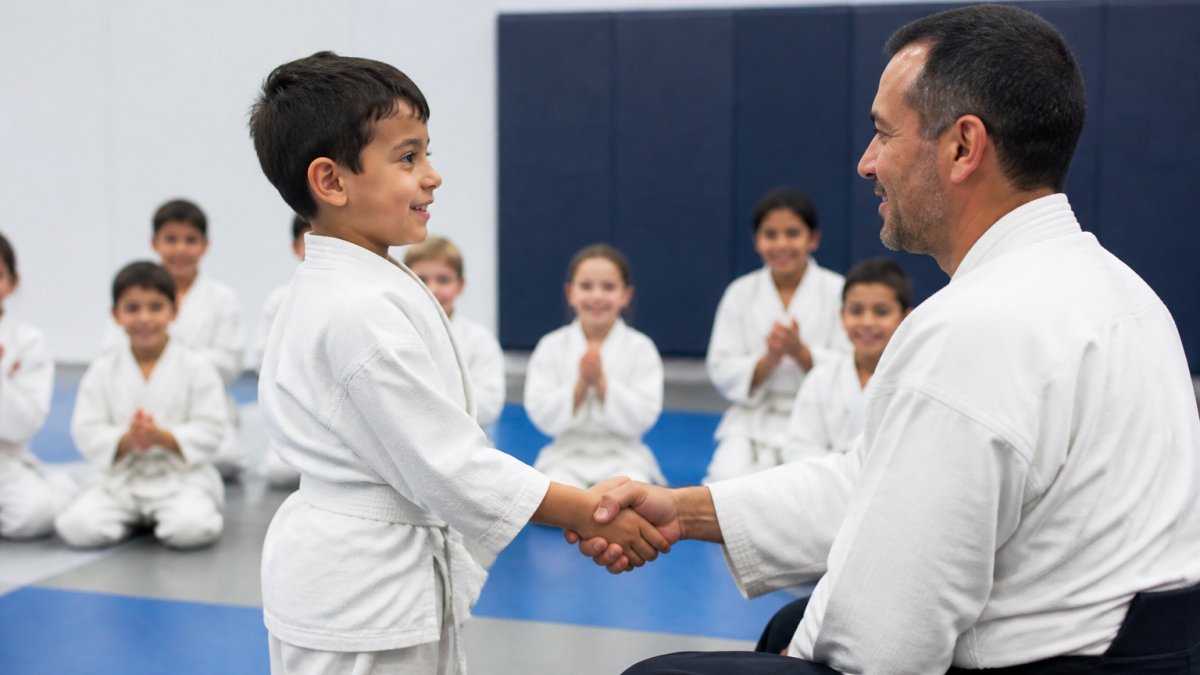
- Celebrate small milestones. First stripe, first clean fall, first time leading a warm-up.
- Review progress monthly. Write down one thing that got easier. That list becomes proof.
- Add a challenge when ready. A new technique, a partner drill, or a friendly in-house event.
| Step | What to Do | How Often | What It Builds |
|---|---|---|---|
| 1 | Choose a supportive class | Once | Comfort and trust |
| 2 | Set a near-term goal | Once | Direction |
| 3 | Attend consistently | 2x per week | Discipline |
| 4 | Track one skill | Weekly | Focus |
| 5 | Celebrate milestones | Monthly | Self-belief |
| 6 | Review progress | Monthly | Proof of growth |
| 7 | Add a challenge | When ready | Resilience |
Realistic Timelines, Progress Tracking, and When Martial Arts May Not Help
Most beginners notice a confidence shift in one to three months; bigger changes, like speaking up in groups or handling pressure calmly, usually take six months to a year of steady training. Progress isn't linear, and plateaus are normal, often a sign the durable gains are being built.
Here's an honest, phase-by-phase timeline:
- Weeks 1-4: Novelty and nerves. The confidence gain here is mostly showing up. A student who was terrified to walk in and now walks in on their own has already made progress.
- Months 2-3: First real skill wins. A clean technique, a first stripe, a partner drill that clicks. This is where task-specific self-confidence starts to accumulate.
- Months 4-6: The plateau. Techniques get harder, corrections get more specific, and the easy wins dry up. Confidence can dip if the student reads the plateau as failure; instructors who name it out loud prevent that dip.
Track progress in ways you can see and measure:
- Attendance consistency: Did you hit your target number of classes each month? The single most predictive indicator of long-term progress.
- Skill checkpoints: Ask the instructor for one specific, observable skill per month (e.g., "keeps hands up during partner drills" or "recovers balance after a push").
- A short journal of weekly wins: One sentence per week. Over three months, that's a dozen pieces of evidence.
Martial arts may not improve confidence in every case. If a student is pushed too hard, mocked for mistakes, or placed in a class that doesn't fit, training can backfire, confidence grows in supportive conditions and shrinks in harsh ones. Conditions that undermine it include:
- Instructors who correct with criticism rather than instruction. "That was wrong" teaches fear; "try it this way" teaches skill.
- Sparring that outpaces skill. Hard contact before a student has defensive fundamentals teaches flinching, not toughness.
- Constant comparison to other students. Rank-referenced feedback ("you're behind the others") erodes the self-referenced progress that makes martial arts work.
Choosing a Supportive Class and What to Ignore
Choose a class where instructors know every student's name and correct mistakes without criticism. Ignore flashy marketing, trophy walls, and promises of fast results. What matters is the culture on the mat.
Ask these questions before you enroll, and listen for specific answers:
- How large are beginner classes, and what's the student-to-instructor ratio? Small groups mean corrections a beginner can actually use.
- How do instructors handle a nervous or struggling student? Look for a described process, pairing with a patient partner, extra repetition, a private word, not a slogan.
- What does a typical first month look like? A good school can describe it week by week.
- What are the safety practices for sparring and contact drills? Gear, progression rules, and supervision should be easy to explain.
The answers tell you more than any brochure: a supportive class makes confidence a natural byproduct of good teaching, while a mismatched one quietly works against everything this article describes.
Frequently Asked Questions
How long does it take to feel more confident in martial arts?
Most beginners notice small shifts within four to eight weeks: standing taller, speaking up in class, or handling a frustrating drill without shutting down. Deeper confidence, the kind that carries into school or work, usually takes six to twelve months of consistent practice. Progress depends on how often you train, the quality of instruction, and whether the class sets clear, achievable goals. Tracking belt promotions, attendance streaks, and specific skills mastered gives you concrete markers instead of vague feelings.
Can martial arts help shy kids become more confident?
Yes, when the environment is structured well. Shy kids often thrive in martial arts for shy kids because the social interaction is built into a predictable routine: bow in, line up, drill with a partner, bow out. There is no pressure to perform socially, only to participate in the activity. Small class sizes, patient instructors, and partner work that rotates gradually help a shy child build comfort without feeling singled out. Parents should look for schools that let beginners observe a class first and pair new students with experienced, calm partners.
Does martial arts improve self-esteem or just self-defense skills?
It does both, but they develop differently. Self-defense and confidence grow together because knowing how to protect yourself reduces anxiety and changes posture and eye contact. Martial arts and self-esteem connect through achievement: earning a stripe, mastering a technique, or helping a junior student all feed self-respect. The key distinction is that self-esteem comes from internal progress, not trophies. A good school emphasizes personal goals over competition, which keeps self-esteem tied to effort rather than external validation.
What should parents look for in a supportive martial arts class?
Look for instructors who correct mistakes calmly and praise specific effort, not just results. Class sizes should be small enough that beginners get individual attention. We invite you to book a free class so your child can test the environment before committing. Check that the curriculum includes partner drills, which build social interaction and belonging, and that promotions are based on consistent attendance and skill checks. A supportive dojo feels structured but not rigid, and instructors should welcome questions from parents.
Building confidence takes time, patience, and the right environment. If you're looking for a place where your child can grow at their own pace, Goshinkan Jujitsu Dojo offers expert instructors, small supportive classes, and a community that celebrates every milestone. Our programs welcome all ages and skill levels, with a focus on discipline, perseverance, and real self-defense skills. Book a free class with Goshinkan Jujitsu Dojo and see how martial arts helps with confidence firsthand.