 ultimate-guide
Benefits of Martial Arts for Adults: A 2026 Guide
Table of Contents
- Why More Adults Are Starting Martial Arts in 2026
- Physical Benefits of Martial Arts for Adults
- Mental Benefits of Martial Arts for Adults
- Martial Arts for Beginners Adults: Choosing Your Style
- How Often Should You Do Martial Arts?
- Staying Safe: Injury Risk and Training Barriers
- Frequently Asked Questions
Last Updated: October 21, 2026
Why More Adults Are Starting Martial Arts in 2026
Adults are walking into dojos in record numbers, and they are not all chasing black belts. The benefits of martial arts for adults stretch well beyond fighting skills.
At Goshinkan Jujitsu Dojo, we see this shift every week. The CDC's physical activity guidelines are clear that adults need regular movement for long-term health, and martial arts training delivers it in a structured, social setting that many gym routines lack.
Below, we break down what the training does for your body and mind, how to pick a style, and what a realistic first year looks like.
Physical Benefits of Martial Arts for Adults
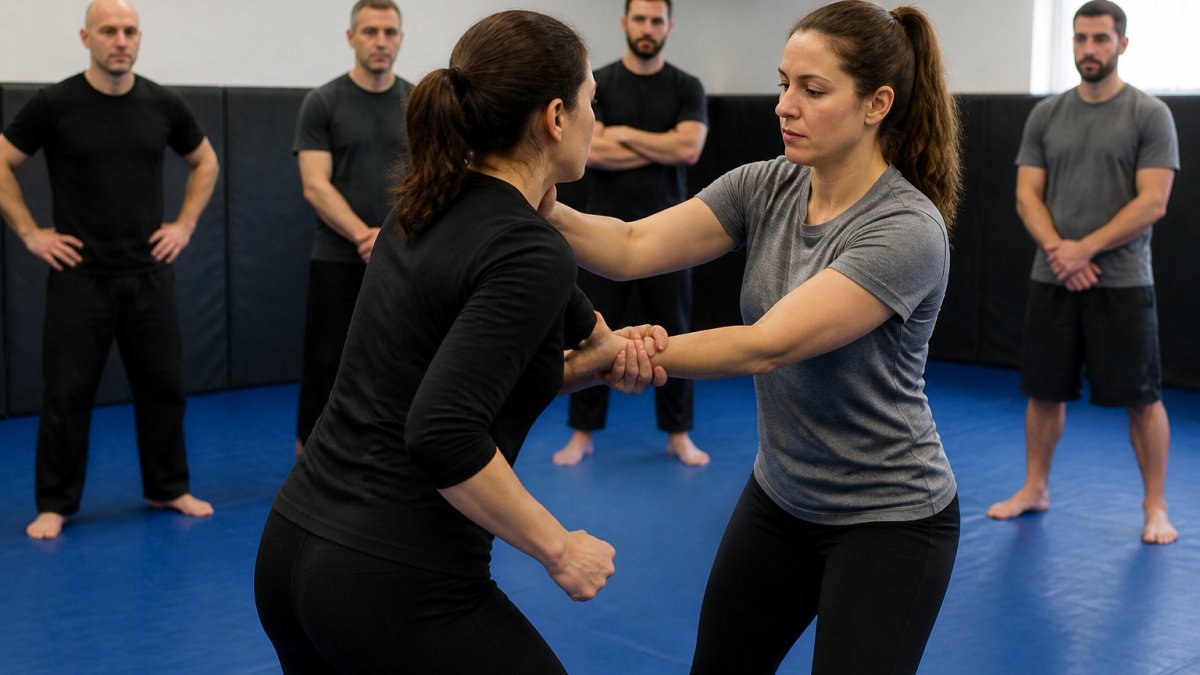
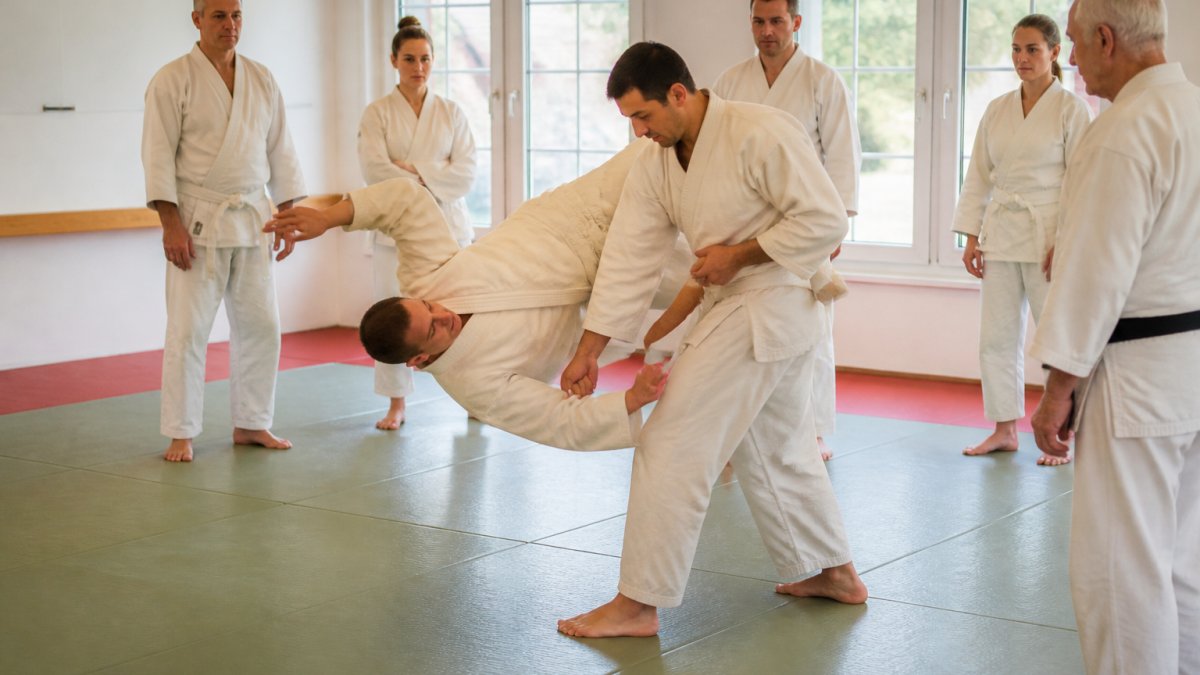
The physical benefits of martial arts for adults show up faster than most people expect, and they come from training structure rather than magic. A typical class alternates short bursts of movement with technique drills and partner work, essentially interval training wrapped in skill practice.
Cardio, Strength, and Flexibility
Cardiovascular endurance improves because classes keep you moving in rounds. Either way, you are accumulating the kind of moderate-to-vigorous activity the CDC's physical activity guidelines recommend for adults, roughly 150 minutes of moderate activity or 75 minutes of vigorous activity per week, plus muscle-strengthening work on two or more days.
Strength comes from three sources: bodyweight work (push-ups, squats, bridges, holds), controlled partner drills, and the isometric tension of gripping, clinching, or holding a guard. You will not build a powerlifter's squat, but adults commonly notice better push-up capacity, grip strength, and core stability within two to three months.
Flexibility develops through warm-ups, kicks, hip openers, and the end-range positions techniques demand. Kicking styles ask a lot of the hips and hamstrings; grappling styles ask a lot of the hips, shoulders, and spine.
- Cardio: striking rounds and continuous drilling raise your heart rate and build endurance
- Strength: bodyweight work, partner resistance, and grip-intensive techniques condition muscles without heavy equipment
- Flexibility: consistent warm-ups and technique work improve hip, shoulder, and spine range of motion
Balance, Posture, and Healthy Aging
Balance and coordination are the quiet winners, with the clearest adult-specific payoff. Standing techniques, weight shifts, pivots, and footwork train your body to stay stable under changing forces.
Posture improves for a mechanical reason: good technique demands an upright, grounded stance. Instructors constantly cue head position, shoulder placement, and core engagement, so you spend an hour reinforcing posture you would otherwise forget by 3 p.m. at a desk.
For adults thinking about healthy aging, the combination matters more than any single benefit. The National Institute on Aging notes that balance and strength training are key for reducing fall risk in older adults, a reason many students start in their 40s and 50s rather than their 20s.
What Changes, and When
A realistic timeline keeps expectations honest. In the first two to four weeks, most adults notice better sleep, less stiffness, and soreness in muscles they forgot existed. By weeks six to twelve, cardio capacity and grip strength improve noticeably. By month six, balance and posture changes are visible to others; by the one-year mark you have a genuine fitness base plus a skill set.
Mental Benefits of Martial Arts for Adults
The mental benefits of martial arts for adults are just as real as the physical ones. Training demands your full attention, pushing daily worries to the background for an hour. Many students describe class as the one part of their week where their phone, inbox, and to-do list disappear.
Stress Relief and Focus
Stress relief comes from movement, deep breathing, and the focus required to learn a technique. You cannot mentally rehearse a work problem while someone demonstrates a throw. That forced presence works like active meditation, easing muscle tension and lowering the mental noise of a busy week, and improved concentration carries over into work and home life.
Confidence and Mental Resilience
Self-confidence grows from competence. Each new technique you execute, each sparring round you survive, and each belt you earn is proof you can handle a challenge. That resilience transfers to everyday life: you learn to stay calm under pressure because you have practiced it.
Martial Arts for Beginners Adults: Choosing Your Style
Martial arts for beginners adults starts with one honest question: what do you actually want? Self-defense, fitness, stress relief, and discipline point toward different styles, and picking the wrong one is the fastest way to quit. There is no single best art, only the best fit for your goals, body, and schedule.
Matching a Style to Your Goals
Use this decision guide before you sign up anywhere. The "contact level" column matters as much as the goal, because it tells you how much impact your body will absorb.
| Your Main Goal | Style to Consider | Contact Level | Why It Fits |
|---|---|---|---|
| Practical self-defense | Brazilian jiu-jitsu, Krav Maga, judo | Moderate to high (grappling or striking) | Focus on real-world control, escapes, and de-escalation |
| Fitness and cardio | Boxing, kickboxing, Muay Thai | Moderate to high (striking) | High-energy rounds that build endurance fast |
| Balance and calm | Tai chi, aikido | Low | Slow, controlled, mindful movement with joint-friendly loading |
| Discipline and tradition | Karate, taekwondo, judo | Low to moderate | Structured progression, forms, and belt systems |
| Full-body strength | Judo, Brazilian jiu-jitsu | Moderate to high (grappling) | Total-body conditioning from grips, throws, and ground work |
| Low-impact entry point | Tai chi, aikido, weapons-based arts | Low | Minimal jumping and impact; easier on knees and shoulders |
A few style-specific notes that the table cannot capture:
- Brazilian jiu-jitsu is grappling-heavy and ground-based. It is excellent for self-defense and strength, but it involves close contact and a learning curve around positional control. Adults with knee or shoulder issues should tell the instructor early so drills can be modified.
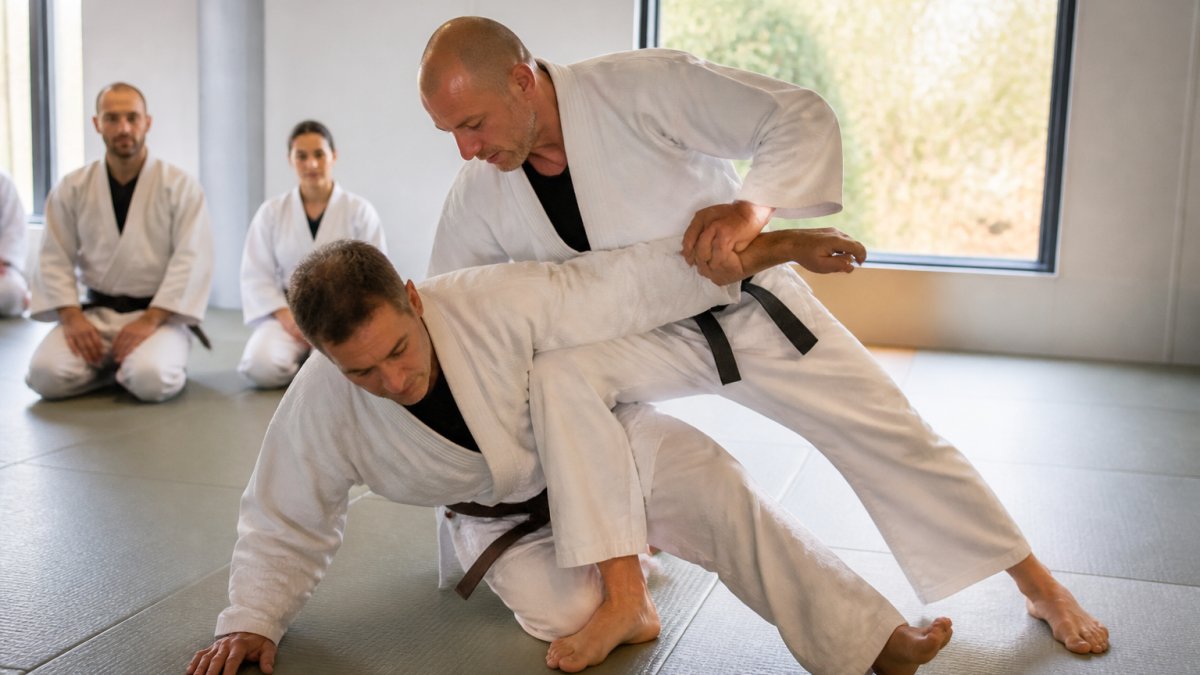
- Judo is throw-heavy and high-impact on the body over time. It builds balance, grip strength, and confidence, but breakfalls are a skill you must learn before you can train safely.
- Karate and taekwondo offer structured belt progression and strong balance and posture work. Sparring contact varies widely by school, so ask about the sparring rules before committing.
Visit a class before committing. Watch how the instructor treats beginners, because that tells you more than any brochure. Ask three questions: How is sparring handled? What is the injury rate among beginners?
What a Realistic First Year Looks Like
Expect the first month to feel awkward, everyone does. You will learn basic stances, footwork, and a handful of techniques, and you will probably be sore in muscles you forgot existed.
Belt progression varies by art and school, so treat any timeline with skepticism. Many karate and taekwondo schools award first rank in a few months, while Brazilian jiu-jitsu belts are typically measured in years.
How Often Should You Train
For most adults, two to three classes per week is the sweet spot. That frequency builds skill and fitness without overwhelming recovery and fits around a normal work schedule. Beginners often start with two sessions and add a third once their body adapts. Consistency beats intensity: three steady classes a week beat five exhausting ones followed by a month off.
Safety, Injury Risk, and Adapting Training
Injury risk is real but manageable. Most martial arts injuries come from training too hard too soon, skipping warm-ups, or ignoring a nagging joint. Good dojos teach you to tap early, communicate limits, and scale techniques to your body. Muscle soreness is normal; sharp pain is not and deserves rest and attention. Adults with prior injuries, joint replacements, or cardiovascular conditions should consult a healthcare professional before starting and tell the instructor about limitations so drills can be modified.
A Note on the Evidence
Research on martial arts and health is promising but uneven. Many studies are small, short, and group different styles together, so claims that "martial arts lowers anxiety" or "improves balance" are general trends, not guarantees for every style. A study of tai chi practitioners says little about boxing. The honest takeaway: benefits are well-supported in broad strokes, but your results depend on the style, the school, and how consistently you train.
How Often Should You Do Martial Arts?
How often should you do martial arts? For most adults, two to three classes per week is the sweet spot. That frequency builds skill and fitness without overwhelming your recovery, and it fits around a normal work schedule.
Consistency beats intensity. Three steady classes a week beat five exhausting ones followed by a month off. If your schedule is irregular, look for a dojo with flexible class times so a missed week does not become a quit.
Staying Safe: Injury Risk and Training Barriers
Injury risk is real but manageable. Most martial arts injuries come from training too hard too soon, skipping warm-ups, or ignoring a nagging joint.
Practical barriers stop more adults than injuries do: time, cost, nerves, and feeling out of place.
At Goshinkan Jujitsu Dojo, our instructors work with all ages and skill levels, and our community-focused environment means new students get support, not pressure.
Frequently Asked Questions
Why do most people quit martial arts?
Most adults quit because of unrealistic expectations, not because the training is too hard. Many sign up expecting rapid belt promotions or dramatic weight loss within weeks. When progress slows, motivation drops. Scheduling conflicts and nagging injuries also play a role, especially when training frequency is too aggressive at the start. Starting with two classes per week, choosing a style that matches your goals, and treating the first three months as a learning phase rather than a test all improve the odds you stick with it.
Can adults start martial arts with no experience?
Yes. Beginner adult programs assume zero background. Instructors teach stance, footwork, and basic techniques from the ground up, and most classes pair newcomers with experienced students. The main adjustment is pacing: your body needs time to adapt to new movement patterns. Expect muscle soreness in the first few weeks, and mention any old injuries to your instructor so drills can be adjusted. Adults who start with no experience often progress faster than they expect because they follow instruction carefully.
How often should you do martial arts to see results?
Two sessions per week is a solid starting point for most adults. That frequency builds cardiovascular endurance, supports strength and mobility gains, and keeps techniques fresh without overloading joints. Once your body adapts after six to eight weeks, three sessions per week accelerates progress in skill and conditioning. Rest days matter as much as training days, since muscle repair happens between classes. If you add strength training or running, keep total weekly sessions manageable to reduce injury risk.
Can martial arts help adults lose weight?
Martial arts burns calories through intervals of intense effort mixed with recovery, which supports weight management. A typical class combines warm-ups, technique drills, and conditioning that raise heart rate and work large muscle groups. Weight loss still depends on overall calorie balance, so training works best alongside sensible eating. The bigger advantage is consistency: classes are scheduled and social, which makes regular physical activity easier to maintain than solo workouts. Many adults also build muscle, which changes body composition even when the scale moves slowly.
Is martial arts safe for adults?
Martial arts is generally safe when taught with proper progression. Reputable schools warm up thoroughly, teach falling and landing skills before throws, and match training partners by size and experience. Sparring is usually optional and introduced gradually. The most common issues are sprains, strains, and soreness from doing too much too soon. Tell your instructor about prior injuries, use protective gear where required, and avoid training through sharp pain. Safety practices and controlled contact make the injury risk comparable to many recreational sports.
What are the mental benefits of martial arts for adults?
Adults commonly report lower stress, better focus, and greater self-confidence after regular training. The structured nature of classes, with clear techniques to practice and forms to memorize, gives the mind a single task to concentrate on, which works as a mental reset after a workday. Physical exertion also releases tension. Over time, progressing through skills and belt levels builds self-esteem. Many students describe improved sleep and a calmer response to daily pressure, though individual results vary.
Starting something new as an adult takes nerve, and the hardest part is often just walking through the door. If you have been meaning to get moving, build confidence, and find a community that supports you, we would love to help. Goshinkan Jujitsu Dojo offers expert instructors, a welcoming environment for every skill level, and training that builds strength, focus, and self-confidence. Book a free class and see what a single session does for you.