 how-to
How Martial Arts Builds Real Weight Loss Results
Last Updated: October 25, 2026
Quick Summary
Martial arts weight loss builds real results through intense physical activity, muscle development, and consistent training that creates a calorie deficit while improving how your body works between sessions. Training 3-4 times weekly combined with proper nutrition produces 1-2 pounds of sustainable weekly weight loss, with most people noticing changes within 4-6 weeks.
- Start with two classes per week for four weeks, then build to three classes weekly for sustainable long-term results
- A 60-minute martial arts session burns 300-1,000 calories depending on intensity and body weight
- Eat protein at each meal, avoid training on an empty stomach, and eat within two hours after training for optimal recovery
- Track waist circumference and fitness improvements alongside scale weight, as muscle development may offset fat loss initially
- Consistency beats intensity: training three times weekly for a year produces better results than sporadic high-frequency training
Table of Contents
- How Martial Arts Supports Weight Loss
- Calories Burned During Martial Arts Training
- Best Martial Arts for Weight Loss
- How Often to Train Martial Arts for Weight Loss
- How Many Calories Does Martial Arts Burn
- Nutrition and Diet for Martial Arts Weight Loss
- Setting Realistic Weight Loss Expectations
- Start Your Martial Arts Journey at Goshinkan
- Frequently Asked Questions
How Martial Arts Supports Weight Loss
Martial arts weight loss builds real results through a combination of intense physical activity, muscle development, and consistent training.
Weight loss happens when you burn more calories than you consume. Martial arts training creates this deficit through vigorous exercise.
The discipline required in martial arts also supports better nutrition choices. Students who commit to regular training tend to make healthier eating decisions. They see their training as an investment worth protecting through good habits.
Here's what makes martial arts different from typical gym workouts: you're learning a skill while getting fit. This dual focus keeps people engaged longer. Most fitness routines feel like work. Martial arts feels like progress toward mastery.
Calories Burned During Martial Arts Training
A typical martial arts training session burns significant energy. The exact amount depends on your body weight, training intensity, and the specific martial arts style you practice.
High-intensity martial arts classes demand constant movement. You're throwing strikes, executing kicks, practicing footwork, and performing defensive drills. Your heart rate stays elevated throughout the session.
The type of training matters. Sparring burns more calories than technique drills. Heavy bag work burns more than pad work. But even moderate-intensity classes create meaningful energy expenditure over time.
Recovery after training also matters. Your muscles repair and rebuild after intense exercise. This process requires energy.
Best Martial Arts for Weight Loss
Different martial arts styles offer different benefits for weight loss.
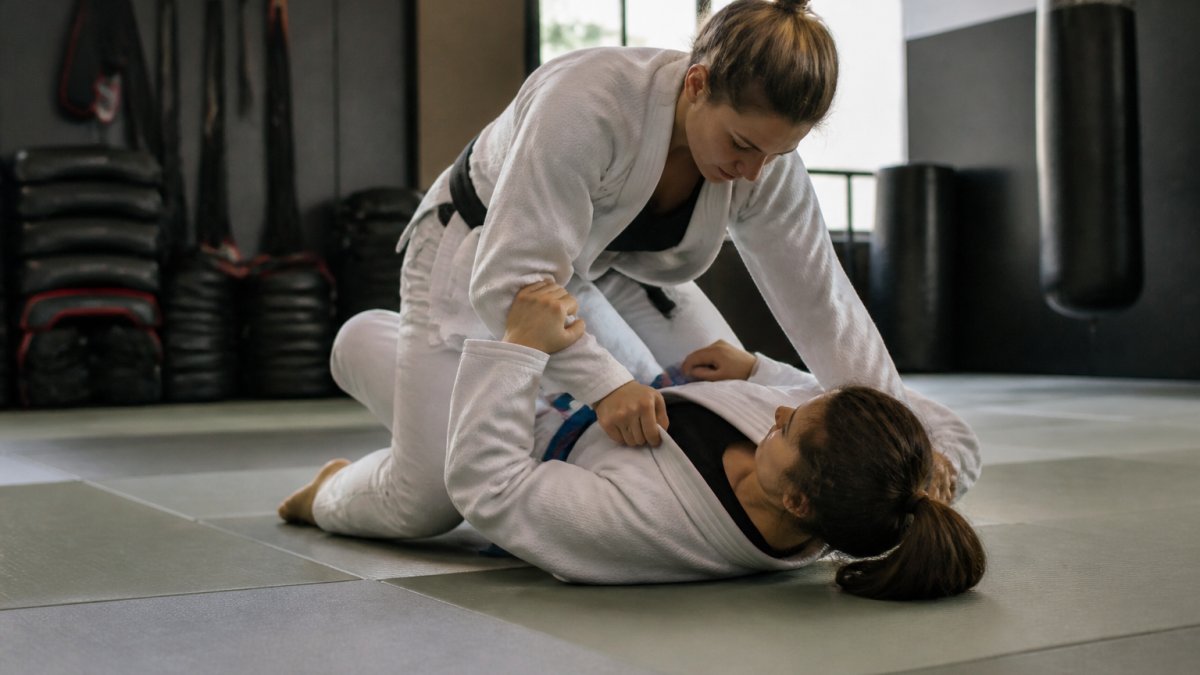
Brazilian Jiu-Jitsu focuses on grappling, throws, and ground fighting. It builds serious strength while burning calories through constant movement.
Muay Thai emphasizes kicks, punches, elbows, and knee strikes. It's one of the most cardiovascularly demanding martial arts.
Kickboxing combines punching with kicks. It's accessible for beginners while offering advanced progression.
Mixed Martial Arts (MMA) combines multiple disciplines: striking, grappling, wrestling. This variety prevents boredom and works every muscle group.
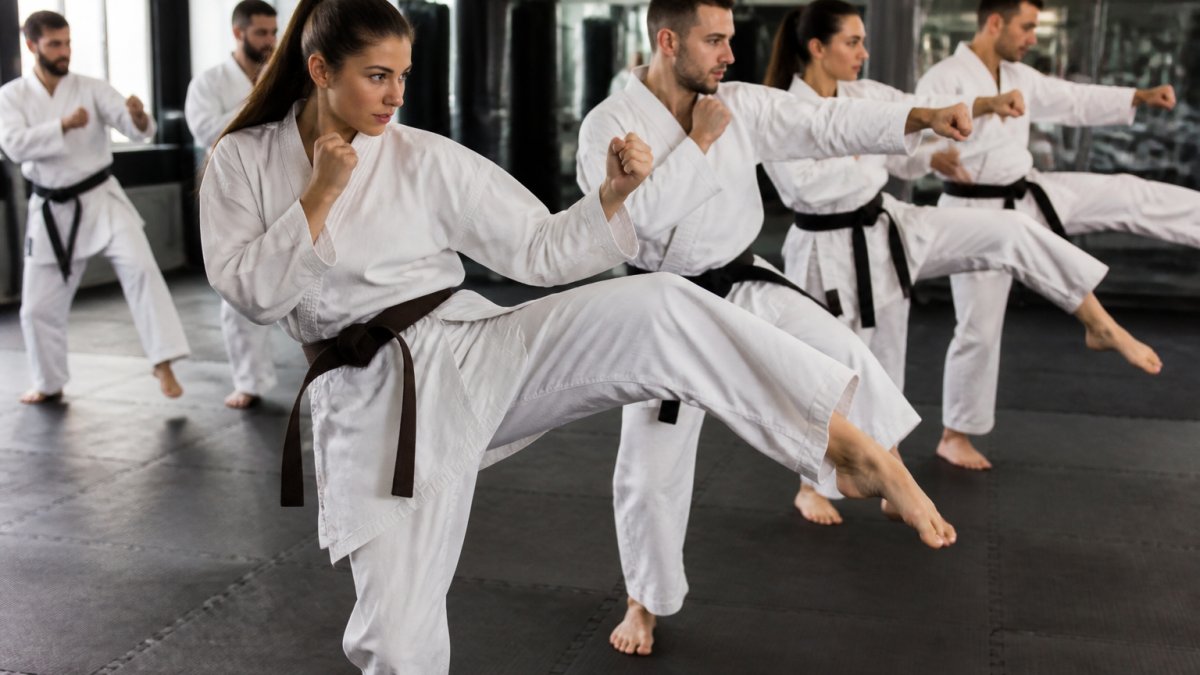
Karate emphasizes striking and kata (forms). Traditional karate builds discipline and technique.
The best martial arts for weight loss is the one you'll practice consistently.
How Often to Train Martial Arts for Weight Loss
Training frequency directly impacts weight loss results. Most people see meaningful changes with 3-4 classes per week. But the right frequency for you depends on your starting fitness, recovery capacity, and schedule. Here's a practical framework to build a sustainable routine.
Weeks 1-4: Foundation (2 classes per week) Start with two classes per week, spaced at least one day apart. This gives your body time to adapt to the demands of training, soreness, joint stress, and cardiovascular load. Focus on learning technique and proper form.
Weeks 5-8: Build (3 classes per week) After four weeks, if you're recovering well, no persistent joint pain, manageable soreness, good energy, add a third class. Three sessions per week creates a consistent calorie deficit and accelerates fitness gains. Aim for non-consecutive days when possible (e.g., Monday, Wednesday, Saturday). This schedule is sustainable for most people long-term.
Weeks 9-12: Progression (3-4 classes per week) If three classes feel manageable and you're sleeping well, consider a fourth. Four classes per week accelerates results but demands more attention to recovery. At this frequency, prioritize sleep (7-9 hours), protein intake, and at least one full rest day. Overtraining without adequate rest leads to injury and burnout. Quality matters more than quantity, one focused, intense class beats three unfocused ones.
Beyond 12 weeks: Maintenance and periodization More than four classes weekly requires careful periodization. Competitive fighters might train five or six days per week, but they balance hard sessions with light technique days, active recovery, and deload weeks. For weight loss, you don't need to train like a fighter. Consistency beats intensity. Training three times weekly for a year produces better results than training five times weekly for two months then quitting.
A sample beginner week:
- Monday: Martial arts class (60 min)
- Tuesday: Rest or light walk
- Wednesday: Martial arts class (60 min)
- Thursday: Rest
- Friday: Martial arts class (60 min), add this in week 5
- Saturday: Active recovery (walking, stretching, mobility work)
- Sunday: Rest
Recovery and injury prevention Soreness is normal in the first few weeks, especially after sparring or heavy bag work. Delayed onset muscle soreness (DOMS) peaks 24-48 hours after training and fades with consistency.
Tracking progress beyond the scale The scale doesn't tell the whole story. Track these instead:
- Waist circumference (measure at the navel) every two weeks
- Class attendance (aim for 80% of planned sessions)
- Fitness markers (can you do more push-ups? recover faster between drills?)
- Energy and sleep quality (rate 1-10 daily)
- Progress photos every four weeks
Normal weight fluctuations of 2-5 pounds per day are common due to hydration, sodium, and food volume. Don't panic over a single weigh-in. Look at trends over weeks, not days.
Build a sustainable training schedule by gradually increasing frequency as your body adapts.
| Training Phase | Frequency | Duration | Focus |
|---|---|---|---|
| Weeks 1-4: Foundation | 2 classes per week | 60 min each | Learn technique, assess body response |
| Weeks 5-8: Build | 3 classes per week | 60 min each | Consistent calorie deficit, fitness gains |
| Weeks 9-12: Progression | 3-4 classes per week | 60 min each | Accelerate results with proper recovery |
| Beyond 12 weeks | 3 times weekly | 60 min each | Sustainable long-term consistency |
How Many Calories Does Martial Arts Burn
Calorie burn varies based on several factors. Your body weight, training intensity, and martial arts style all influence energy expenditure. To give you a realistic picture, here are estimated calorie burns for a 150-pound person during a 60-minute session, based on metabolic equivalent (MET) values commonly used in exercise science:
- Light technique drills (low intensity): 300-400 calories
- Moderate bag work and pad drills: 450-600 calories
- Vigorous sparring or high-intensity interval training: 600-800 calories
- Competition-style sparring or fight camp conditioning: 800-1,000 calories
These estimates come from MET values that range from about 5 METs for light martial arts practice to 10+ METs for vigorous sparring. A MET of 5 means you burn roughly 5 times the calories you would at rest. For a 150-pound person, one MET equals about 1.1 calories per minute. So a 60-minute class at 8 METs burns approximately 528 calories.
Heavier individuals burn more total calories at any given intensity. A 200-pound person might burn 30-35% more than a 150-pound person doing the same workout. Lighter individuals burn fewer.
Training intensity is the biggest lever. Light technique work burns fewer calories. Heavy bag sessions, sparring, and conditioning drills burn substantially more.
Duration matters too. A 60-minute class creates more total calorie expenditure than a 30-minute one. But a 30-minute intense session can rival a 60-minute moderate one.
The afterburn effect (excess post-exercise oxygen consumption, or EPOC) adds to your total daily expenditure. Research suggests EPOC can add 6-15% to the calories burned during the workout itself (pubmed.ncbi.nlm.nih.gov).
Rather than obsessing over exact numbers, focus on consistency and effort. Higher effort plus more frequent training equals greater calorie deficit.
Nutrition and Diet for Martial Arts Weight Loss
Training without proper nutrition limits your results. You can't out-train a poor diet.
Eat enough protein. Your muscles repair and grow with adequate protein intake. Protein also keeps you fuller longer.
Don't skip meals before training. Training on empty stomach feels miserable and limits performance.
After training, eat within 2 hours. Your muscles are primed to absorb nutrients. Protein and carbohydrates help recovery and adaptation.
Hydration matters constantly. Martial arts training causes heavy sweating. Dehydration hurts performance and recovery. Drink water throughout the day and during training.
Avoid the trap of training hard then eating everything in sight. Training creates hunger. That's normal. Eat healthy foods in reasonable portions.
Setting Realistic Weight Loss Expectations
Weight loss timelines vary between individuals. Genetics, starting weight, training frequency, and nutrition all influence results.
Most people notice changes within 4-6 weeks of consistent training. Clothes fit differently. Energy levels improve. Strength increases. The scale might move slowly at first.
Muscle weighs more than fat. As you build muscle through martial arts, scale weight might not drop as fast as you expect.
Expect 1-2 pounds of weight loss weekly with consistent training and good nutrition. This is a realistic, sustainable rate. Faster weight loss usually comes back.
Plateaus happen. Your body adapts to training. You might see rapid progress for 8 weeks, then plateau for 2-3 weeks. This is normal. Keep training.
Different martial arts styles produce different timelines. High-intensity striking arts might show faster initial results than grappling-focused training.
Mental changes often matter more than physical ones. Students report improved confidence, better sleep, reduced stress, and enhanced focus.
Start Your Martial Arts Journey at Goshinkan
Ready to experience how martial arts can transform your fitness?
Our expert instructors design training that challenges you appropriately. Whether you're beginning your martial arts journey or returning after years away, we meet you where you are.
Visit Goshinkan to experience martial arts training that fosters personal development, camaraderie, and respect. We offer a free trial class so you can see firsthand how our training works. No pressure. No contracts.
Book a martial arts trial class today and start building the fitness results you're looking for. Our flexible scheduling works with your life. Learn about no-contract options if commitment concerns you. Or explore the broader benefits martial arts provides for adults to understand the full picture of what training delivers.
The best time to start is now. Your future self will thank you for the decision you make today.
Martial arts builds real weight loss results through consistent training, proper nutrition, and realistic expectations. According to research on exercise adherence from the American College of Sports Medicine, consistency matters far more than intensity.
Frequently Asked Questions
Can martial arts help with weight loss?
Yes. Martial arts builds weight loss through multiple mechanisms: high-intensity training burns significant calories during each session, strength-building exercises increase muscle mass which raises resting metabolism, and the consistency required in martial arts training creates the calorie deficit necessary for sustained weight loss. The combination of cardiovascular conditioning and resistance work makes martial arts effective for both fat loss and body composition improvement.
How often to train martial arts for weight loss?
Training 3-4 times per week creates enough training frequency for measurable weight loss while allowing recovery. Beginners may start with 2-3 sessions weekly and progress as fitness improves. Consistency matters more than frequency, regular attendance at 3 sessions per week outperforms sporadic high-frequency training. Most practitioners see noticeable results within 8-12 weeks of consistent training at this frequency combined with basic nutrition awareness.
How many calories does martial arts burn?
Calorie burn varies by intensity, body weight, and martial arts style. A 155-pound person may burn a significant number of calories during a 60-minute high-intensity martial arts session. These estimates assume vigorous training; technique-focused or beginner classes burn fewer calories. Individual metabolism and effort level create significant variation.
Which martial art is best for weight loss?
High-intensity martial arts styles typically burn a significant number of calories due to their full-body nature and emphasis on interval training. Other styles also build significant muscle and strength while burning calories. The best choice depends on your fitness level, injury history, and preference, consistency with a style you enjoy matters more than choosing the theoretically highest-calorie option. Beginners often see better long-term results with styles that feel sustainable.