 how-to
7 Ways to Motivate Shy Kids Without Pressure
Last Updated: November 4, 2026
Quick Summary
To motivate shy kids, build confidence through small, doable wins instead of pep talks: pick one slightly hard skill, practice it at home, try it in real life, name the win out loud, and repeat before adding a harder step. Treat shyness as information about temperament, not a flaw to fix.
- Slow-to-warm-up temperament is a recognized pattern where a child needs time and quiet observation before joining in.
- Describe the behavior instead of labeling the child shy, since the label can stick as a fixed trait.
- Start with one friend or one instructor before adding a second child, then a small group.
- Give a five-to-ten-second pause before answering for your child so silence does not become the solution.
- Move through gradual exposure steps only when your child seems calm at the current one.
Table of Contents
- Start With Temperament, Not Labels
- How to Build Confidence in a Shy Child With Small Wins
- Activities for Shy Kids That Lower the Stakes
- How to Encourage a Child to Speak Up in the Moment
- A Step-by-Step Gradual Exposure Plan for New Situations
- When Shy Child Anxiety Needs More Than Encouragement
- How to Motivate Shy Kids at School and in Groups
- Book a Free Class and Let Your Child Set the Pace
- Frequently Asked Questions
Start With Temperament, Not Labels
Most parents who want to know how to motivate shy kids start with the wrong question: "How do I fix this?" The better question is, "What is my child actually telling me?" A child who hangs back in a new room is not broken, they are reading the room before joining it.
A child who stands at the edge of a new room, watching, is often just getting oriented before joining in.
Slow-to-Warm-Up Is Not a Flaw
Slow-to-warm-up temperament is a recognized pattern where a child needs time and quiet observation before joining new situations. It is a style, not a defect, and many such children grow into careful, thoughtful adults.
Stop treating shyness as a problem to solve. Treat it as information about how your child's brain works.
Words That Help and Words That Hurt
Your words shape how your child sees themselves. Choose them carefully.
- Helpful: "You take your time." / "You watched first, then jumped in."
- Helpful: "That looked hard, and you tried anyway."
- Hurts: "Don't be shy." / "She's just shy." / "Why can't you be more outgoing?"
The label "shy" sticks. A child who hears it often starts to believe it is a fixed trait. Describe the behavior instead of the child: "You were quiet at first, then you found a friend."
If you want a deeper look at how a structured activity builds confidence in quiet children, see our guide on martial arts for shy children.
How to Build Confidence in a Shy Child With Small Wins
Confidence in a shy child grows from evidence, not pep talks. Each small win becomes a building block for the next.
Here is how to stack those wins:
- Pick one skill that is slightly hard but doable, like ordering their own drink.
- Practice it at home first, with you playing the cashier.
- Try it in real life during a quiet time of day.
- Name the win out loud afterward: "You spoke up and the cashier heard you."
- Repeat the same win a few times before adding a harder one.
Praise effort and bravery, not just results. "You asked a question even though you were nervous" teaches more than "Good job."
For a fuller breakdown of how confidence develops over time, read why martial arts helps with confidence.
Activities for Shy Kids That Lower the Stakes
The best activities for shy kids share one trait: low social pressure with clear structure. Kids relax when they know what to expect and what to do next.
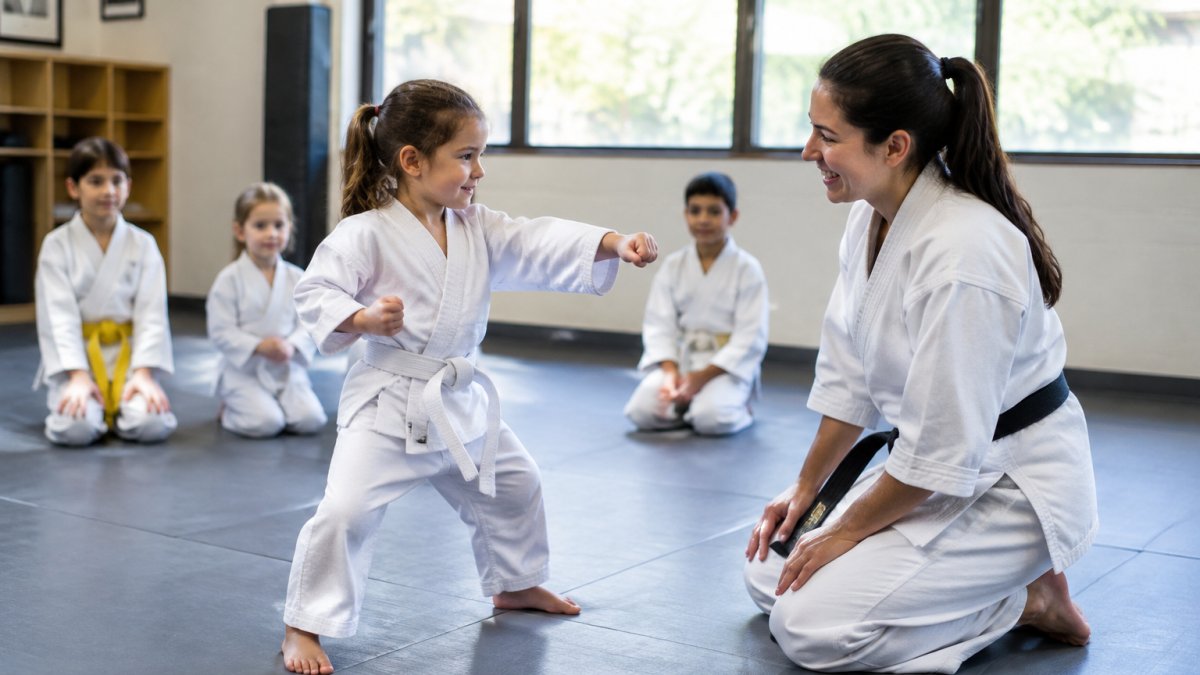
Good options include structured activities with clear routines and predictable steps, such as martial arts classes, art or music lessons, board game groups with fixed rules, or nature walks with a parent.
One-to-One Before Group Settings
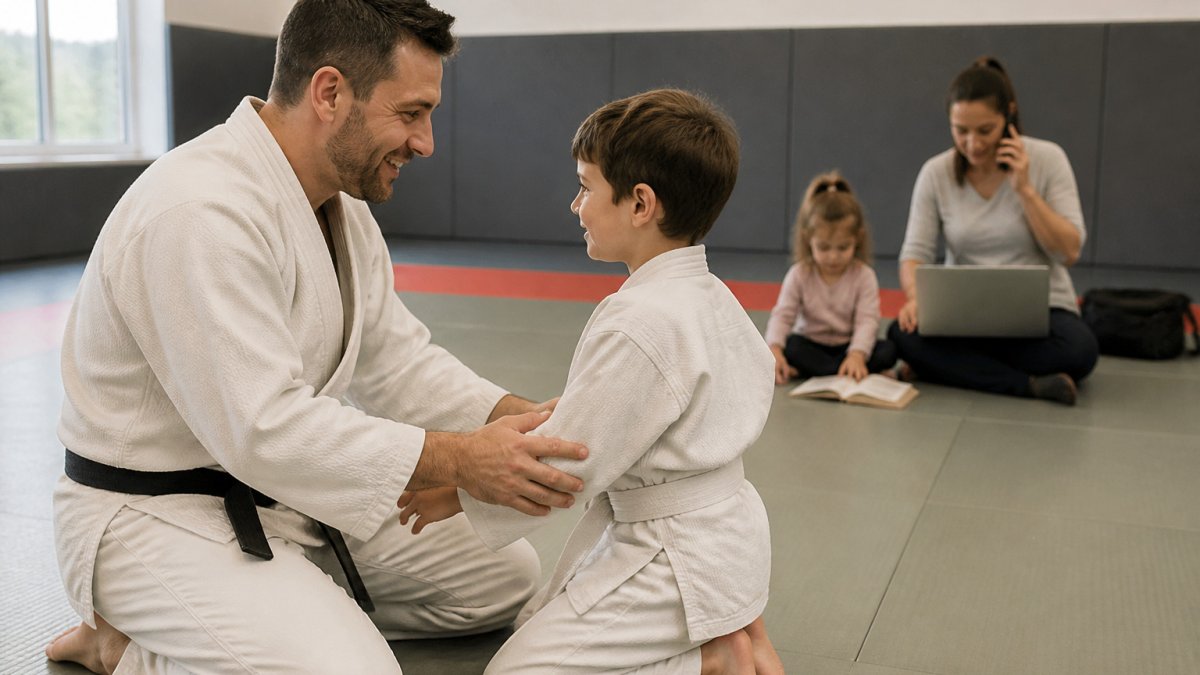
Start with one friend, not a crowd. A single playdate is far easier than a party. One instructor is easier than a big team.
Once your child handles one-to-one interaction well, add a second child. Then a small group. This is gradual exposure in action, and it works.
How to Encourage a Child to Speak Up in the Moment
When your child freezes in a social moment, your reaction matters more than the moment itself. Stay calm, get down to their level, and give them words they can borrow. The goal is one small attempt your child can build on.
Scripts by Age Band
The words that work for a 3-year-old sound babyish to a 10-year-old. Match the script to the developmental stage.
Toddlers and preschoolers (roughly ages 2-4): Keep it to one or two words and pair it with a gesture.
- "You can say, 'Hi.'"
- "Point to the one you want."
- "Wave bye-bye."
Early elementary (roughly ages 5-7): Short full sentences and a clear ask.
-
"You can say, 'Can I play too?'"
-
"Try, 'What's your name?'"
-
"Say, 'I'd like a turn when you're done.'"
-
"Try, 'Hi, I'm ___. I just joined.'"
-
"Ask, 'What are you playing?' Then you can listen."
-
"If you want to leave, say, 'I'm going to get water. See you later.'"
Teens: Shift from scripts to rehearsal and debrief.
What to Say When Your Child Freezes
Freezing is not defiance, it is a nervous system hitting pause. Lower the temperature instead of narrating the failure.
- "Want me to stand next to you while you ask?"
- "Take a breath. I'll wait."
- "You don't have to talk. A smile works too."
Then step back and let them try. If they cannot, do not scold or rescue. Say, "That was hard.
Watch out: If you answer for your child every time they pause, you teach them that silence gets the job done.
When the Other Child Says No
A rebuffed attempt can undo weeks of progress if handled badly, so prepare your child in advance with a fallback line.
- "Okay, maybe later."
- "I'll go find something else to do."
- "That's alright. I'll ask someone else."
Afterward, name what your child controlled: "You asked, and that took courage. Their answer isn't about you." Do not chase the other child or lobby on your child's behalf unless there is bullying involved.
Fading Your Support
Parental scaffolding should shrink over time. A common pattern is to move through four stages:
- You say the words and your child watches.
- You stand beside your child while they say the words.
- You stay in the room but a few steps away.
- Your child handles the exchange and reports back to you.
Stay at each stage until your child seems calm, then move one step back. If your child regresses after a hard day, return to the previous stage without commentary. Regression is normal and usually temporary.
Role-play at home builds the same muscle. Practice ordering food, asking for a turn, or saying hello. Keep it light, and let your child play the other person sometimes so they hear the exchange from the outside.
A Step-by-Step Gradual Exposure Plan for New Situations
Gradual exposure moves your child from comfort to challenge in small steps. Rushing the steps backfires, and so does skipping them.
Here is a simple plan you can adapt:
| Step | What Your Child Does | Goal |
|---|---|---|
| 1 | Watch the activity from a distance | Feel safe |
| 2 | Watch from inside the room | Get familiar |
| 3 | Try one small part with you nearby | First contact |
| 4 | Try one part without you | Independence |
| 5 | Join the full activity | Full participation |
Move to the next step only when your child seems calm at the current one. Some steps take one visit.
Avoidance is the enemy here. Each time a child avoids a situation completely, the fear grows.
When Shy Child Anxiety Needs More Than Encouragement
Shy child anxiety is different from shyness. Shyness is a preference for watching first. Anxiety is distress that does not fade and gets in the way of daily life.
Watch for these signs:
- Physical symptoms like stomachaches or headaches before social events
- Crying or panic that lasts well past the situation
- Avoiding school, friends, or activities entirely
If you see these signs, talk to your child's doctor or a child therapist.
For parents weighing whether a group activity suits an anxious child, our broader guide on whether martial arts is good for kids walks through the pros and cons.
How to Motivate Shy Kids at School and in Groups
School is the hardest setting for a shy child because the social stakes are high and the child has less control. A few strategies help, but they work best when you coordinate with the adults in the building rather than coaching from the sidelines.
What to Ask the Teacher For
Vague requests like "please help my child come out of their shell" are hard for a teacher to act on. Ask for specific, low-cost accommodations instead.
- A heads-up before group work. Ask the teacher to tell your child privately, a day ahead, who they will be paired with.
- A predictable role. A shy child often shines with a clear job, like handing out supplies, running the attendance folder, or being the line leader.
- A warning before being called on. Ask for a "think time" signal, such as the teacher saying, "I'll come back to you in a minute."
Put the request in writing, keep it short, and offer to follow up in two to three weeks. Teachers respond better to a specific ask than to a general concern.
When to Ask About a Formal Support Plan
If shyness is interfering with learning, not just recess, ask the school's support team about a formal plan. Schools can offer accommodations or support plans to some students who need them.
This is not a step to take lightly, and it is not a sign of failure, it ensures the school has a shared plan instead of improvising day by day.
Handling School Avoidance
A child who cries every morning or complains of stomachaches before school is telling you something. Distinguish between ordinary reluctance and a pattern that is getting worse.
- Ordinary reluctance: fades within minutes of arrival and does not affect weekends or sleep.
- Escalating avoidance: lasts weeks, includes physical symptoms, or spreads to activities the child used to enjoy.
If avoidance is escalating, do not force a full day and do not allow a full retreat.
Watch out: Reassuring a child repeatedly that "there's nothing to worry about" can accidentally reward the worry with extra attention.
Group Activities Outside School
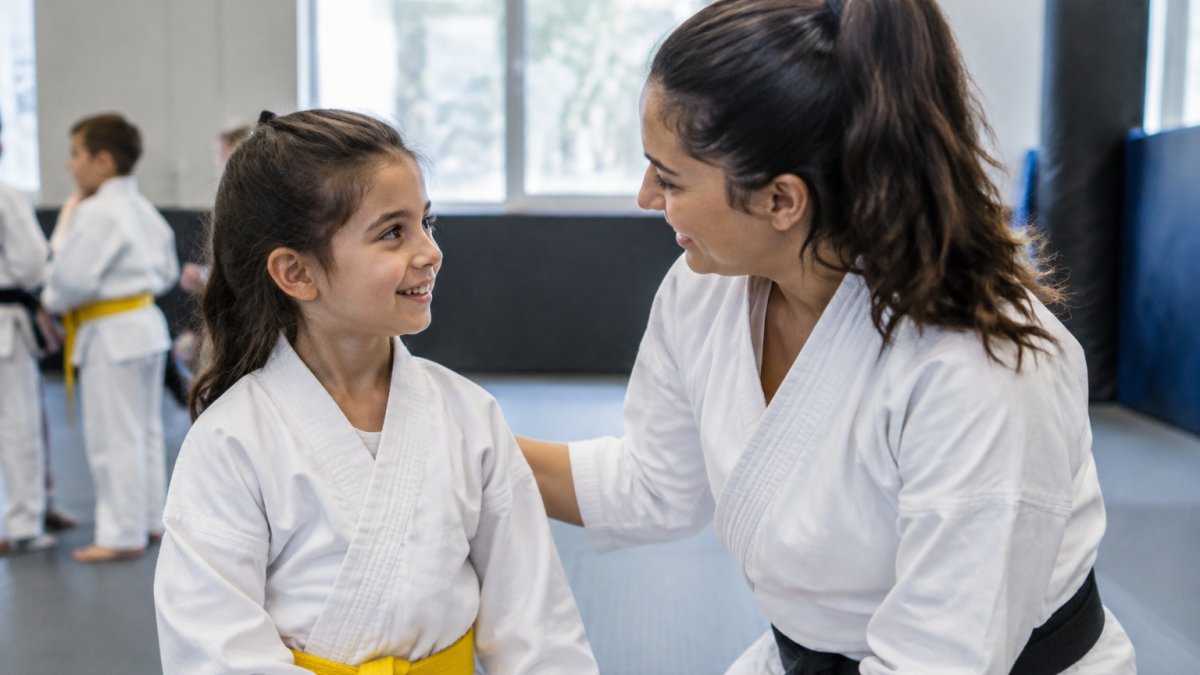
Group activities work best when the child has a defined part to play. Look for a fixed routine, a small group size, and a coach or instructor who greets each child by name.
Before signing up, ask three questions: How many kids per instructor? What does the first ten minutes look like? Can my child watch a session before joining? The answers tell you more than the brochure does.
If you are looking for a supportive group setting, you can find local martial arts classes that match your child's pace.
Book a Free Class and Let Your Child Set the Pace
Motivating a shy child is not about pushing harder.
Goshinkan Jujitsu Dojo offers expert-led classes in a community-focused setting where kids can build focus, discipline, and self-confidence. Students of all skill levels are welcome.
Ready to see it in person? Read our complete guide to booking a martial arts trial class and get started with Goshinkan Jujitsu Dojo.
Frequently Asked Questions
How do I motivate a shy child without putting pressure on them?
Focus on preparation and small choices rather than outcomes. Tell your child what to expect before a new situation, let them pick one small step to try, and praise the effort instead of the result. For example, agree before a birthday party that they will say hello to the host and then find a quiet spot to settle in. This builds confidence in a shy child without making social interaction feel like a test they can fail.
What activities for shy kids work best at home?
Low-pressure, one-to-one activities work best at first: drawing together, building blocks, cooking, or practicing a short script for ordering food. Board games teach turn-taking and speaking up in a safe setting. Once your child is comfortable, add one friend rather than a group. Structured activities with clear rules, like martial arts classes, also help because your child knows exactly what to do and when.
When should I seek help for shy child anxiety?
Talk to your pediatrician if shyness consistently stops your child from doing things they want to do, such as attending school, sleeping alone, or joining activities they previously enjoyed. Other signs include distress that lasts weeks, physical symptoms like stomachaches before social events, or avoidance that is getting worse over time. A pediatrician can help distinguish slow-to-warm-up temperament from anxiety that may benefit from professional support.
How can I encourage a child to speak up for what they need?
Practice short, specific phrases at home before your child needs them, such as 'I need help' or 'Can I have a turn?' Role-play with toys or during pretend play, then prompt gently in real situations: 'This is a good time to ask the coach for a water break.' Praise the attempt even if the words come out quietly. Over time, repeated small successes make speaking up feel safer.