 how-to
How to Fit Martial Arts for Busy Parents Into Your Week
Last Updated: November 3, 2026
Quick Summary
Martial arts for busy parents fits into a normal week with two 60-minute classes, which is about the same time as two sitcom episodes. Keep both classes on the same days each week, because switching days every week is the most common reason adults quit by week six.
- Two classes a week is the sustainable target for most busy parents.
- Add an optional 15 to 20 minute at-home session for stretching and footwork.
- Same-time adult and kids' classes let one trip cover both trainings.
- Ask about the makeup-class policy, the biggest buffer against a bad week.
- Confirm at least two adult class times you could attend before committing.
Table of Contents
- Why Martial Arts for Busy Parents Is Worth the Time
- The Best Martial Arts for Busy Parents: Styles That Fit Real Life
- Beginner-Friendly Martial Arts for Adults Who Have Never Trained
- Martial Arts Class Schedule for Families: Making the Week Work
- Martial Arts Classes for Parents and Kids: Train Together or Side by Side
- Choosing a School, Instructor, and Budget Before You Enroll
- Book a Free Class at Goshinkan Jujitsu Dojo
- Frequently Asked Questions
Why Martial Arts for Busy Parents Is Worth the Time
Here is the honest math. A one-hour class, twice a week, is about the same time as two sitcom episodes.
Parents carry a specific kind of load. You manage schedules, homework, meals, and a job.
Training addresses both. A common mistake is waiting for life to calm down before starting. Life does not calm down.
The benefits that matter most to parents:
- Physical fitness and staying active without a gym commute
- Stress relief from focused, phone-free movement
- Self-defense skills you can teach your kids by example
Below, you can read how to pick a style, build a schedule, and start without burning out.
The Best Martial Arts for Busy Parents: Styles That Fit Real Life
The best martial arts for busy parents are the ones with beginner-friendly classes, predictable schedules, and low injury risk. Brazilian jiu-jitsu, judo, Muay Thai, kickboxing, and boxing all fit that list. Each one asks something different of your body and your calendar.
Brazilian Jiu-Jitsu and Judo: Grappling With Less Striking
Brazilian jiu-jitsu, often called BJJ, is a grappling art built on control, use, and ground technique.
Both suit parents well. You learn real self-defense skills without getting hit in the head.
Judo adds falling skills, called breakfalls, which are generally useful for learning how to fall more safely.
The trade-off is close contact. If you dislike being grabbed or pinned, try a striking class first.
Muay Thai, Kickboxing, and Boxing: Striking for Conditioning
Striking arts deliver fast conditioning. Muay Thai uses punches, kicks, knees, and elbows.
These classes move. You will sweat, and you will build stamina quickly.
Striking also builds situational awareness. You learn distance, timing, and stance work. Those habits sharpen balance and coordination over time.
Watch out: striking class can be loud and fast. Visit one session before enrolling to check the pace and the coaching style.
Beginner-Friendly Martial Arts for Adults Who Have Never Trained
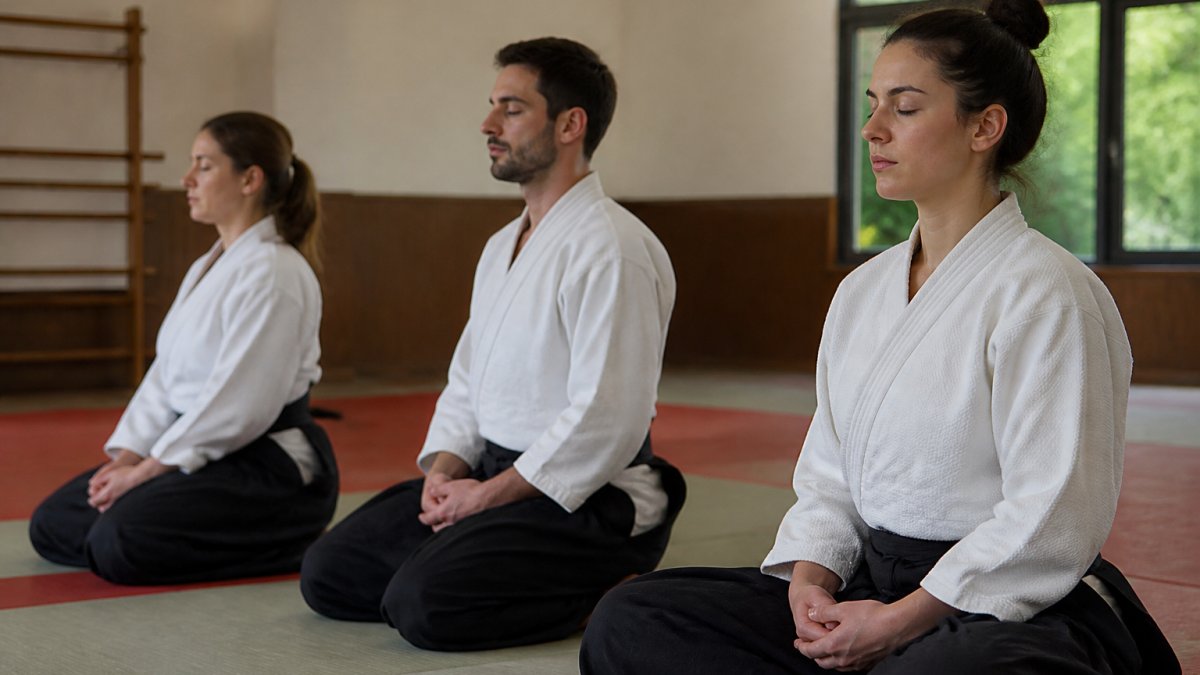
Beginner-friendly martial arts for adults assume zero background. Good schools separate new students from experienced ones, teach fundamentals slowly, and let you sit out drills that feel unsafe. You do not need flexibility, youth, or prior sports experience to start.
A good first class looks like this:
- A warm-up that matches your current fitness
- Simple stance work and footwork
- One core technique, practiced slowly with a partner
- A short conditioning block
- Time for questions
What a Good First Month Looks Like
Your first month is about showing up, not mastering moves. Expect sore muscles and clumsy footwork.
Progress looks like this:
- Week 1: Learn the room, the warm-up, and basic posture
- Week 2: Add one or two techniques and start pairing with regulars
- Week 3: Move with less hesitation and better balance
Training consistency beats intensity. Two classes a week for a month teaches you more than one brutal week followed by a month off.
Martial Arts Class Schedule for Families: Making the Week Work
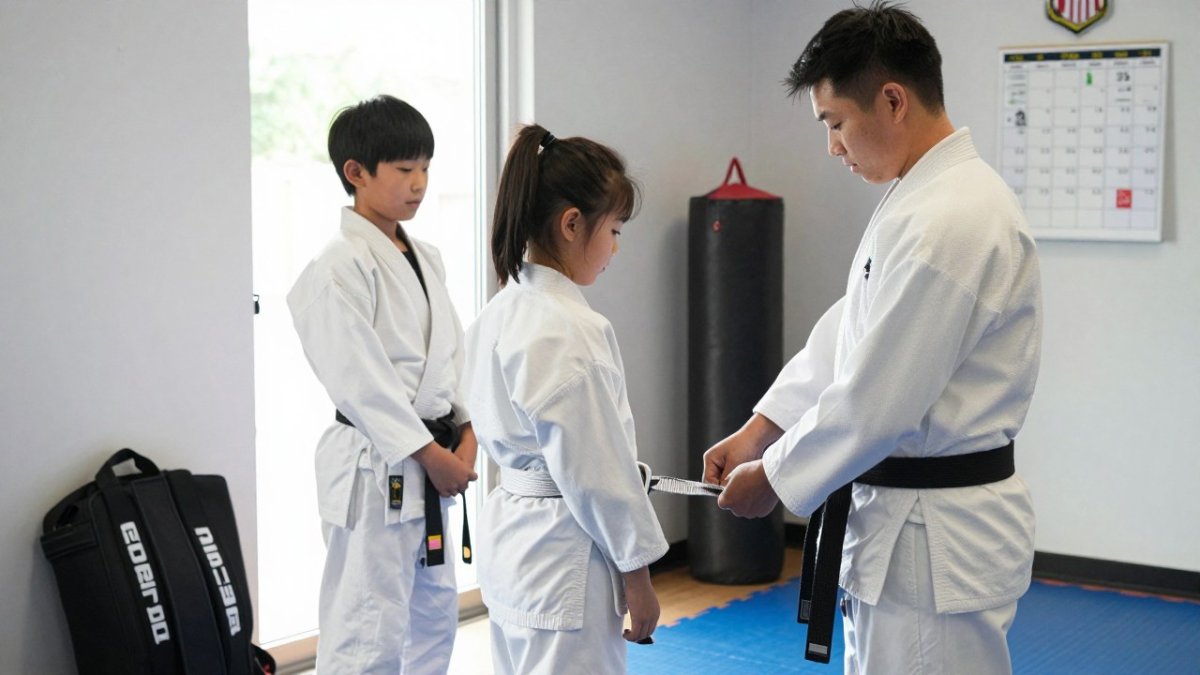
A workable martial arts class schedule for families starts with the calendar you already keep. Pick class times that sit next to existing routines, not times that fight them. Then protect those slots like a work meeting.
How Many Classes a Week Is Realistic?
For most busy parents, two classes a week is the sustainable target. One class a week maintains momentum but slows progress. Three or more classes a week is achievable only if the schedule already has slack, and most parents who start at three drop to one within a month.
A common pattern among adult beginners is a 60-minute class twice a week, plus one short at-home session of 15 to 20 minutes for stretching, footwork, or reviewing one technique.
A Realistic Two-Class Week
Here is a template that fits around a standard workweek. Adjust the days, not the structure.
- Monday evening: 60-minute class. Stack it onto the commute home or school pickup so the drive is one trip.
- Wednesday evening: 60-minute class. Same time slot as Monday, so the week has a predictable rhythm.
- Saturday morning (optional): 30 to 45 minutes of open mat, solo drilling, or a family class if the school offers one.
Keeping both classes on the same days each week is what turns training into a habit. Switching days every week is the most common reason adults quit by week six.
Fitting Class Around Work, Childcare, and Family Commitments
Practical scheduling tips for parents with limited time:
- Stack class onto school pickup so the drive is one trip
- Choose back-to-back class times so one parent covers both
- Keep a spare uniform and water bottle in the car
Childcare is the constraint most guides skip. Three setups work in practice:
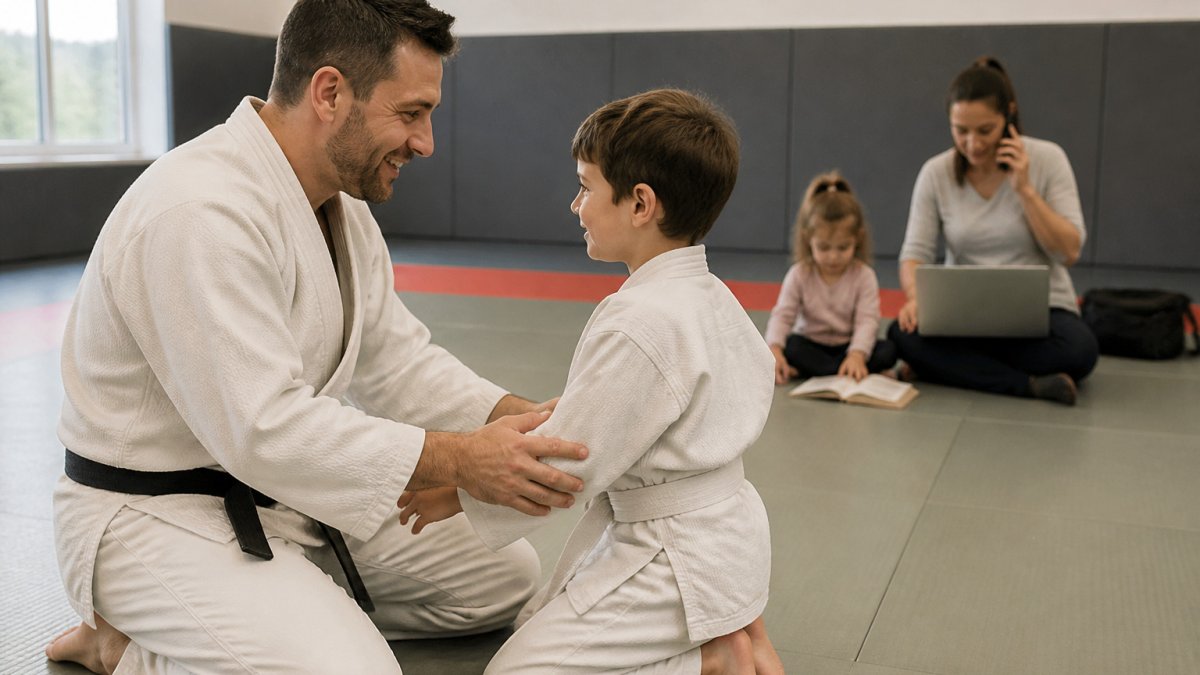
- Same-time, separate classes. You train in the adult class while your child trains in the kids' class. One trip covers both, and nobody sits in a lobby for an hour.
- Staggered classes. You take the early class and your partner takes the later one, so one adult is always home with younger children.
- Family class. Some schools run a combined parent-and-child session. It is the easiest logistics, but the pace is usually set for the child, so treat it as a supplement rather than your main training.
Before you enroll, ask the school three logistics questions: Do you offer same-time adult and kids' classes? Is there a waiting area where a non-training parent can sit with younger siblings? What is the makeup-class policy for sick kids and late work nights? A flexible makeup policy is the single biggest buffer against a schedule that collapses in a bad week.
Watch out: a school with only one adult class time per day leaves you no fallback when a work deadline or a sick child wipes out your usual slot. Confirm there are at least two adult class times you could attend before you commit.
Here is the weekly rhythm most busy parents can actually sustain.
| Slot | What to do | Time |
|---|---|---|
| Monday evening | 60-minute class, stacked onto commute or school pickup | 60 minutes |
| Wednesday evening | 60-minute class, same time slot as Monday | 60 minutes |
| Saturday morning (optional) | Open mat, solo drilling, or family class | 30 to 45 minutes |
| Any two weekdays | At-home stretching and reviewing one technique | 15 minutes |
Martial Arts Classes for Parents and Kids: Train Together or Side by Side
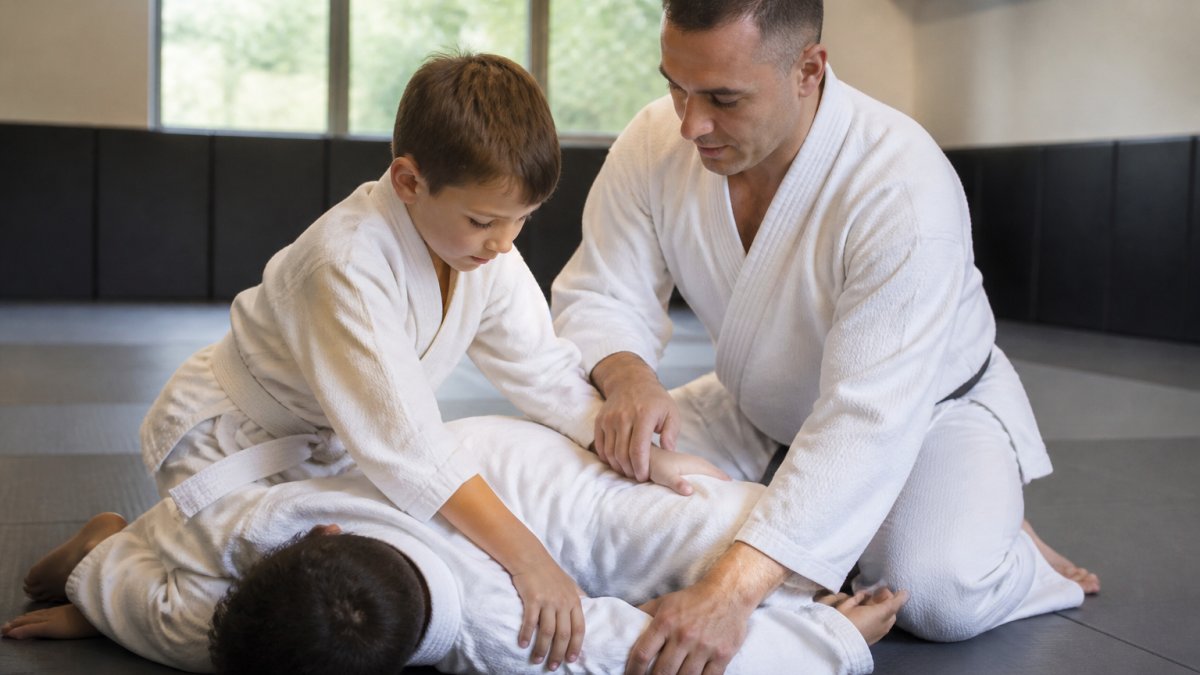
Martial arts classes for parents and kids can run two ways. You can train in the same class, or you can train in separate classes at the same time. Both work.
Training together builds a shared language. You both learn the same techniques, so practice at home makes sense.
Side-by-side training fits different skill levels. You work on adult material while your child learns age-appropriate basics.
A few ground rules help either setup:
- Let the instructor coach your child, not you
- Skip the urge to correct form in the car
- Praise effort, not rank
Family training also solves the childcare and family logistics problem. Our article on martial arts classes for families covers the family class options in more detail.
Choosing a School, Instructor, and Budget Before You Enroll
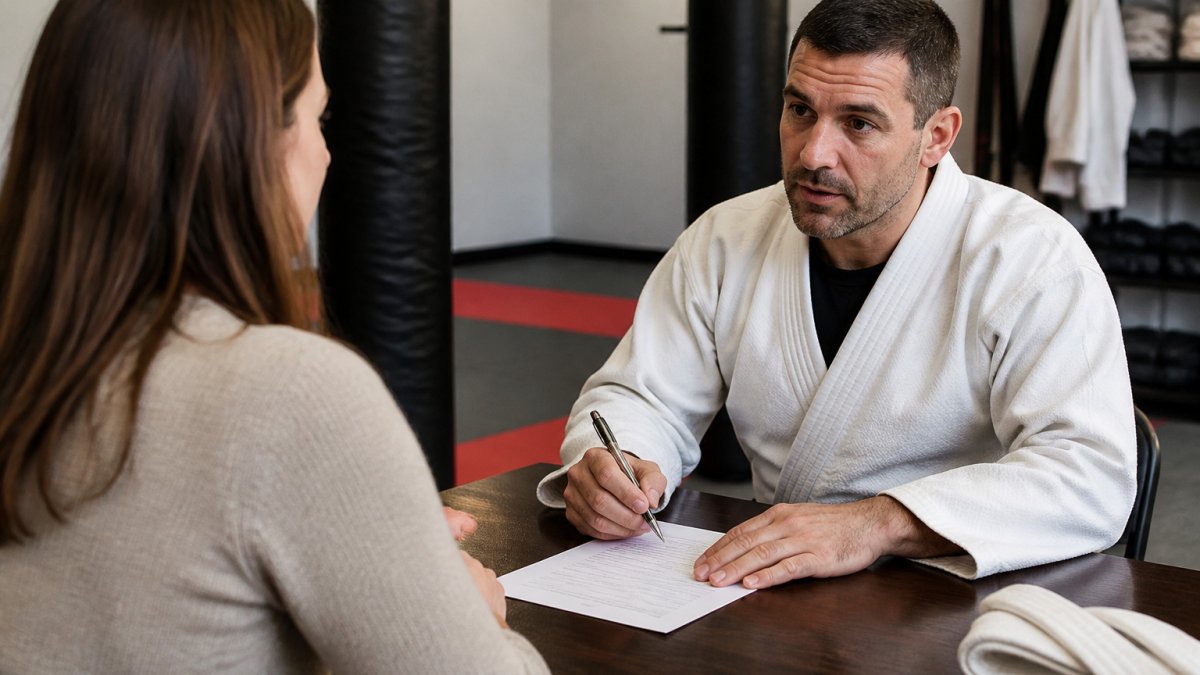
Choosing a school comes down to three checks: the instructor, the schedule, and the total cost. Visit in person, watch a class, and ask direct questions before you sign anything. A risk-free trial class tells you more than any brochure.
Instructor and School Checklist
Use this list on your visit. A good school answers every item without hesitation.
- Instructor background: Who teaches the beginner classes, and what is their rank, lineage, or competition record? Ask whether the head instructor teaches beginners or delegates to junior students.
- Class size: How many students per instructor? A beginner class above roughly 15 students per instructor usually means less individual correction.
- Safety policies: Are sparring and live drills optional for beginners? Is protective gear required? Is the mat clean and adequately padded?
What to Evaluate Before You Sign
Ask for the full monthly number in writing, then add the extras. Tuition is only part of the cost. The categories to price out are:
- Monthly tuition
- Uniform and belt
- Protective gear (gloves, shin guards, mouthguard, cup)
Then compare that all-in total against your family's monthly spending. A school with a higher monthly rate but no testing fees can cost less over a year than a cheaper rate with frequent promotion charges.
Contracts, Trials, and Cancellation
Read the contract before you sign, and ask these questions directly:
- Is there a free trial class or a paid trial week?
- What is the cancellation policy, and is there a cancellation window?
- Is the agreement month-to-month, or does it auto-renew for a fixed term?
A month-to-month agreement costs more per month but protects you if the schedule does not work. For a closer look at no-contract training options, read our guide to no-contract martial arts classes.
Watch out: the cheapest monthly rate often hides testing and gear fees. Ask for the all-in number, and ask whether belt testing is included or billed separately.
If you want to compare local options first, our guide to finding local martial arts classes walks through what to check.
Book a Free Class at Goshinkan Jujitsu Dojo
The fastest way to know if martial arts fits your week is to try one class. No research replaces standing on the mat. The dojo welcomes adults and kids at all skill levels, including complete beginners.
Here is what to expect from us:
- Expert instructors who coach fundamentals first
- A community-focused environment where families train near each other
- Classes for all ages and skill levels, so parents and kids both have a place
If you are still weighing the time commitment, our guide to the benefits of martial arts for adults covers what regular training does for energy and stress. Follow our step-by-step guide to book a martial arts trial class and pick a time that fits your week.
Frequently Asked Questions
How many times a week should a beginner parent train?
Two classes per week is the most common starting point for busy parents. It gives you enough repetition to learn falling skills, stance work, and basic techniques without overwhelming your calendar. Add a third class only after your first month if recovery and family logistics allow. Consistency matters more than volume: two steady classes beat four sporadic ones, .
Can parents and kids take martial arts classes together?
Yes, many schools run family or parent-child sessions where adults and children train side by side. These classes work best when the curriculum is age-appropriate for kids but still challenging for adults, and when the instructor can split attention between skill levels. If a shared class is not available, look for back-to-back class times so one trip covers both. Ask about family rates and whether a parent can observe a child's class before enrolling.
Which martial art is the most beginner-friendly for adults?
Brazilian jiu-jitsu, judo, and boxing are often the easiest entry points for adults. BJJ and judo emphasize grappling, breakfalls, and leverage, so smaller or older beginners can progress without taking hard strikes. Boxing builds fitness and situational awareness with simple footwork and stance work. The best choice is the one whose class times fit your week and whose instructor teaches beginners well. Try a risk-free trial class in two styles before deciding.
How can busy parents fit martial arts training into a family schedule?
Treat training like any other fixed appointment. Pick class times on the same days each week, keep a gym bag packed in the car, and combine trips so a parent's class and a child's class happen on the same evening. Many schools offer a martial arts class schedule for families with early evening and Saturday options. Start with two classes per week, protect those slots, and add more only when the routine feels stable.
Your week is already full. That is exactly why this works: two focused hours can rebuild your fitness and your patience. Get started with Goshinkan Jujitsu Dojo and book a free class this week.