 blog
7 Best Martial Arts for Discipline That Build Focus
Last Updated: November 2, 2026
Quick Summary
Karate, taekwondo, Brazilian jiu-jitsu, judo, Muay Thai, Krav Maga and wrestling are among the best martial arts for discipline, each building it through repetition, partner respect and consistent attendance. Discipline comes from a routine practiced until it becomes normal, not from intensity, so a student who trains twice a week for a year builds more self-control than one who quits after a month.
- Karate builds discipline through repetition of stances, strikes and forms, plus bowing rituals that reinforce respect.
- Beginners in Brazilian jiu-jitsu typically spend several weeks on positions and escapes before live sparring.
- Expect the first four to six weeks of kids karate to focus on logistics like bowing, lining up and class format.
- Behavior changes at home usually appear between months two and four, and only with consistent attendance.
- Vet a school by watching a full class and checking whether instructors correct behavior calmly.
Table of Contents
- How We Compared Martial Arts for Discipline
- Does Martial Arts Help With Discipline? What the Training Structure Actually Does
- 7 Best Martial Arts for Discipline, Ranked by How They Build It
- Karate: Repetition and Respect
- Taekwondo: Kicking Techniques and Focus Under Pressure
- Brazilian Jiu-Jitsu: Problem Solving on the Mat
- Judo: Throws, Balance, and Respect for a Partner
- Muay Thai and Kickboxing: Conditioning and Composure
- Krav Maga: Practical Self-Defense With Clear Rules
- Wrestling: Grinding Through the Hard Weeks
- The Best Martial Arts for Kids: Matching Style to Age and Temperament
- Karate for Kids Benefits: What Parents Can Realistically Expect
- Choosing Martial Arts Classes for Children: How to Vet a School and Instructor
- Book a Free Class at Goshinkan Jujitsu Dojo
- Frequently Asked Questions
How We Compared Martial Arts for Discipline
This comparison looks at how each style's training structure builds habits. Styles that demand repetition, correction, and respect tend to build steadier habits than styles that chase quick wins. Our comparison weighed five factors: how often students repeat core movements, how clearly progress is marked, how much self-control sparring requires, how instructors correct behavior, and how well the style suits different ages and temperaments.
Does Martial Arts Help With Discipline? What the Training Structure Actually Does
Yes. Martial arts helps with discipline because the class format itself teaches it: students bow in, follow instructions, repeat drills, and wait their turn under an instructor's eye.
A common mistake is assuming discipline arrives from intensity. For a deeper practical explanation of how training builds focus, see our Martial Arts for Focus Building: A Practical Guide.
The Habits That Get Built in Class
- Listening on the first instruction because drills start immediately
- Repeating basics until form becomes automatic
- Respecting a partner during sparring and throws
Parents often ask how to carry that structure home. Our guide on how to improve child focus with martial arts covers the routines that transfer from the mat to homework and bedtime.
7 Best Martial Arts for Discipline, Ranked by How They Build It
Each style below earns its place for a different reason. Read the "best for" line before the description, because the right pick depends on the student, not the ranking.
| Style | Discipline Built Through | Best For | Learning Curve |
|---|---|---|---|
| Karate | Repetition, forms, respect rituals | Kids needing structure | Moderate |
| Taekwondo | Kicking drills, focus under pressure | Active kids who like speed | Moderate |
| Brazilian jiu-jitsu | Problem solving, live grappling | Thinkers and smaller students | Gradual |
| Judo | Throws, balance, partner respect | Kids who enjoy physical contact | Moderate |
| Muay Thai / kickboxing | Conditioning, composure | Teens and adults | Steep at first |
| Krav Maga | Clear rules, practical self-defense | Adults wanting realism | Moderate |
| Wrestling | Grinding through hard weeks | Competitive teens | Steep |
Karate: Repetition and Respect
Karate builds discipline through repetition. Students drill stances, strikes, and forms until the movements need no thought, and the bowing rituals reinforce respect for instructors and classmates. The structure suits kids who need clear rules. The drawback: progress can feel slow to a student who wants action immediately.
Taekwondo: Kicking Techniques and Focus Under Pressure
Taekwondo leans on kicking techniques, which demand balance and concentration. A student who loses focus during a spinning kick lands off-target, and that feedback is immediate. The sport-like pace keeps energetic kids engaged. Where it falls short is patience: students who dislike fast movement may find the emphasis on speed frustrating.
Brazilian Jiu-Jitsu: Problem Solving on the Mat
Brazilian jiu-jitsu, or BJJ, builds discipline through grappling puzzles. Every position has a solution, and students learn to stay calm while someone applies pressure. Smaller students often thrive because technique beats size. The learning curve is gradual, and beginners spend weeks on fundamentals before sparring.
Judo: Throws, Balance, and Respect for a Partner
Judo teaches throws, and a throw requires a partner's trust. Students learn to break falls safely, control their balance, and treat the person they are throwing with care. That partner respect is the discipline lesson. It suits kids who enjoy physical contact and coaches who emphasize safety.
Muay Thai and Kickboxing: Conditioning and Composure
Muay Thai and kickboxing build conditioning and composure. Striking drills are exhausting, and holding form while tired is the test. Adults and teens gravitate here because the fitness payoff is obvious. The steep early curve is real: expect sore shins and slow technique at first.
Krav Maga: Practical Self-Defense With Clear Rules
Krav Maga focuses on practical self-defense with simple, direct techniques. Discipline comes from the rules around when force is appropriate, and instructors stress control over aggression. Adults who want realism without competition find it fits. The downside is limited belt progression, so students who need visible milestones may lose motivation.
Wrestling: Grinding Through the Hard Weeks
Wrestling earns its spot for pure perseverance. Seasons are long, weight management is demanding, and progress comes from grinding through hard weeks. Competitive teens who respond to challenge do well. Beginners who need encouragement may find the intensity overwhelming.
The Best Martial Arts for Kids: Matching Style to Age and Temperament
Most parents asking about the best martial arts for discipline are really asking a narrower question: which style fits my child's age, energy level, and temperament? Style matters less than the match between the child and the class format. Use the framework below to narrow the field before you visit a school.
Match by age band
- Ages 4-6: Look for programs built around short stations, games, and simple commands. Karate and taekwondo classes at this age usually run 30-40 minutes and emphasize listening, lining up, and taking turns. Judo can work if the school teaches falling and gripping before throwing.
- Ages 7-10: This is the sweet spot for karate, taekwondo, and judo. Students can follow multi-step instructions, remember forms, and handle light contact. Brazilian jiu-jitsu fits here too, especially for kids who prefer solving problems to performing techniques on command.
- Ages 11-14: Wrestling, Muay Thai, and kickboxing become realistic options because students can handle conditioning and controlled sparring. BJJ and judo remain strong for kids who want live resistance without striking.
Match by temperament
- High-energy kids who lose focus: Taekwondo and Muay Thai give fast feedback, a kick that drifts off-target is obvious immediately. The pace keeps attention on the drill rather than on the clock.
- Shy or cautious beginners: Smaller classes in karate, judo, or BJJ let an instructor correct quietly instead of calling out a child in front of a group. Visit at the actual class time, not a demo, and watch how the instructor handles the quietest student.
- Thinkers who like puzzles: BJJ rewards problem-solving and lets a smaller student succeed through technique. Beginners typically spend several weeks on positions and escapes before live sparring.
What to check before enrolling a child
Ask three questions before enrolling: How long is a beginner class? Are beginners grouped separately? What is the instructor-to-student ratio for your child's age group? Then watch a full class and note whether the instructor corrects behavior calmly, whether students wait their turn without chaos, and whether the school explains its cancellation policy in writing.
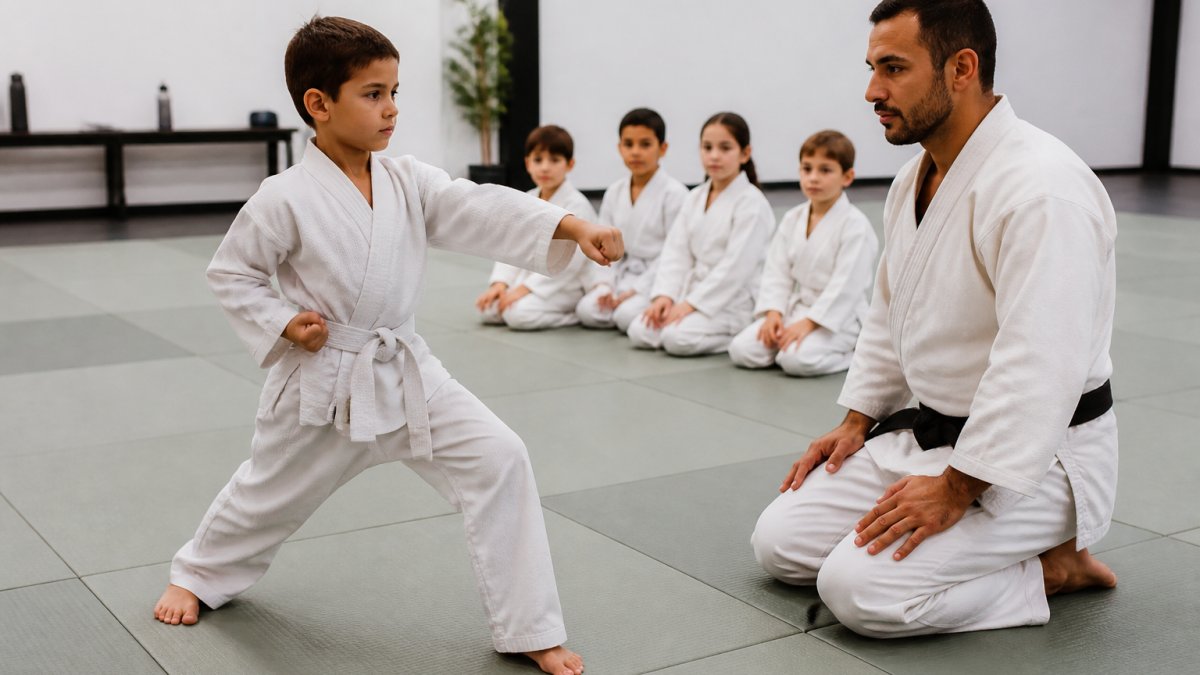
Watch Out: A style cannot guarantee discipline on its own. The same karate program can build steady habits under one instructor and feel like a weekly playdate under another. Judge the school and the instructor, not just the style name on the sign.
Karate for Kids Benefits: What Parents Can Realistically Expect
Karate for kids benefits are real, but they are narrower and slower than most marketing suggests. The honest version: karate builds discipline through a repeatable class routine, and the behavior changes parents notice are usually byproducts of that routine rather than the goal of it. Here is what to expect, how to measure it, and where the limits are.
The mechanism: why the routine transfers
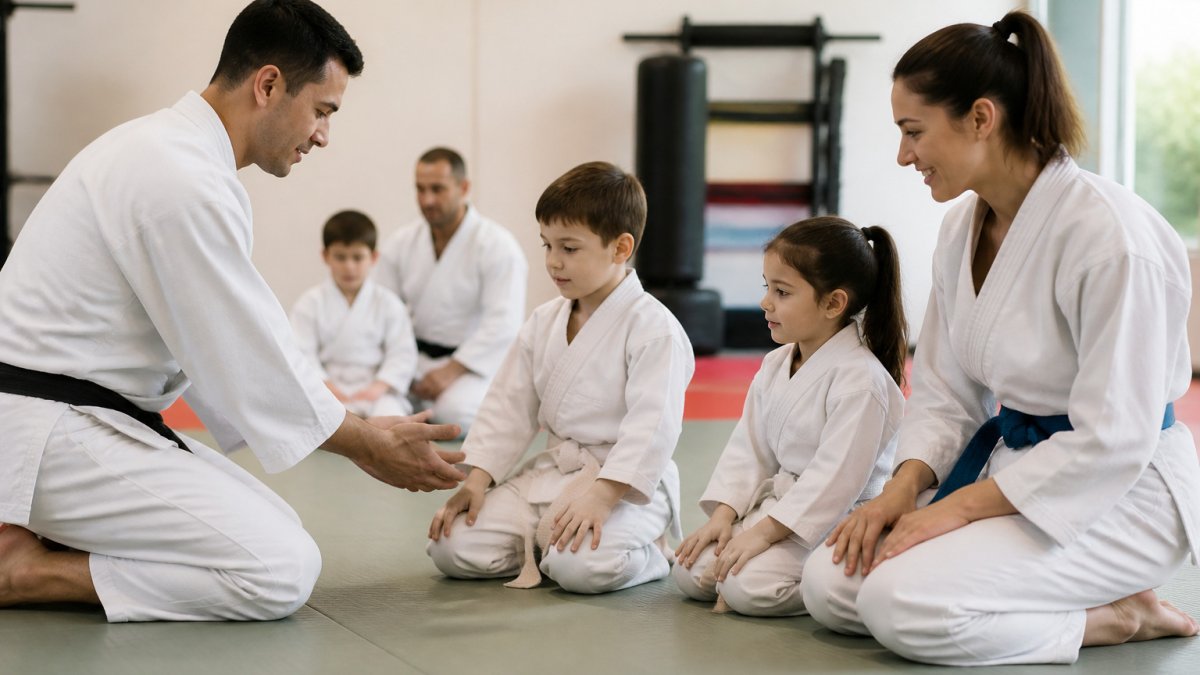
A typical beginner karate class follows the same sequence every week: bow in, warm up, drill basics, practice a form, cool down, bow out. That predictability is the discipline lesson. A child who learns that the same five things happen in the same order every Tuesday and Thursday is practicing the core skill of self-control, doing what comes next without being negotiated into it.
Observable indicators, not vague claims
Instead of asking whether your child seems more confident, track things you can actually see:
- Attendance consistency: Does your child get ready for class without a fight after the first month? That is the habit forming.
- First-instruction compliance: Does your child follow a direction the first time at home, or still need three reminders? Most parents see gradual improvement over two to three months, not weeks.
- Skill milestones: Can your child perform the first form or a basic combination without prompting? Belt tests and stripe promotions give concrete checkpoints.
Realistic timelines
Expect the first four to six weeks to be about logistics, learning to bow, line up, and follow the class format. Behavior changes at home typically show up between months two and four, and only if attendance is consistent. A child who trains twice a week for a year will usually show more change than one who trains hard for a month and stops. A child who struggles with impulse control will still struggle in week three; that is normal, not a sign the program is failing.
Potential downsides to weigh
- Culture varies by school. Some programs emphasize tradition and etiquette; others are closer to a fitness class with belts. Visit and watch before committing.
- Instructor quality matters more than style. A patient instructor who corrects calmly builds discipline; an instructor who yells or shames can do the opposite.
- Injury risk is low but not zero. Sprains and bruises happen in sparring and falling practice. Ask how the school introduces contact and whether sparring is optional for beginners.
Karate can support discipline, but it does not install it. The routine, the instructor's corrections, and consistent attendance do the work. Measure attendance, first-instruction compliance, and whether your child finishes what they start, those are the indicators that matter more than a confidence claim.
If you want to see how a class actually runs before committing, read our guide to booking a trial class.
Choosing Martial Arts Classes for Children: How to Vet a School and Instructor
Vet a school by watching a class before you enroll. Look for instructors who correct behavior calmly, keep students engaged, and explain the "why" behind drills. Ask about class sizes, beginner onboarding, and how the school handles a child who wants to quit. A good instructor will tell you honestly whether the program fits your child.
- Does the instructor correct students by name and with patience?
- Are beginners grouped separately or thrown in with advanced students?
- Is there a clear belt progression with realistic timelines?
Book a Free Class at Goshinkan Jujitsu Dojo
The best way to judge any style is to stand on the mat. Goshinkan Jujitsu Dojo offers expert instructors, a training environment built on camaraderie and personal growth, and classes for all ages and skill levels. If you want to see how a class actually runs before committing, read our guide to booking a trial class or visit Goshinkan Dojo to see our programs and sign up.
Frequently Asked Questions
Does martial arts help with discipline?
Yes, when the school is structured well. Discipline in martial arts comes from repeated routines: bowing in, drilling stances and techniques, waiting your turn, and earning belt progression through consistent attendance. The habits transfer because students practice focus and self-control under mild pressure every class. The style matters less than the instructor's consistency and whether the student attends regularly. Two classes a week sustained over months builds more discipline than an intense month followed by quitting.
Which martial art is best for teaching children discipline?
Karate and Taekwondo are common starting points because their forms, stances, and belt progression reward repetition and respect. Brazilian jiu-jitsu and Judo also build discipline through partner work, where kids must control their strength and follow safety rules. The best martial arts for kids depend on temperament: a high-energy child may thrive in Taekwondo's kicking drills, while a cautious child may prefer the close, controlled pace of grappling. Visit a class before deciding.
What should parents look for in a martial arts school?
Watch a full class before signing up. Look for instructors who give clear directions, correct students calmly, and keep beginners included rather than sidelined. Ask about class sizes, instructor experience, and how belt progression works. A good school explains its cancellation policy and lets you try a free class. Also check whether the training environment feels welcoming to shy kids, since a community-oriented dojo helps new students settle in at their own pace.
How often should a child practice martial arts to build discipline?
Two classes per week is a practical baseline for most children. That pace builds the routine without overwhelming a beginner, and it gives enough repetition for techniques and forms to stick. Consistency matters more than volume, so a steady twice-weekly schedule beats sporadic bursts. At home, short practice of stances or drills between classes reinforces the habit. Ask the instructor what practice outside class they recommend for your child's level.
Choosing a martial art is really a decision about which structure your child, or you, will stick with long enough for discipline to take root. At Goshinkan Jujitsu Dojo, we build that structure around expert instruction, a supportive community, and steady progress for every skill level. Get started with Goshinkan Jujitsu Dojo and book a free class to see how the right training environment changes focus and confidence.