 how-to
How to Improve Child Focus With Martial Arts
Last Updated: October 26, 2026
Quick Summary
Martial arts improve child focus by creating a structured environment where attention is non-negotiable, requiring mental precision for every technique. Repetitive drills strengthen neural pathways associated with sustained attention, literally rewiring the brain to concentrate better.
- Expect visible focus changes in class within 4-8 weeks and changes at home over 3-6 months with consistent attendance.
- Younger children benefit from shorter classes: preschool and early elementary 30-45 minutes, ages 8-12 typically 45-60 minutes.
- Jiu-jitsu and judo suit problem-solvers; karate and taekwondo excel at building sustained attention through repetition and rank progression.
- Look for instructor ratios near 8:1 or lower for younger children to ensure individual correction during drills.
- Observable progress includes following multi-step directions, staying with tasks longer, and recovering faster after distractions.
Table of Contents
- How Martial Arts Improve Child Focus and Concentration
- The Role of Structured Practice in Building Mental Discipline
- How Martial Arts Help Children Concentrate Through Repetition and Drills
- Listening Skills and Following Instructions in Class
- Martial Arts for Kids With ADHD: Building Self-Regulation
- Best Martial Arts for Kids: What Works for Focus and Discipline
- Measuring Progress and Reinforcing Focus at Home
- Book Your Child's First Class at Goshinkan
- Frequently Asked Questions
How Martial Arts Improve Child Focus and Concentration
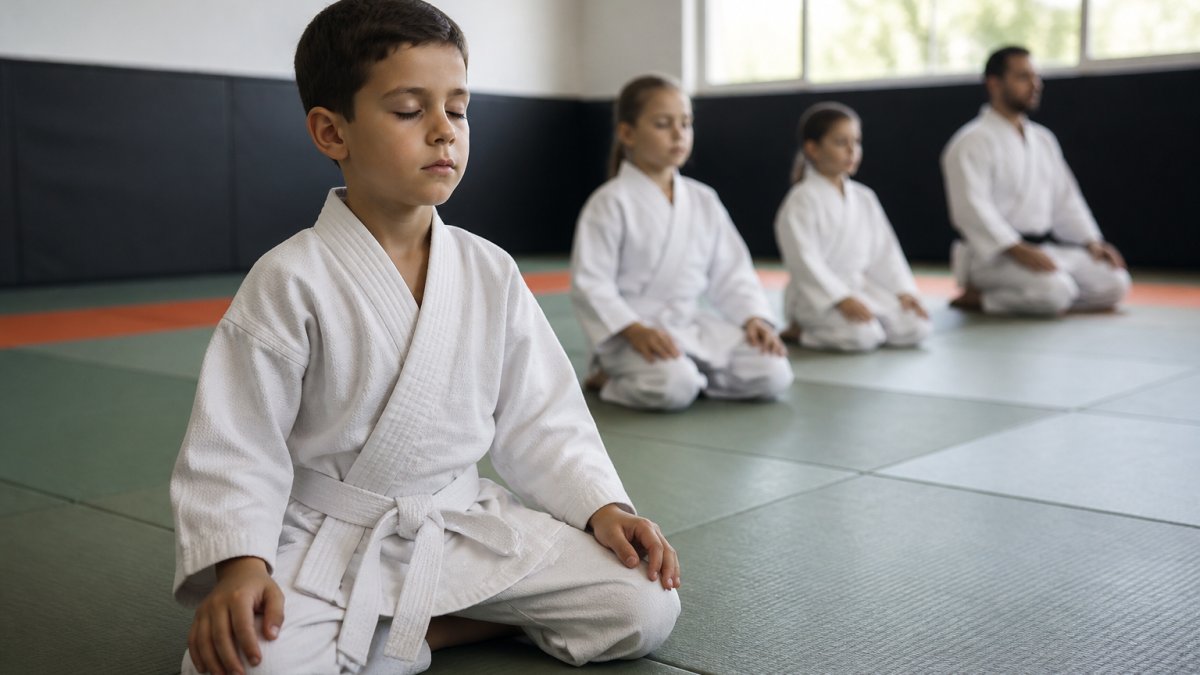
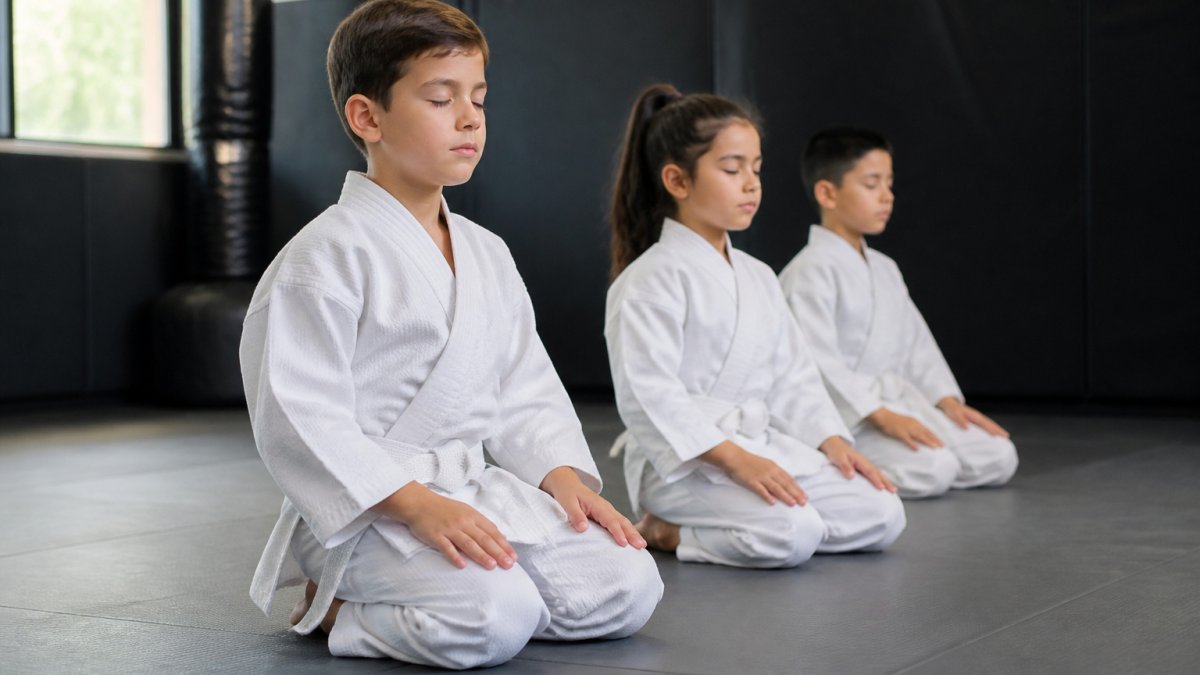
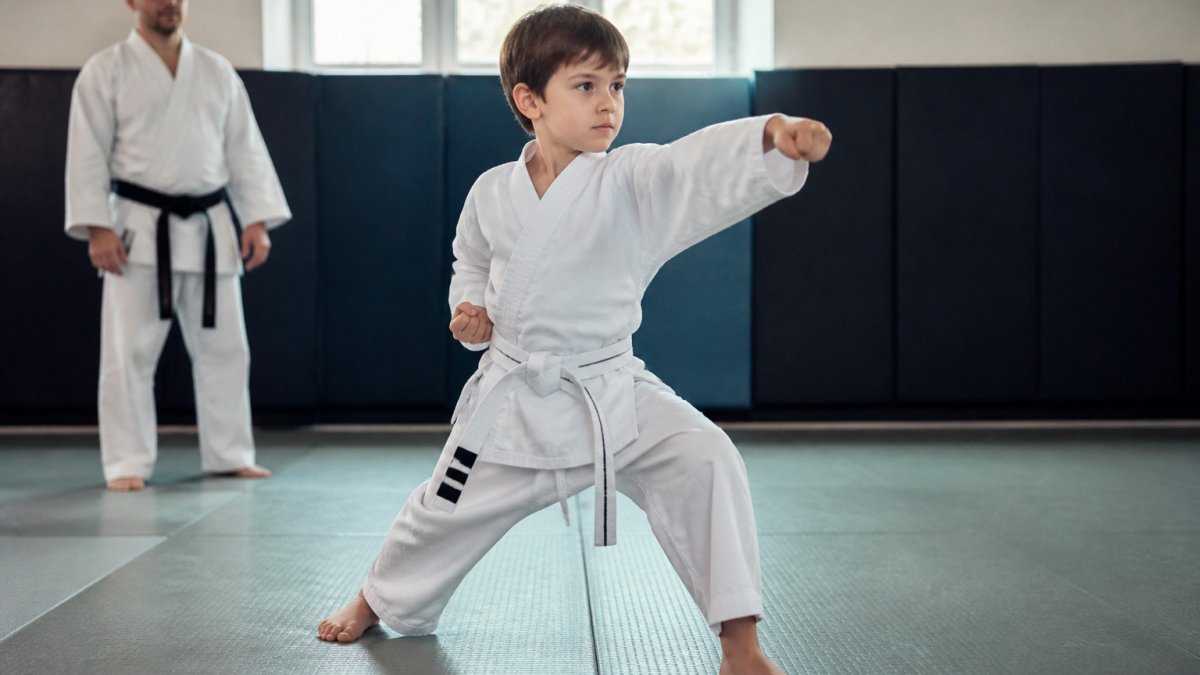
Martial arts improve child focus by creating a structured environment where attention is non-negotiable. Every kick, punch, and stance requires mental precision. A child cannot execute a technique while daydreaming. The brain learns to lock in or fail visibly.
What makes this different from other activities?
Research from the American Academy of Pediatrics on child physical activity emphasizes that structured martial arts training builds both physical and cognitive skills in children. The repetitive nature of drills trains the mind to stay present.
The Role of Structured Practice in Building Mental Discipline
How structure builds discipline:
This is where many parents see the first shift. A child who struggles with homework suddenly sits down and works. Not because the homework changed. Because the brain learned discipline in class and applied it elsewhere.
How Martial Arts Help Children Concentrate Through Repetition and Drills
What happens during drills:
According to research on motor learning and attention from the National Institute of Neurological Disorders and Stroke, repetitive motor practice strengthens neural pathways associated with sustained attention. Each drill is literally rewiring the brain to concentrate better.
Listening Skills and Following Instructions in Class
At Goshinkan Jujitsu Dojo, we keep instructions concise and action-oriented. We show, not tell. We correct with specificity. A child learns that listening is the fastest path to success.
Martial Arts for Kids With ADHD: Building Self-Regulation
Guidance from the CDC on physical activity for children with developmental disabilities supports structured martial arts as a beneficial intervention. The key is finding an instructor who understands how to work with ADHD, someone patient, clear, and willing to adjust expectations when needed. Why Martial Arts Helps With Confidence: A Parent's Guide explores how this structured environment builds the self-assurance children need to engage fully in class.
Best Martial Arts for Kids: What Works for Focus and Discipline
The style on the sign matters far less than what happens inside the room. Taekwondo, karate, jiu-jitsu, and judo can all build focus when teaching is structured and the instructor is skilled with children. What separates a program that sharpens attention from one that simply burns an hour is class design, instructor communication, and fit with your child's age and temperament.
A parent's checklist for evaluating a class
- Class size and instructor ratio: Ask how many students per instructor. For younger children, a ratio near 8:1 or lower usually means each child gets corrected during drills rather than watching from the back.
- Class length by age: Preschool and early elementary classes often run 30-45 minutes; ages 8-12 commonly run 45-60 minutes. A 90-minute class for a 6-year-old is a focus test, not a focus builder.
- Predictable structure: Can the instructor describe the class flow (warm-up, technique, drill, game or form, cool-down) in one sentence? Predictability is what lets a child's brain settle.
- Instruction style: Watch whether directions are short, demonstrated, and checked. Instructors who talk for several minutes without a physical demonstration lose most young students.
- Correction style: Specific, immediate, and calm beats loud and general. Listen for "keep your back knee bent" rather than "do it better."
- Safety and contact: Ask about contact rules by age, mat supervision, and whether sparring is optional. For younger children, look for controlled, padded contact and clear stop signals.
- Communication with parents: A brief monthly progress note or a two-minute check-in after class is a strong signal. Silence for months is not.
- Trial policy: A free or low-cost trial class is standard. A program that pressures a multi-month contract before your child has stepped on the mat is a warning sign.
Match the style to your child's temperament
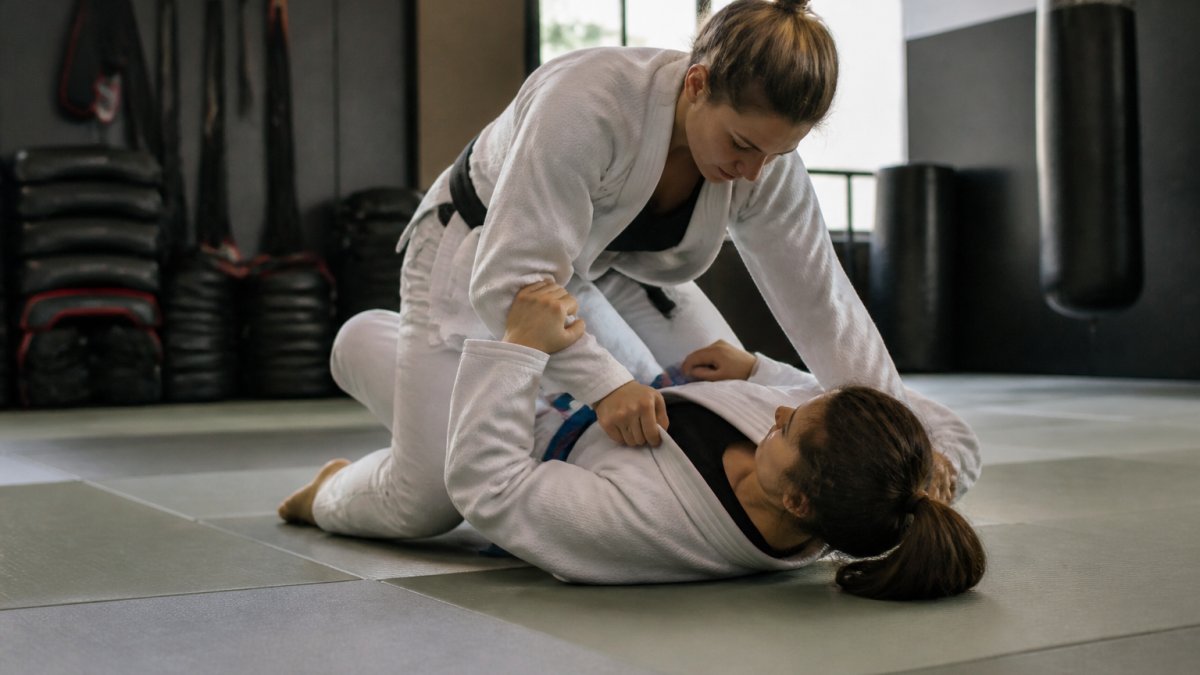
- Jiu-jitsu and judo involve constant problem-solving and partner work. They suit children who engage with puzzles and adapt well to close contact; they can be harder for children who need more personal space at first.
- Karate and taekwondo emphasize forms, precision, and rank progression. The repetition is excellent for sustained attention, and the belt system gives frequent, visible goals.
- Mixed programs can work well for young beginners, but ask how the school sequences skills, variety without structure can feel chaotic to a child who struggles to focus.
What to ask about age and readiness
You can explore more about martial arts selection in our guide to Is Martial Arts Good for Kids? A Parent's 2026 Guide, which helps parents evaluate whether a specific style matches their child's needs.
Measuring Progress and Reinforcing Focus at Home
Belt promotions are easy to celebrate, but the focus gains parents care about show up in quieter ways. "Better focus" is easy to feel and hard to prove, so a simple tracking approach turns vague impressions into a pattern you can act on.
Observable indicators to watch for
- Following multi-step directions: Your child completes a two- or three-step request ("put your shoes away, fill your water bottle, and bring your backpack") without a reminder in the middle.
- Staying with a task: Homework or a chore continues for a longer stretch before your child gets up, asks a question unrelated to the task, or reaches for a screen.
- Recovering after distraction: When something interrupts, a sibling, a noise, a notification, your child returns to the task with less prompting than before.
- Starting without reminders: The number of times you have to say "time to start" decreases.
- Listening during conversation: Your child responds to what you said rather than asking you to repeat it.
- Teacher feedback: A note or conference comment about staying on task, raising a hand, or finishing work within the time given.
A simple two-minute tracking method
Pick three behaviors from the list above that matter most in your household. Once a week, rate each on a 1-5 scale, where 1 means "needs constant reminders" and 5 means "handles it independently." Log the date and rating for 8-12 weeks.
You're looking for a trend, not a straight line upward. A child who moves from a 2 to a 3 over two months on "starts homework without reminders" is showing real change. Ratings that bounce around with no direction may mean a different class fit, instructor, or a conversation with a pediatrician.
Reinforce focus at home without turning it into a lecture
Two practical habits help:
For deeper guidance on reinforcing these skills, read our article on Martial Arts for Focus Building: A Practical Guide, which includes at-home routines that extend classroom learning.
Book Your Child's First Class at Goshinkan
| Martial Arts Style | Best For | Key Focus Benefit | Commitment Level |
|---|---|---|---|
| Jiu-jitsu | Problem-solving and adaptability | Requires constant mental engagement | Moderate to High |
| Karate | Precision and form discipline | Repetition builds sustained attention | Moderate |
| Taekwondo | Speed and coordination | Dynamic focus under pressure | Moderate to High |
| Judo | Strategic thinking | Real-time decision-making | Moderate |
Frequently Asked Questions
Can martial arts really help improve a child's focus?
Goshinkan Jujitsu Dojo offers expert-led martial arts training in a supportive environment, with a focus on discipline and perseverance. Book a free class to learn more.
Are martial arts helpful for children with ADHD?
Goshinkan Jujitsu Dojo welcomes students of all ages and skill levels and offers expert-led training in a supportive environment. Book a free class to learn more about the program.
How often should a child practice martial arts to build focus?
Goshinkan Jujitsu Dojo focuses on helping students build focus and discipline through martial arts training. Contact the dojo for information about class scheduling.
What should parents look for in a martial arts class for kids?
Goshinkan Jujitsu Dojo offers expert-led training in a community-focused environment, with an emphasis on physical techniques, discipline, and perseverance. Book a free class to learn more.