 listicle
7 Real Benefits of a Martial Arts Community
Last Updated: October 29, 2026
Quick Summary
A martial arts community is a group of students, instructors, and families who train together, support each other, and share values around respect and personal growth. It keeps you showing up when motivation dips, builds trust through paired drills and mentorship, and creates friendships that outlast gym memberships.
- Paired drills build trust because you practice technique on each other carefully and repeatedly.
- Rank progression creates mentors, since senior students help beginners learn the basics.
- Kids build confidence through a loop of clear standards, visible attempts, specific correction, and small acknowledgment.
- Adults often find training works as a reset rather than a high, leaving them tired but calmer.
- Ask whether parents are welcome on the floor during class or only in a waiting area.
Table of Contents
- Why a Martial Arts Community Changes More Than Your Fitness
- The Social Benefits of Martial Arts Go Beyond Making Friends
- How Belonging and Inclusion Are Built Into a Good Dojo
- Martial Arts for Kids: Confidence, Focus, and Listening Skills
- Martial Arts for Adults: Fitness, Stress Relief, and a Second Wind
- Martial Arts Friendships That Last Past the Mat
- How to Spot a Supportive Martial Arts Community Before You Sign Up
- Book a Free Class and Meet the Community Yourself
- Frequently Asked Questions
Why a Martial Arts Community Changes More Than Your Fitness
A martial arts community is a group of students, instructors, and families who train together, support each other, and share a common set of values around respect and personal growth.
That distinction matters more than most beginners expect. Fitness fades when motivation dips. Community keeps you showing up.
Below, we'll show you exactly how a strong dojo community works, what it does for kids and adults, and how to tell a supportive school from one that just collects tuition checks.
The Social Benefits of Martial Arts Go Beyond Making Friends
The social benefits of martial arts start with friendship, but they don't end there. Training partners become accountability systems. A common mistake is assuming adult students only want fitness and kids only want fun.
Here's how that belonging actually forms:
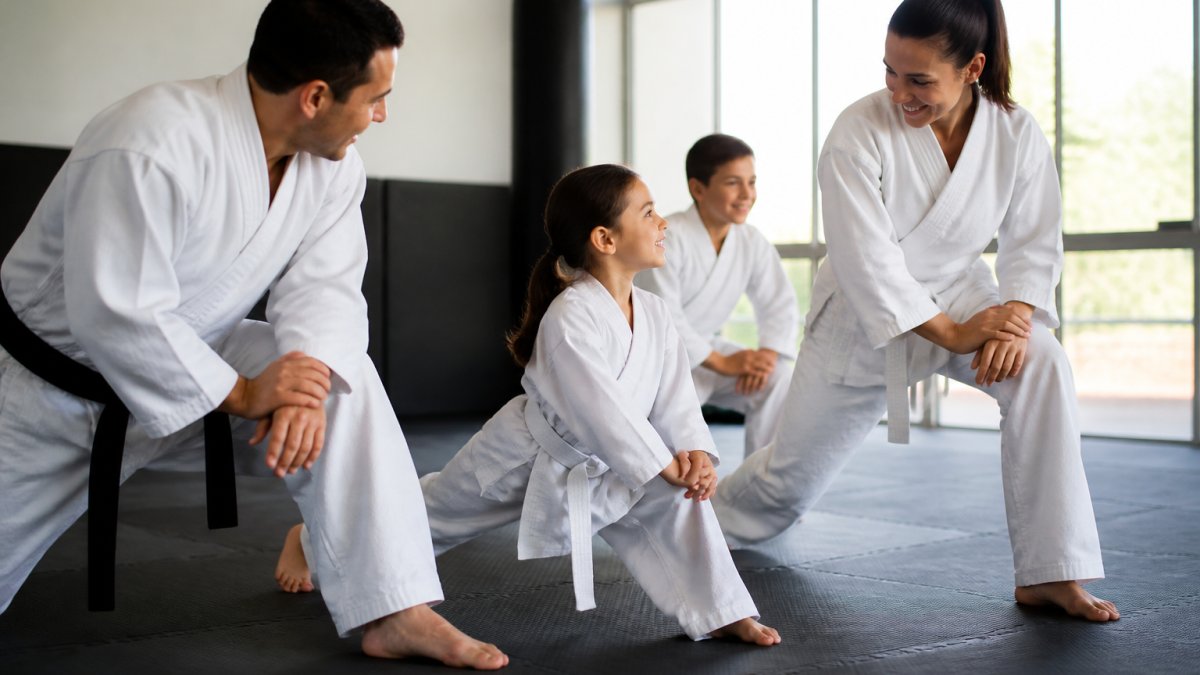
- Paired drills build trust because you practice technique on each other, carefully and repeatedly.
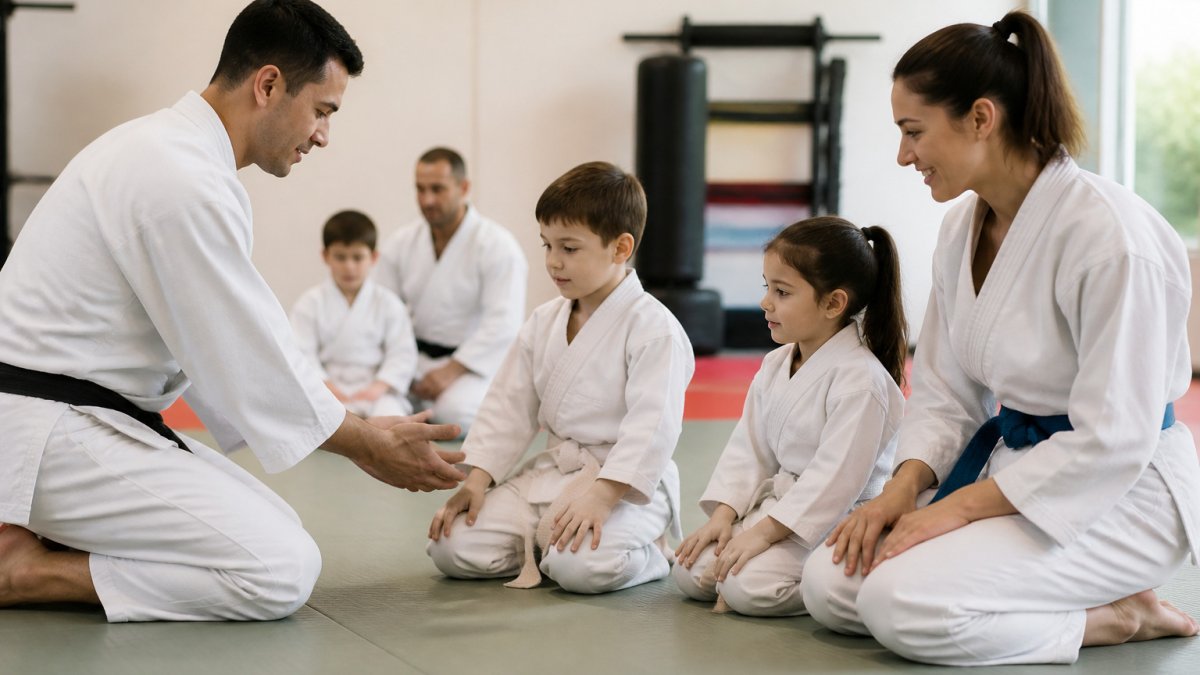
- Rank progression creates mentors, since senior students help beginners learn the basics.
- Shared rituals like bowing and lining up reinforce mutual respect without a lecture.
- Family involvement gives parents a role beyond the parking lot.
The mat can be the one place where phones stay in the bag and conversation happens face to face. That's not a small thing in a culture of screens.
How Belonging and Inclusion Are Built Into a Good Dojo
Inclusion in a dojo is intentional, not accidental. Good schools often design inclusion through mixed-age classes, beginner-friendly pacing, and attention to different abilities.
Watch out: a school that sorts every class by rank and never mixes groups can leave beginners isolated for months. Ask how new students are paired during their first few weeks.
Different styles also create different environments. Some programs lean competitive, others lean traditional. Neither is wrong, but the fit matters.
Martial Arts for Kids: Confidence, Focus, and Listening Skills
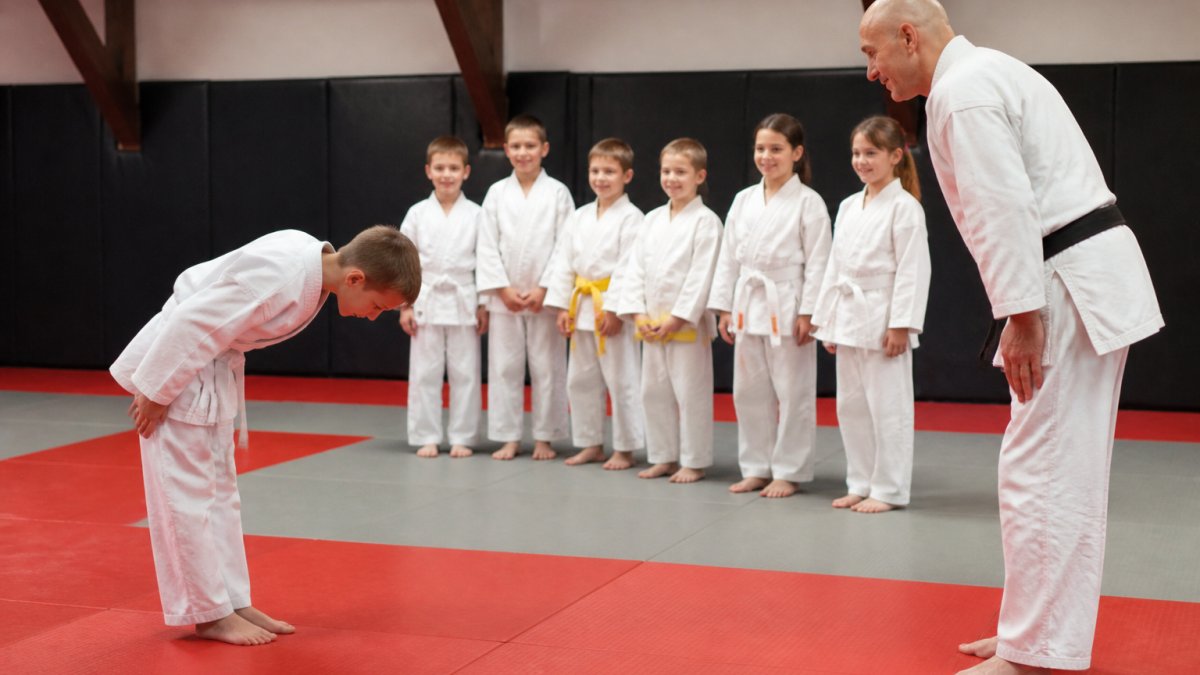
Martial arts for kids builds confidence, focus, and listening skills through repetition and clear expectations. A child who learns to follow a three-step instruction on the mat carries that habit into homework and the classroom. The confidence comes from earned progress, not praise.
Here's what parents notice first:
- Kids learn to stand still, make eye contact, and respond when an instructor speaks.
- Small wins, like a new stripe or a clean technique, build self-respect.
- Group drills teach patience with classmates who learn at a different speed.
How the Confidence Actually Forms
Most guides stop at "confidence." The mechanism is worth spelling out because it changes what you should look for in a school. A child's confidence in a dojo grows through a loop: a clear standard, a visible attempt, specific correction, and a small public acknowledgment (a stripe, a nod, a turn leading a line).
Kids who struggle early on can find that a predictable routine and technique-focused feedback help them settle in over time. That distinction matters for kids who are sensitive to criticism at school or in other sports.
The Family and Community Layer
A kids' program is really a family program. Parents who stay and watch can become part of the dojo community over time. Some schools run parent-and-child classes or family open mats, which can give adults a shared activity with their kids. If you are choosing between two schools, ask whether parents are welcome on the floor during class or only in a waiting area. The answer tells you whether the school treats families as members or as customers.
Realistic Expectations
Changes in focus and classroom listening tend to be gradual and uneven, and they depend on each child. A child who is shy may take a full season to speak up in class.
If your child has quit other sports after a few weeks, that's worth examining. For a fuller look at how this plays out, read our guide on whether martial arts is good for kids.
Martial Arts for Adults: Fitness, Stress Relief, and a Second Wind
Martial arts for adults delivers fitness, stress relief, and a genuine second wind for people who thought team sports were behind them. Adults often arrive carrying desk-job tension and look for a clearer head after a hard week.
The physical side is real. Training develops strength, flexibility, and coordination without the monotony of a treadmill. The mental side may matter more. Focused practice gives your attention one job, which is a rare relief in a multitasking day.
Why the Stress Relief Works
Stress relief in a dojo is not just the workout. It is the combination of three things that are hard to find elsewhere: a defined block of time with no phone, a physical task that requires full attention, and a room of people who expect you to show up. Many people find training works as a reset rather than a high, leaving them tired but calmer.
Older Adults and Beginners With Limitations
A common misconception is that martial arts is for young, flexible people. Good schools adapt. Good schools often adapt for beginners and students with limitations, and it is worth asking how this one does. Adults who start later in life may find that balance and confidence in everyday movement matter as much as belt rank. If you have a specific limitation, ask whether the school has taught students with it before and whether you can observe a class that matches your pace.
Realistic Expectations and Trade-offs
Progress in adult training is typically gradual, and it varies with consistency, prior fitness, and the student's goals. Soreness in the first few weeks is normal, and a good school will tell you how to manage it rather than push through it.
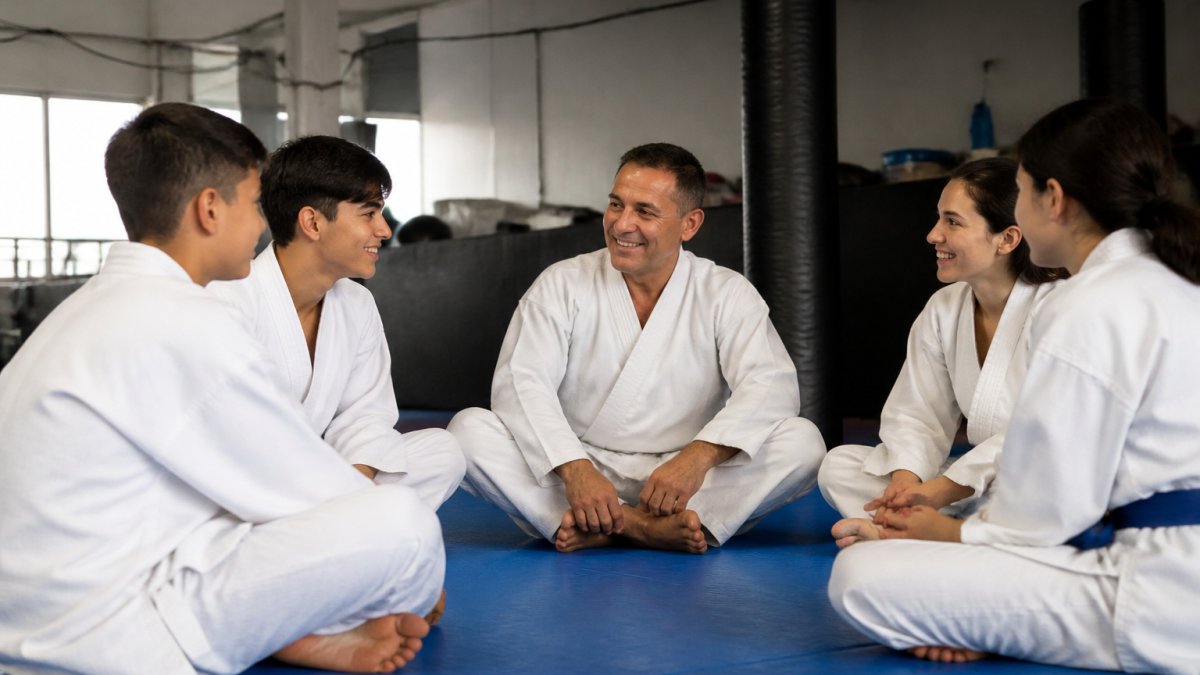
Adults who train alongside parents and neighbors often describe the dojo as the most social part of their week. If you want the deeper version of this argument, our article on the benefits of martial arts for adults covers fitness and stress relief in more detail.
Martial Arts Friendships That Last Past the Mat
Martial arts friendships tend to outlast gym memberships because they're built on shared struggle rather than shared convenience.
What most guides miss is how much of this happens off the mat. Some students and families socialize outside class time as well.
A practical way to think about it: friendships form at the rate of your shared reps. The more consistently you train with the same people, the faster the group becomes a circle.
How to Spot a Supportive Martial Arts Community Before You Sign Up
You can evaluate a dojo's culture before you pay anything. Use this checklist on your first visit:
- Instructors greet students by name and correct technique kindly.
- Senior students actively help beginners without being asked.
- Parents are welcomed, not kept at a distance.
- New students are paired with someone patient during early classes.
- The school explains its values, not just its belt system.
- You can observe a full class before deciding.
- Staff answer questions about scheduling and cancellation clearly.
Watch out: a school that dodges questions about contracts or makes it hard to watch a class is telling you something. Transparency is part of a healthy training culture.
To see how our own community operates, visit who we are at Goshinkan and read about the values behind our classes.
Use this checklist on your first visit to judge a dojo's culture before you pay anything.
| What to look for | What it tells you |
|---|---|
| Instructors greet students by name and correct technique kindly | Sign of a supportive program |
| Senior students actively help beginners without being asked | Mentorship is built in |
| Parents are welcomed, not kept at a distance | Families treated as members, not customers |
| New students paired with someone patient in early classes | Beginners are not left isolated |
| School explains its values, not just its belt system | Culture matters as much as rank |
| You can observe a full class before deciding | Transparency about how they train |
| Staff answer scheduling and cancellation questions clearly | Healthy, transparent training culture |
Book a Free Class and Meet the Community Yourself
Reading about belonging is nothing like feeling it. The fastest way to know whether a dojo fits your family is to stand in the room and train one class. We'd rather you see the culture than take our word for it.
Goshinkan Jujitsu Dojo offers expert instructors, a training environment that promotes camaraderie and personal growth, and classes inclusive of all ages and skill levels. If you need practical guidance before your first visit, our guide to booking a martial arts trial class walks you through it. You can also explore the many ways Goshinkan can make an impact on your life to see what classes fit your schedule.
Get started with Goshinkan Jujitsu Dojo and meet the people you'll be training beside.
Frequently Asked Questions
What are the real benefits of joining a martial arts community?
The benefits run past fitness. Students gain social connection, accountability, and a sense of belonging that keeps them showing up. Research on group exercise consistently links social support to better adherence, and a dojo adds structure: regular class times, shared goals, and mentors who notice when you are absent. Kids build focus and listening skills, adults get stress relief and strength training, and both groups report higher confidence. The community is often what turns a few weeks of classes into a years-long practice.
Can martial arts help children develop social skills?
Yes, and the format does much of the work. Kids in martial arts classes pair up for drills, take turns leading warm-ups, and learn to bow and address partners respectfully. Shy children are not forced into conversation; they ease in through structured activity. Over time, martial arts for kids becomes a place where they practice eye contact, taking instruction, and encouraging a classmate who is struggling. Parents often notice the difference at school and at home within a few months.
Can adults benefit from joining a martial arts community?
Adults gain from the same things kids do, plus a few extras. Martial arts for adults delivers strength, mobility, balance, and coordination training in a single session, and the social side counters the isolation that builds up around work and family routines. Many adults join after years away from organized exercise and find the group accountability easier to stick with than a solo gym membership. Beginners are welcome at any age, and most dojos scale the intensity to the student.
How can a shy beginner find a supportive martial arts community?
Start by visiting a class and watching. Look for instructors who greet newcomers by name, pair beginners with experienced students, and correct mistakes privately rather than calling them out. Ask whether you can try a free class before committing, and check whether the dojo offers a no-contract membership so you can leave if it is not a fit. A good community lets a quiet student observe first and participate at their own pace, and martial arts friendships tend to form naturally through repeated partner drills.
The hardest part isn't the first class; it's deciding to walk in. Most people who try a session find the room warmer than they expected. We'd be glad to save you a spot and let the community do the rest.